Ace Combat 7: Skies Unknown is a 2019 arcade flight combat game from Bandai Namco, still actively played in 2025 with a dedicated multiplayer community and periodic content updates. You pilot fighter jets through a 20-mission campaign set in the fictional continent of Usea. Success depends on positioning, speed management, and target priority — not realistic flight modeling. The aircraft upgrade tree, not mission difficulty, is the real gate that determines whether the campaign feels fair or punishing.
\n\n \nMost beginner guides tell you to \"just play the campaign and buy whatever plane looks cool.\" That advice holds until roughly Mission 6. After that, the difficulty curve steepens — not because enemies get smarter, but because the aircraft upgrade tree becomes a bottleneck. Which planes you buy determines which parts you unlock. And parts — especially the queen's custom, variable cycle engine, and superior maneuverability upgrades — determine whether a mission like Fleet Destruction (Mission 6) or Pipeline Destruction (Mission 10) feels like a challenge or a grind. Most guides skip this dependency.
\n\n \nThe aircraft tree in Ace Combat 7 is a directed graph. Each plane purchase unlocks specific upgrade parts that persist across your entire hangar. Buy the F-14D Tomcat, for example, and you unlock the superior maneuverability part — usable on any plane. Skip the F-14D, and you lose access to that part unless you backtrack later. The failure state is buying an F-22 Raptor too early (cost: 807,000 credits) and having no parts to equip it with, because the parts come from cheaper mid-tier planes you skipped. Hard-Stop Verdict: The F-22 without parts performs worse than a fully upgraded F/A-18F with the right loadout.
\n\nCore Gameplay: What the Campaign Actually Asks You to Do
\n\nAce Combat 7 missions fall into three categories: air-to-air dominance, ground-pound strikes, and mixed theater operations. Each requires a different loadout and approach. The game never explicitly teaches you how to read the mission briefing and select the right plane and special weapon. That gap is where most new players lose efficiency.
\n\n \nAir-to-air missions (Missions 2, 5, 14, 18) demand high speed, high pitch rate, and long-range missiles. The Su-57 or Su-35 excel here. Take the A-10 and you will struggle — too slow, too low. Ground missions (Missions 4, 6, 9, 11) demand attack aircraft or multirole fighters with air-to-ground special weapons. The F-15E Strike Eagle with SFFS cluster bombs clears ground targets faster than any air-superiority fighter. Mixed missions (Missions 7, 10, 15, 19) demand a plane that does neither perfectly but both adequately. The F/A-18F or Rafale M are the correct choices here. (Parenthetical Aside: Mission 19 specifically punishes players who brought a pure ground-attack plane — the boss fight switches to air-to-air mid-mission.)
\n\nThe scoring system rewards speed of target elimination, not survival. S-ranking a mission requires destroying a minimum number of targets within a time threshold. Playing defensively — staying at range, avoiding risk — actually lowers your score. The game wants you to push into furballs, use high-G turns to stay on target, and expend missiles quickly. This is the opposite of what most flight sims teach.
\n\n \nYour mission score determines your rank (C through S). Higher ranks earn more credits. Credits buy aircraft and parts. The economic loop is: aggressive play → S-rank → more credits → faster aircraft tree completion. Playing cautiously reduces credits per hour and delays access to top-tier planes by roughly 40–60% compared to an aggressive approach. The game literally rewards speed over caution.
\n\n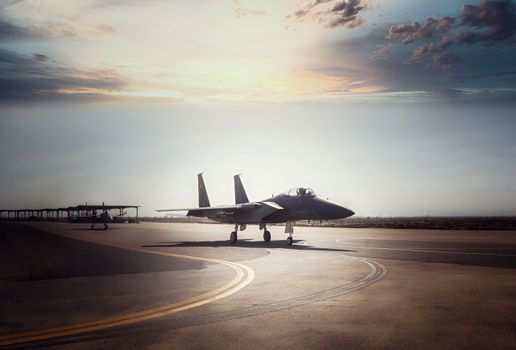
The Aircraft Tree: The Real Campaign Gate
\n\nThe aircraft tree contains roughly 30+ aircraft spread across four tech lines: American, European, Russian, and a secret line for late-game fictional planes. Each line has its own unlock dependencies and part rewards. The mistake most guides make is recommending a single \"best\" plane, when the correct answer is which planes unlock which parts in what order.
\n\n \nPlausible alternative: Save all credits for the F-22 Raptor, the highest-tier American fighter. Why it loses: The F-22 costs 807,000 credits. By the time you save that much (roughly Mission 14–15 on Normal), you have been flying under-upgraded planes for 8–10 missions. Meanwhile, the Su-30SM (375,000 credits) unlocks the variable cycle engine part — a 15% top-speed and acceleration boost usable on any plane. The Su-30SM itself, equipped with that part and LAAM long-range missiles, completes Missions 12–15 faster and safer than a stock F-22 with no parts. The F-22 is better only after you have already unlocked its supporting parts through other purchases. It is a finishing piece, not a starting one.
\n\n \nParts in Ace Combat 7 are not simple buffs. They operate on trade-offs. The lightweight fuselage part increases pitch rate and acceleration but reduces HP by 30%. The active radar jammer reduces missile lock range on you but disables your own radar display. The queen's custom part increases all maneuverability stats at the cost of increased stall speed. Understanding which trade-off is acceptable per mission type — you want lightweight on air-to-air missions, but never on ground-attack missions where flak is dense — separates competent players from effective ones.
\n\n \nHere is the shortcut most guides will not give you: Buy the F/A-18F Super Hornet as your second plane. It unlocks the superior maneuverability part. Then buy the Su-30SM as your third plane. It unlocks the variable cycle engine. With those two parts on your F/A-18F, you can S-rank every mission through Mission 15. The F-22 can wait.
\n\n
Key Modes and What They Offer
\n\nThree distinct modes exist in Ace Combat 7. Each serves a different intent.
\n\n| Mode | Best For | Skip If | Trade-off |
|---|---|---|---|
| Campaign | Learning mechanics, earning credits, unlocking the tree | You only want competitive PvP | Linear, scripted, low replay value after S-ranks |
| Multiplayer (Battle Royale / Team Deathmatch) | Competitive dogfighting, testing builds | You dislike peer-to-peer latency or limited matchmaking | No progression rewards credits or parts — cosmetic only |
| VR Missions (PSVR / PC VR) | Immersion, visual spectacle | You don't own VR hardware or want more than 45 min of content | Three missions, no replay depth, no progression |
Multi