The Oyrein Pong Zero is a newly revealed 37-gram competitive gaming mouse that pairs top-tier internal components—specifically a Pixart PAW3950 sensor and Omron Optical switches—with an ultra-lightweight shell. You should not blindly pre-order it based on weight alone. Instead, your first step is to plug its exact dimensions (118 x 60.5 x 37.7 mm) into a shape-comparison tool like EloShapes to see how its profile aligns with your current main mouse, as a 37-gram mouse with the wrong hump placement will actively degrade your aim.
The 37-Gram Anti-Consensus
The competitive shooter community operates under a persistent, unquestioned assumption: lighter is always better. When EloShapes highlighted the Oyrein Pong Zero, the immediate draw was its 37-gram weight. For context, the Logitech G Pro X2 Superlight—widely considered a gold standard for professional play—weighs in closer to 60 grams. Cutting an additional 23 grams off an already featherweight peripheral sounds like a direct upgrade to your reaction time. It is not.
Once a mouse drops below the 45-gram threshold, you encounter a severe physical trade-off regarding stopping power. In tactical shooters where micro-adjustments dictate the winner of a duel, pushing a 37-gram object across a smooth surface requires almost zero initial force. However, stopping that momentum exactly on a pixel-perfect target requires intense manual tension in your fingertips and forearm. Players who switch to sub-40g mice frequently experience an initial honeymoon phase of feeling faster, followed by a sharp decline in crosshair stability because they lack the physical friction required to stop their flicks accurately.
Furthermore, extreme weight reduction dictates strict compromises in internal architecture. The Pong Zero houses a Nordic nRF54H20 MCU and a Pixart PAW3950 sensor. That sensor is capable of absurd specifications: 30,000 DPI, 750 IPS (inches per second) max speed, and support for up to an 8,000 Hz polling rate. Running a peripheral at 8,000 Hz drains battery life exponentially faster than the standard 1,000 Hz rate. A mouse that weighs 37 grams physically cannot house a large battery. If you choose to run this hardware at its maximum performance ceiling, you gain microscopic reductions in input latency but lose multi-day reliability. You will be plugging this mouse in constantly.
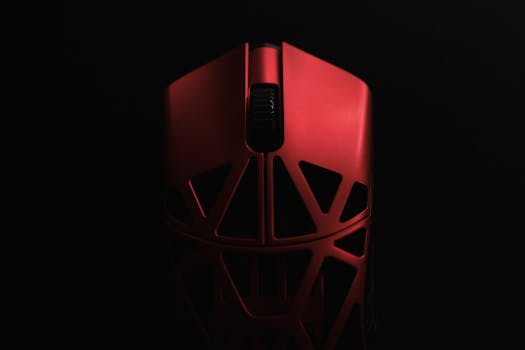
The inclusion of Omron Optical switches and a TTC Gold encoder proves Oyrein is targeting the enthusiast market, but these components also add rigid weight. To hit that 37-gram target while using premium, standard-sized internal switches, the manufacturer has to shave plastic from the outer shell. This often results in side-wall flex. If squeezing your mouse during a tense clutch causes the plastic to creak or inadvertently actuate a side button, the weight savings immediately become a competitive liability.
Using EloShapes as Your Hardware Calculator
EloShapes exists to solve a very specific decision problem: humans are completely incapable of visualizing millimeter differences in three-dimensional space. Before shape aggregators existed, players bought $150 mice based on marketing photos, only to realize the arch of the plastic forced their hand into an agonizing cramp. You should treat EloShapes not just as a news aggregator for peripheral reveals, but as a mandatory geometry calculator for your grip style.
The Pong Zero measures 118 x 60.5 x 37.7 mm. Those numbers tell a distinct story if you know how to read them. A length of 118 mm is notably short. Most medium-to-large mice sit in the 120-125 mm range. This shorter length heavily favors fingertip grip players or those with aggressive claw grips who need empty space between the back of the mouse and the base of their palm to make vertical micro-adjustments. If you are a palm-grip player who relies on the back of the mouse filling your hand for stability, a 118 mm length will leave your hand dragging uncomfortably on the mousepad.
The 37.7 mm height is equally critical. This is a relatively low-profile hump. When you overlay the Pong Zero's dimensions against a taller, bulkier mouse in the EloShapes calculator, you will see exactly where the plastic curves away from your hand. This visual delta is the most important metric in peripheral shopping. A mouse that perfectly matches the natural resting curve of your knuckles requires less muscular effort to control, which directly translates to less fatigue during a three-hour gaming session.
Your next step in the hardware optimization loop is connecting these dimensions to your playing surface. If you pair a 37-gram, low-profile mouse with a low-friction glass mousepad, you are creating an environment with virtually zero physical resistance. This setup demands absolute, flawless muscular control from the player. Conversely, pairing this ultra-light mouse with a heavy control cloth pad can restore the stopping power lost by the weight reduction. The calculator only gives you the geometry; you have to balance the friction equation yourself.
The Unseen Bottlenecks of Unproven Brands
Hardware specifications are ultimately just a list of ingredients. The Pixart PAW3950 sensor and Nordic MCU are top-of-the-line components, but sticking a V8 engine in a shopping cart does not make it a race car. Oyrein is a fresh, unknown brand in a market dominated by legacy giants and established boutique manufacturers. Buying the first generation of hardware from a new company carries distinct, unavoidable risks that spec sheets completely obscure.
The primary hidden variable is firmware implementation. You can buy the fastest Omron Optical switches on the market, but if the code governing the Nordic nRF54H20 MCU is poorly optimized, it will introduce click latency that entirely negates the hardware advantage. Established brands have spent years refining their wireless protocols to ensure stable connections in environments flooded with 2.4GHz interference. A new brand has no track record of wireless stability. A sensor spinning out or a wireless connection dropping for a fraction of a second during a match is catastrophic for a competitive player.
Pricing and availability remain massive question marks. Similar mice featuring the PAW3950 sensor and Omron switches tend to retail somewhere between $110 and $190. That is a massive price window. If the Pong Zero launches at the bottom of that bracket, it becomes a highly disruptive budget option for enthusiasts willing to gamble on a new brand. If it launches near $190, it enters direct competition with flagship models that offer ironclad warranties, proven quality control, and mature software ecosystems.
You also have to consider the logistics of aftermarket support. When you buy a popular mouse, third-party companies immediately produce aftermarket glass skates, custom grip tapes, and replacement parts. A niche mouse from an unproven brand rarely receives this third-party ecosystem support. If the stock PTFE skates on the Pong Zero are scratchy or poorly rounded, you might be stuck with them for months until a boutique skate manufacturer decides the mouse is popular enough to warrant a production run.
The Final Verdict
Do not let the 37-gram specification rush your purchasing decision. Go to EloShapes, map your current daily-driver mouse against the Oyrein Pong Zero's 118 x 60.5 x 37.7 mm footprint, and visually confirm if the shape actually supports your specific grip style. Wait for independent reviewers to test the shell for side-wall flex and validate the firmware's wireless latency before you invest your money in an unproven brand.