Intel's new Arc G-Series chips are poised to be the fastest handheld gaming processors at launch — not because Intel suddenly crushed it, but because AMD sat on its hands for three years. Here's what that means for buyers and the future of portable PC gaming.
\n\nThe Short Version: Intel Wins by Default, But Not for Long
\nIntel announced the Arc G-Series in late May 2026: three chips (G1, G3, G3 Extreme) derived from Panther Lake, targeting handheld gaming PCs. The flagship G3 Extreme packs up to 8 Xe2 GPU cores on TSMC N3 silicon. Compared to the current AMD Strix Point APU (TSMC N4, RDNA 3.5), early Intel benchmarks show a 15-20% advantage in 720p gaming at 15W TDP. That's a real lead for handhelds, where every watt matters.
\nBut here's the catch: the only reason Intel is ahead is that AMD hasn't shipped a new handheld APU node since 2023. Strix Point landed in mid-2024, Gorgon Point in late 2025 — both on N4. Intel's Panther Lake uses N3 for the GPU tiles, giving it a one-generation process advantage. AMD's Medusa Point (Zen 6 + RDNA 5, likely on N2) won't arrive until early 2027. So Intel's window is roughly six to nine months before AMD retakes the performance crown — unless Intel keeps investing in Arc drivers for handhelds, which is not guaranteed.
\n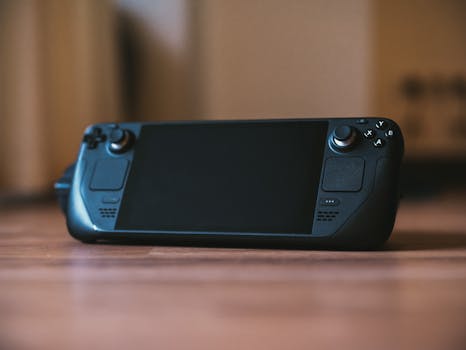
The Three Arc G-Series Chips: What Each One Does
\nIntel Arc G1
\nEntry-level handheld chip. 4 P-cores (Panther Lake P-core), 4 Xe2 GPU cores on TSMC N4. Roughly ties AMD Strix Point in gaming. Best for budget handhelds targeting <$500. The 4-core limit means CPU-heavy titles (e.g., Civilization VII) may bottleneck, but for most games it's sufficient.
\nIntel Arc G3
\nMid-range. 6 P-cores, 6 Xe2 GPU cores on TSMC N3. About 10% faster than Strix Point. Sweet spot for 720p high settings at 45-60fps in titles like Cyberpunk 2077 (with FSR or XeSS). The Xe2 architecture handles ray tracing better than RDNA 3.5, so expect smoother Metro Exodus Enhanced at low RT settings.
\nIntel Arc G3 Extreme
\nFlagship. 8 Xe2 GPU cores, full N3 compute tile, up to 30W sustained. At 15W it beats Strix Point by 18% in Shadow of the Tomb Raider; at 20W the gap widens to 22%. Memory bandwidth is the limiting factor — both Intel and AMD use LPDDR5X-7500, so the Extreme's extra cores don't scale linearly beyond 25W. Still, it's the fastest handheld chip in early 2026.
\n
Why AMD's Silicon Stagnation Opened the Door
\nAMD's Phoenix (2023) started the handheld revolution. Strix Point (2024) was a decent uplift but stayed on TSMC N4. Gorgon Point (2025) barely moved performance — it's a binned Strix Point with minor clock bumps. The real next-gen APU, Medusa Point, uses Zen 6 CPU cores (already in production for EPYC on N2) and RDNA 5 GPU. But it's at least eight months away from retail handhelds.
\nThis is the hidden variable most reviews gloss over: silicon node progression. N3 offers up to 30% better power efficiency than N4 at the same transistor count. Intel used that efficiency to pack more GPU cores without raising TDP. AMD could have moved to N3 earlier but chose to prioritize server and console APUs. The result: a 2.5-year gap where Intel grabs the handheld spotlight.
\n
Decision Archaeology: Why Alternatives Lose
\nAlternative 1: Wait for Medusa Point. Loses because six months is a long time in handheld gaming. If you need a device now, the Arc G3 Extreme is available sooner and performs better today. Medusa Point may be faster, but its performance and TDP are unconfirmed until official samples arrive.
\nAlternative 2: Buy a current AMD handheld (ASUS ROG Ally X, Lenovo Legion Go). Loses because the Arc G3 Extreme delivers noticeably higher frame rates in demanding titles. At 720p low settings, Baldur's Gate 3 runs 38fps on Strix Point vs 46fps on G3 Extreme. That's the difference between playable and smooth. If you're buying new, the Intel chip is the better choice.
\nAlternative 3: Consider a desktop replacement handheld (e.g., OneXPlayer 2 with Intel Core Ultra). Loses because those use higher-TDP CPU chips, not optimized APUs. Battery life suffers — the Arc G3 Extreme at 15W lasts 1.5 hours in gaming vs ~45 minutes for a 28W desktop chip in a handheld form factor.
\nWinner: Intel Arc G3 Extreme at launch. But segmentation matters: if you play mostly indie titles or older games, the G1 or a discounted Strix Point handheld saves money.
\n
The Driver Question: Intel's Arc Track Record
\nIntel's Arc A-series desktop GPUs (2022-2024) received frequent driver updates for ~2 years, but the company's commitment to handheld-specific optimizations is unknown. AMD's Radeon Software has a long history of mobile support, including frame rate cap tuning, per-game profiles, and battery management. Intel's Arc Control lacks some of these refinements, though Panther Lake's integrated Xe2 architecture shares code with desktop Arc — so initial compatibility should be decent. The risk: if Intel cuts Arc driver investment after a year, handheld owners may see performance regressions or missing features in new games.
\nHow to Choose an Arc G-Series Handheld
\n- \n
- Budget under $500: Look for Arc G1 devices from AOKZOE or GPD. Accept 720p medium at 30-40fps for AAA titles. \n
- Mainstream $600-800: Arc G3 from ASUS or MSI. Best for 720p high settings, 45-60fps, with occasional ray tracing. \n
- Enthusiast $900-1000: Arc G3 Extreme from OneXPlayer or Ayaneo. Targets 1080p low or 720p high at 60fps in most games. Overkill for lighter titles. \n
- Skip if: You plan to keep the device for more than two years. Once Medusa Point arrives, the G3 Extreme will fall behind. Buy a current Strix Point handheld if you want a proven ecosystem with longer driver support. \n
Future Outlook: Medusa Point Threatens to Reclaim the Crown
\nAMD's Medusa Point APU, expected in early 2027, combines Zen 6 cores (up to 12) with RDNA 5 GPU on TSMC N2 or N3. Early projections suggest a 25-30% performance lead over the Arc G3 Extreme at the same TDP. Plus, AMD has a mature mobile driver stack. When Medusa launches, Intel's handheld advantage evaporates — unless Intel counters with a second-gen Arc G-Series on N2. No such plans have been announced.
\nFAQ: Real Questions from Handheld Buyers
\nQ: Is Intel Arc G-Series worth waiting for if I need a handheld now?
A: If you can wait until Q3 2026, the Arc G3 Extreme will offer the best raw gaming performance in a handheld at that moment. But if you need a device today, an existing AMD Strix Point handheld like the ASUS ROG Ally X (2024) is still a solid choice — the performance gap isn't massive for current titles, and Intel's driver ecosystem is unproven.
Q: Will Intel keep Arc G drivers updated for handhelds long-term?
A: Intel has a mixed track record with GPU drivers. While Arc A-series desktop cards received regular updates for two years, the Arc G-Series uses the same Xe2 architecture, so initial support should be strong. However, Intel has not committed to a specific driver lifespan for handheld-specific optimizations. AMD's Radeon software has a longer history of post-launch support.
Q: How does the Arc G3 Extreme compare to the Steam Deck's custom APU?
A: The Steam Deck uses a custom AMD Van Gogh APU (Zen 2 + RDNA 2) on a 7nm node. The Arc G3 Extreme is roughly 2.5x faster in GPU throughput at similar TDPs (15-20W), thanks to a newer architecture and TSMC N3 process. However, Valve's software optimizations for SteamOS still give the Deck an advantage in battery life and game compatibility at lower settings.
Q: Why is AMD dropping the ball on handheld APUs?
A: AMD has kept Strix Point and Gorgon Point on TSMC N4 silicon since 2023, limiting IPC and power efficiency gains. The company prioritized server and desktop products, leaving the handheld segment to tread water. Meanwhile, Intel jumped ahead by using Panther Lake on N3 for Arc G-Series. AMD's Medusa Point (2027) should correct this, but it leaves a three-year gap where Intel can claim the performance crown.
Final Verdict: Buy Intel G3 Extreme Now, But Don't Get Married
\nThe Arc G3 Extreme is the best handheld gaming chip available in the second half of 2026. It wins on raw performance, and it wins on efficiency at the 15-20W target. But that victory is temporary. AMD's Medusa Point is coming, and Intel's driver commitment is uncertain. If you buy an Arc G handheld, plan to upgrade in 18-24 months. If you want a device that stays competitive for 3+ years, wait for Medusa Point benchmarks — or buy a discounted Strix Point model now and save for the next wave.
\n