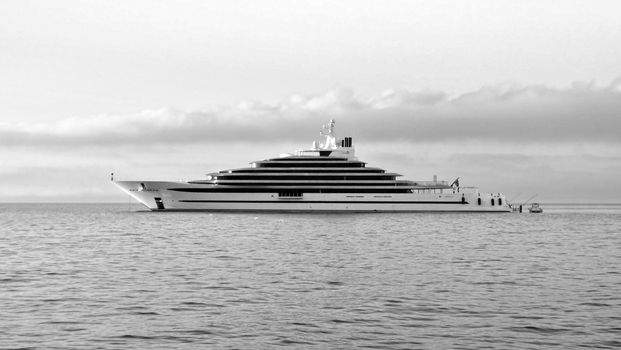
Gabe Newell's Leviathan superyacht—now documented in 55 fresh photographs from the Bahamas—cost roughly half a billion dollars and measures around 100 meters. The real story isn't the boat porn. It's that Newell's relationship with Oceanco, the Dutch shipbuilder, appears to go well beyond a typical client-vendor arrangement. When a founder has this level of entanglement with his yacht builder rather than just commissioning a build, that's not consumption. That's balance-sheet deployment at a scale that tells you Valve has far more unencumbered cash than even generous estimates suggested.
Why the Yacht Photos Matter More Than You Think
Here's the assumption worth challenging: most coverage treats this as a billionaire flex, disconnected from Valve's gaming business. The opposite is closer to true. Newell's personal liquidity and Valve's corporate treasury have always been functionally intertwined—Valve is privately held, has no external shareholders, and has never taken venture funding. The yacht spend isn't "despite" Steam's success; it's downstream of a specific corporate structure that keeps Valve immune to quarterly pressure.
The 55 new photographs, shot by Guillaume Plisson for Oceanco's promotional push, show the Leviathan in active operation with guests aboard. Oceanco's accompanying copy emphasizes "human-centered philosophy" and "community-driven environment"—language that sounds absurd applied to a half-billion-dollar vessel until you recognize it as brand positioning for prospective buyers. Newell's cameo in Oceanco's advertisement earlier this same week completes the loop: he's simultaneously customer and now spokesperson for a company that builds products almost no one can afford.
The hidden variable: yacht photography at this level is rarely casual. The timing, the professional shoot, the coordinated ad appearance—these suggest Oceanco is actively marketing its order book to ultra-high-net-worth individuals, using Newell as credible social proof. For someone in the gaming industry, this matters because it indicates Valve's cash generation remains robust enough that its founder's side investments (the yacht, whatever his actual financial arrangement with the shipyard may be) don't create even cosmetic pressure on the core business. Compare this to publicly traded publishers who cut 10-15% of staff to "streamline operations" while executives retain golden parachutes.
The trade-off most miss: private ownership cuts both ways. Valve can fund decade-long projects like the Steam Deck or VR hardware without shareholder revolt. But there's no external accountability forcing transparency. The yacht photos give us an indirect read on financial health that no quarterly report would provide.
What This Tells You About Valve's Decision-Making Structure
Valve's organizational design is famously flat—new employees famously receive a handbook explaining the "choose your own project" culture. What the yacht purchase clarifies is where the actual bottleneck sits. Newell isn't just first among equals; he's the sole capital allocator for expenditures at this scale, with no board to answer to.
This has direct implications for anyone tracking Valve's strategic moves:
| Decision Type | Typical Public Company | Valve's Actual Structure |
|---|---|---|
| Major hardware bets | Board vote, shareholder disclosure | Newell discretion |
| Acquisition strategy | Committee review, due diligence timeline | Personal network, speed |
| Long-term R&D with no near-term revenue | Quarterly justification | Funded if founder-convinced |
| Executive succession planning | Formal search, governance | Opaque, centralized |
The asymmetry: Valve can move faster on conviction than any competitor. The cost is single-point-of-failure risk. Newell is 61. The yacht photos are a reminder that Valve's strategic patience—sometimes read as drift—is enabled by a capital structure that would be impossible with external equity.
For players and industry observers, this shapes how to interpret Valve's next 2-3 moves:
- Hardware bets (Steam Deck successors, VR) will continue to get patient funding regardless of near-term unit economics
- Game development (Half-Life, new IPs) follows conviction, not market timing—meaning announcements arrive without warning, not on predictable cycles
- Platform policy (Steam revenue split, content moderation) shifts only when Newell's position changes, not from external pressure
The Peasant Eyes Framing Isn't Accidental
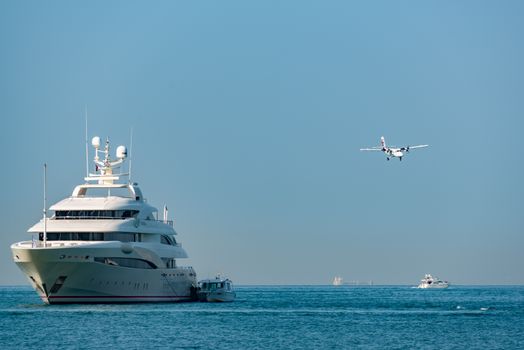
PC Gamer's headline and the broader coverage's self-deprecating tone—"for your peasant eyes"—deserves closer reading. It's deflection humor that actually obscures something useful. The yacht exists in a category of asset that's deliberately illegible to normal economic analysis. You don't evaluate a $500M superyacht on ROI. You evaluate it on optionality: the ability to host deals away from regulatory jurisdiction, to entertain partners without paper trails, to move physical presence independent of commercial flight records.
For someone trying to model Valve's behavior, this is the relevant frame. The yacht isn't consumption. It's infrastructure for a certain kind of dealmaking that doesn't happen in Bellevue conference rooms. The Bahamas photographs specifically—jurisdiction choice, guest presence, operational status—suggest the vessel is already active in this role.
Decision shortcut: when you see future Valve partnerships, acquisitions, or hardware supply deals announced, check whether they involve parties who could plausibly have been entertained aboard the Leviathan. The timeline won't be disclosed. But the pattern of "sudden" Valve moves with European or Asian partners may correlate with vessel positioning more than you'd assume.
What to Actually Do With This Information
Stop reading yacht coverage as celebrity lifestyle journalism. For anyone making bets on Valve's platform, hardware, or game release timeline, the Leviathan is an unusually transparent signal of capital abundance and founder control. The specific risk to watch: if Oceanco faces financial stress or Newell's public appearances with the vessel cease, that would indicate pressure points invisible in Steam's public metrics.
The one thing to do differently: weight Valve's capacity for surprise moves more heavily than their stated roadmap. The cash is there. The decision structure permits it. The only constraint is Newell's attention and conviction.