iRacing Wiki - Complete Guide
Game Overview
iRacing is a subscription-based, massively multiplayer online (MMO) motorsport simulation platform developed and published by iRacing.com Motorsport Simulations. Released initially in 2008 after originating from the well-regarded NASCAR Racing 2003 Season by Papyrus Design Group, iRacing is widely considered the gold standard of virtual racing. It is available exclusively on PC (Windows) and requires a constant, high-speed internet connection due to its cloud-based physics and matchmaking architecture.
Unlike traditional console racing games or even other PC simulators, iRacing operates on a service-based model. There is no base "game" to purchase; instead, users pay a recurring subscription fee that grants access to the platform, its proprietary simulation engine, and a baseline roster of vehicles and tracks. Additional content is purchased a la carte through an in-simulation storefront. The platform officially sanctions over 400 official races every single day, catering to everyone from absolute beginners picking up a virtual steering wheel for the first time to real-world Formula 1 drivers and NASCAR champions.
Core Systems
The Tire Model and Physics Engine
The foundational pillar of iRacing is its tire model. Considered the most advanced in the industry, the iRacing tire model calculates grip, wear, temperature, and deformation at multiple points across the tire's contact patch thousands of times per second. It accurately simulates how a tire heats up under load, how it cools down when sliding, and how it degrades over the course of a race stint. This system is dynamic and affected by ambient track temperature, surface rubber buildup, and even microscopic variations in the track surface. Combined with a rigorous physics engine that calculates weight transfer, aerodynamic turbulence, and suspension geometry, iRacing provides a deeply authentic driving experience where minor setup changes yield highly realistic results.
The Safety Rating (SR) and License System
To prevent the "pinball" style of racing common in arcade games, iRacing employs a strict Safety Rating (SR) system. Every driver starts with a Rookie license. As they participate in official races, their SR fluctuates based on their driving behavior. Making contact with other cars, going off-track, or crashing results in incident points (typically 0x to 4x per incident, depending on severity). Accumulating too many points in a race drops the SR. Finishing races cleanly raises it.
To progress from Rookie to Class D, and subsequently up through Class C, B, A, and the elite Pro license, drivers must maintain a specific minimum Safety Rating (usually 2.99 or 3.99 out of 5.00) over a set number of races. Higher license classes unlock faster, more demanding, and prestigious series. This system effectively segregates the player base, ensuring that high-speed, high-downforce open-wheel cars are only driven by those who have proven they can do so safely.
iRating and Matchmaking
While the Safety Rating dictates what a player can drive, the iRating dictates who they drive against. iRating is a modified Elo-style rating system. When a driver enters an official race, the matchmaking system looks at their iRating and places them in a session with drivers of a similar skill level. Winning or finishing near the top of the field gains iRating, while finishing at the back loses it. This creates hyper-competitive, tight-pack racing. A driver with an iRating of 1500 will rarely ever share a track with a driver rated at 4000, ensuring that races remain as fair and balanced as possible.
Economy and Content Acquisition
The iRacing economy revolves around a dual-currency system using real-world money. The subscription fee grants base access, but expanding one's garage requires purchasing cars and tracks individually. Cars typically cost between $11.95 and $14.95, while tracks range from $11.95 to $19.95 (with some larger, complex venues like the Nürburgring costing slightly more). To ease the financial burden, iRacing offers a "Tracks and Cars Discount Program." For every 12 months of continuous subscription, members receive a $60 credit to spend in the storefront. Furthermore, purchasing a specific track grants permanent access to every configuration of that venue, and purchasing a car grants permanent access to all skins and setups associated with it.
Characters / Classes / Factions
In the context of iRacing, there are no traditional "characters" or narrative "factions." Instead, the role-playing elements manifest through the distinct disciplines of motorsport, the vehicles driven, and the online communities that form around them. Choosing a path in iRacing is akin to choosing a class in an RPG, complete with distinct playstyles, attributes, and progression tracks.
Open-Wheel Racers (The Precision Class)
This faction consists of drivers who specialize in high-downforce, lightweight single-seater formula cars. The progression usually begins with theSkip Barber Formula 2000 or the Formula Vee, moving up to the USF2000, Formula 3, Formula Renault, and ultimately the Dallara IR-01 (an IndyCar replica) and the Williams FW31 (a historic Formula 1 car). Open-wheel racing demands millimeter-perfect accuracy. The cars are fragile, and aerodynamic wake turbulence makes close-quarters racing exceptionally difficult. Drivers in this class value surgical precision over outright aggression.
Touring and GT Racers (The Brawler Class)
GT and Touring car racing is iRacing’s closest equivalent to heavy combat. Drivers in this faction pilot production-based sports cars like the Porsche 911 GT3 Cup, the Ferrari 488 GT3, and the Audi R8 LMS GT3. These cars are heavy, possess immense mechanical grip, and feature "contact patches" that allow for rubbing and close-quarters battling without immediate catastrophic failure. The driving style requires managing heavy braking zones, exploiting torque, and engaging in tactical door-to-door warfare. This is currently the most popular class on the platform, boasting the highest participation numbers in official series like the IMSA iRacing Pro Series.
Oval Racers (The Tactical Class)
Oval racing is the heritage of iRacing, stemming from its NASCAR roots. This class is divided into paved oval and dirt oval disciplines. Paved oval drivers pilot stock cars (such as the NASCAR Cup Series Next Gen car, the XFINITY Series car, and the Craftsman Truck) around legendary superspeedways like Daytona and Talladega, as well as short tracks like Bristol and Martinsville. Dirt oval drivers slide massive, horsepower-heavy "Late Models" and "Sprint Cars" around loosely gripped clay circuits. Oval racing requires a highly specific skillset centered on momentum management, throttle control, pack racing dynamics, and hyper-awareness of aerodynamic drafting. It is a game of chess at 200 mph, where a single mistake can trigger a multi-car pileup known as "the big one."
Sports Car Prototypes (The Endurance Class)
This faction focuses on Le Mans-style endurance racing. Drivers pilot advanced prototypes like the Dallara LMP2, the Cadillac DPi-V.R, and the hybrid Hypercars. These cars are incredibly complex, featuring hybrid powertrains, heavy drag, and sophisticated tire management systems. Drivers in this class often specialize in long-distance stints, managing tire degradation and fuel consumption over the course of two-to-four-hour races (or 24-hour events like the Daytona 24). It requires immense consistency and mental fortitude.
World Building
A 1:1 Digital Planet
iRacing does not feature a fictional world; instead, it builds a meticulously crafted 1:1 replica of our own planet’s motorsport landscape. The developers utilize state-of-the-art laser scanning technology. A physical laser scanner is taken to real-world tracks, shooting millions of laser points per second to capture the exact topography of the asphalt, curbs, and surrounding barriers. This means that every bump, crack, and camber change in the real world exists in the simulation. If a real-world track is repaved, iRacing sends a team to rescan it and updates the digital version. This dedication to realism creates a world that feels incredibly grounded and authentic.
The Global Calendar
The world of iRacing is bound by a structured, 13-week racing season. Four times a year, the seasons change. Each season brings a new set of official series, rotating different cars and tracks into the spotlight to keep the gameplay fresh. The conclusion of a 13-week season brings the "Season Kickoff," a week of special events that transition the platform into the next quarterly cycle. This constant rotation creates a living, breathing world where the meta shifts every three months.
Major Events and Landmarks
Within this digital world, certain events take on a legendary status, acting as major set-pieces that draw massive crowds. The crown jewel is the iRacing Daytona 24, a virtual endurance race that runs in tandem with the real-world Rolex 24 at Daytona. It features top-tier esports teams, real-world professional drivers, and massive viewer numbers on Twitch and YouTube. Other major landmarks include the virtual Indy 500, the Le Mans 24 Hours, the Bathurst 12 Hour, and the Coca-Cola iRacing Series championship finale. These events transcend standard multiplayer matches, functioning as global esports festivals complete with live commentary, pit reporters, and broadcast-quality graphics.
Dynamic Environment and Weather
Further solidifying the world-building is iRacing's dynamic weather and time-of-day system. Tracks feature fully simulated day-night cycles, complete with accurately modeled starfields and transition lighting. The weather system introduces dynamic rain, where water pools physically on the track surface, creating "rivers" in the racing line that drivers must actively avoid. As cars drive through puddles, they displace water, altering the track conditions for the cars behind them. This dynamic environment means that no two races are ever exactly the same, as the physical world is in a constant state of flux.
Strategy & Tips
Master the Art of Consistency
The biggest mistake new players make is treating iRacing like an arcade game where pushing to the absolute limit every corner is rewarded. In iRacing, the fastest drivers are usually the most consistent drivers. Focus on hitting your braking markers and apexes perfectly lap after lap. A driver running consistent 1:30.000s will almost always beat a driver who alternates between 1:29.500s and 1:31.000s, because the erratic driver will eventually make a mistake that results in a crash or a spin. Build your speed slowly; do not add throttle until you are completely comfortable with the current grip level.
Utilize the Practice and Qualifying Sessions
Do not jump straight into a race. Every official session begins with a practice segment. Use this time to scrub tires, bring them up to operating temperature, and find the limit of the track. Pay attention to the track map to see where other drivers are crashing—this tells you where the "danger zones" are. In qualifying, remember that your out-lap is just as important as your flying lap. A tire that is not up to temperature will not provide grip, and pushing too hard on an out-lap is a guaranteed way to end up in the barrier.
Learn to Manage the Invisible Draft
Aerodynamics in iRacing are strictly simulated. When driving a stock car or a GT car, driving closely behind another car drastically reduces the drag on your vehicle, allowing you to go faster (the slipstream). However, this also means the air hitting your front wings is "dirty," reducing your downforce and making the car understeer. Conversely, the car in front loses downforce at the rear due to your presence, making them loose. Understanding this invisible push-and-pull is vital for oval racing, where "drafting" is the only way to win, but equally important in GT racing when approaching lapped traffic.
Setup Strategy: Change One Thing at a Time
iRacing features a highly complex garage setup system. Beginners should avoid touching the advanced alignment or dampening settings until they understand the basics. If the car is undriveable, stick to the fundamentals: tire pressures. Lower pressures generally increase the contact patch and grip but generate more heat; higher pressures do the opposite. If you must change the setup, change only one variable at a time (e.g., add a click of front wing) and run a few laps to feel the difference. If you change three things at once and the car gets worse, you have no idea which change caused it.
Protect Your Safety Rating Like Gold
Your SR is your key to progressing in iRacing. Early in your career, your primary goal is not to win, but to bring the car home in one piece. If you find yourself in a pack of erratic drivers, lift off the throttle and let them go. It is mathematically better to finish a race in last place with zero incidents than to finish third with four incidents. A single bad race can wipe out weeks of SR progress. Practice defensive driving—look in your mirrors, check your blind spots before changing lines, and give other cars plenty of racing room.
Optimize Your Hardware and Netcode
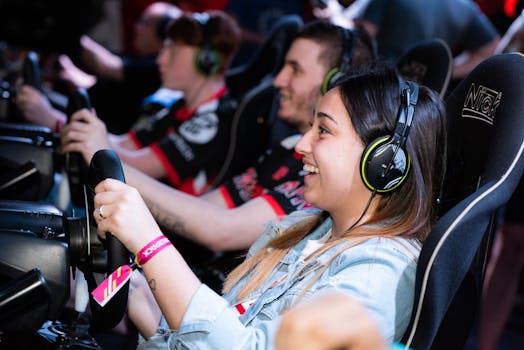
iRacing is highly sensitive to hardware. Ensure your wheel's force feedback is set correctly; the "Dynamic Force" setting should usually be maxed, while the overall force strength should be adjusted to avoid clipping (which flattens the feedback and hides crucial information about tire grip). More importantly, iRacing relies on a tick-rate of 60Hz for its physics. If your internet connection drops packets or spikes in latency, the simulation will struggle to predict car positions, leading to "warping" where cars teleport into walls. Use a wired Ethernet connection, never Wi-Fi, and close background applications like Steam overlays or web browsers to maximize CPU priority for the simulation.
Resources
- Official iRacing Forums: The primary hub for technical support, setup sharing, and developer communication. The "Technical Help" section is invaluable for troubleshooting hardware issues.
- iRacing.com WiKi: An unofficial but highly comprehensive community-driven encyclopedia detailing every car's default setup tendencies, track guides, and mathematical breakdowns of the iRating and SR systems.
- YouTube Channels (David Perel, Guido van der Garde, Barry Snel): These channels provide high-quality coaching, track guides, and setup tutorials. David Perel’s "Road & Track Guides" are considered essential viewing for road course beginners.
- Coach Dave Academy (Delta): A premium subscription service that provides hyper-optimized, data-driven car setups and rigorous data analysis tools (Delta) to help drivers find exact tenths of a second per lap.
- Sim Racing Subreddit (r/iRacing): A highly active community space for sharing highlights, discussing recent updates, and asking casual questions about the state of the simulation.
- RaceSpot TV and iRacing Live: The official broadcasting partners of iRacing. Watching their broadcasts of major series is one of the best ways to learn racecraft, understand tire strategy, and see how top-tier drivers handle traffic.