Game Overview
Mount & Blade II: Bannerlord is a highly immersive action role-playing game with strategic elements, developed and published by TaleWorlds Entertainment. Serving as a prequel to the critically acclaimed Mount & Blade: Warband, Bannerlord places players into the tumultuous continent of Calradia during the decline of the Calradic Empire. The game officially launched out of early access on October 25, 2022, and is available on Windows PC, Xbox Series X|S, and PlayStation 5.
At its core, Bannerlord is a sandbox experience that refuses to hold the player’s hand. It seamlessly blends third-person melee combat, large-scale siege warfare, deep economic simulation, and complex diplomatic systems into a single, cohesive package. Unlike traditional RPGs that rely on a predetermined narrative to drive the player forward, Bannerlord provides a dynamic engine where the player’s actions, alliances, and economic decisions organically shape the world map and the fates of its myriad factions.

Core Systems
Bannerlord’s appeal lies in how multiple distinct systems interlock to create a living, breathing world. Understanding these core mechanics is essential for long-term success and enjoyment.
Combat Mechanics
The combat system is a physics-driven, directional affair. Players must manually control their weapon swings by moving the mouse or right analog stick in the direction they wish to strike (left, right, up, or down). To defend, players must match the direction of an incoming attack. This creates a skill-based environment where player reflexes and knowledge of weapon timings matter far more than hidden dice rolls. Weapons are categorized by damage types—cut, pierce, and blunt—each interacting differently with various armor types. Furthermore, mounted combat adds a layer of momentum calculation, where the speed of your horse directly correlates to the damage output of your lance or sword.
Skill Progression
Bannerlord eschews traditional experience points for leveling up in favor of a Learning-by-Doing system. Every action you perform—swinging a two-handed sword, scouting enemy hideouts, trading grain between cities, or smithing a new blade—grants progress to a specific skill. As skills level up, they unlock perks that offer meaningful changes to gameplay, such as the ability to recruit higher-tier troops from villages or increase the movement speed of your caravan. You also gain Focus Points and Attribute points upon leveling your character, which dictate how quickly a skill can be learned and what perks are available to you.
Economy and Trading
The economic system in Bannerlord is remarkably complex, featuring dynamic supply and demand that reacts to the world state. If a city is besieged and its surrounding villages are raided, the price of food and raw materials will skyrocket. If a faction is constantly at war, the price of weapons and horses will surge. Players can engage in serious trading by studying the encyclopedia to see what a city produces and what it lacks. For those who want a more passive income, the game allows you to build Workshops in cities, which generate daily income based on local economies, or invest in Caravans, which autonomously travel the map trading goods.
Kingdom Management
Eventually, players will want to carve out their own piece of Calradia. You can swear fealty to an existing king as a mercenary or vassal, or you can create your own independent kingdom. Ruling requires balancing the appeasement of powerful nobles through fief distribution, managing domestic policies that affect tax income and troop wages, and navigating the intricate diplomatic web of war declarations, peace treaties, and alliances. You must also manage your clans by assigning companions to lead parties, govern towns, or carry out specialized roles within your army.
Characters / Classes / Factions
Before setting foot on the battlefield, players must determine their origins and choose their allegiances. These choices heavily influence early-game stats and starting scenarios.
Character Creation and Backgrounds
Instead of picking a strict class, Bannerlord uses a background system divided into six categories: Youth, Education, Apprenticeship, Adulthood, Reason for Travel, and Family Pedigree. Each choice grants a specific combination of Focus Points, Attribute points, and skill levels. For example, choosing a "Street Urchin" youth gives bonuses to Roguery and Scouting, while an "Upper Class" upbringing boosts Charm and Trade. By the end of creation, your character is a unique blend of skills tailored to your preferred playstyle, whether that is a front-line berserker, a wealthy merchant, or a cunning diplomat.
Companions
Companions are specialized NPCs with unique names, backstories, and skill distributions that can be recruited from taverns across Calradia. They function as your lieutenants. You can assign a companion with high Engineering skills to speed up the building of siege engines, or give a companion with high Tactics control over a contingent of your army during battles. They can also be sent out to form their own war parties, essentially acting as AI-controlled allies that patrol your lands and reinforce you in large conflicts.
The Major Factions
Calradia is dominated by eight major factions, split between the remnants of the Calradic Empire and the foreign kingdoms that have settled on its borders. Each faction features unique troop trees, cultural bonuses, and geographic starting positions.
- The Calradic Empire (Northern, Southern, Western): The remnants of the old world. Their armies rely on highly disciplined heavy infantry (Legionaries) and skilled crossbowmen. Their cultural bonus increases the security of owned settlements, reducing banditry.
- Vlandia: Heavily inspired by feudal Western Europe. Vlandia fields devastating heavy cavalry (Knights) and solid infantry. Their cultural bonus provides extra loot after winning battles, making them ideal for aggressive warlords.
- Sturgia: A northern faction reminiscent of Kievan Rus. Sturgian troops excel in snowy terrain and boast strong axe-wielding infantry and archers. Their cultural bonus reduces the speed penalty of moving through snow.
- Battania: Inspired by Celtic nations, Battania thrives in dense forests. Their greatest assets are their highly accurate longbowmen and swift, lightly armored shock infantry. Their cultural bonus increases the speed of traversing forests.
- Aserai: A desert-dwelling faction with Arabic influences. The Aserai rely on nimble cavalry archers and heavy infantry with excellent two-handed axes. Their cultural bonus reduces the penalty of moving through deserts and makes buying goods slightly cheaper.
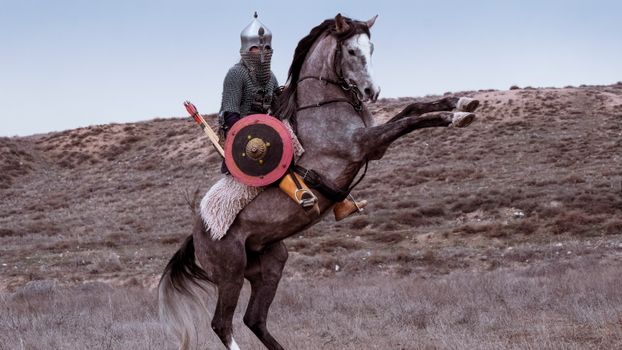
- Khuzait: A nomadic steppe faction inspired by the Mongols. The Khuzaits are the masters of the horse archer, capable of running circles around slower armies. Their cultural bonus dramatically increases the movement speed of their non-cavalry parties on the world map.
World Building
The lore of Mount & Blade II: Bannerlord is delivered not through lengthy cutscenes, but through environmental storytelling, NPC dialogue, and the dynamic events happening across the map. The world feels ancient and lived-in.
The Fall of the Calradic Empire
The central narrative backdrop of Bannerlord is the death throes of the Calradic Empire. Centuries before the events of the original Mount & Blade, the Calradic Empire united the continent under a single banner. However, the assassination of Emperor Arenicos left no clear heir, plunging the massive empire into a catastrophic civil war. The Empire has fractured into three distinct factions led by rival senators—Lucon, Rhagaea, and Garios—each claiming to be the true successor. While the Empire tears itself apart, the neighboring kingdoms (Vlandia, Battania, etc.) sense weakness and aggressively expand their borders, raiding imperial lands and capturing ancient cities.
Key Locations
The geography of Calradia dictates its politics. The massive inner sea serves as a central trade hub, with wealthy coastal cities like Epicrotea and Ortovon acting as economic powerhouses. Makeb, the imperial capital, is a heavily fortified jewel that frequently changes hands during the civil war. In the deep forests of the northwest lies Marunath, the traditional seat of Battanian power, while the vast, unforgiving steppes of the east house the nomadic cities of the Khuzait, such as Makeb and Galend. The physical distance between these locations directly impacts how long it takes for armies to reinforce one another, making geography a critical strategic consideration.
Living World Dynamics
Calradia operates on a macro-level simulation. Nobles raise armies, raid villages to starve out enemy castles, and defect to other kingdoms if they feel mistreated by their liege. Bandits form large, roaming packs that will ambush trade routes, causing localized economic depressions. Minor factions, such as the Company of the Golden Boar or the Hidden Hand, operate as mercenary groups or clandestine organizations that can be hired or fought. Because of this simulation, no two playthroughs are ever exactly alike; a faction that is dominant in one save file might be completely wiped off the map within the first few years in another.
Strategy & Tips
Surviving in Calradia is notoriously difficult for new players. The early game is a grind of survival, and making poor decisions can lead to bankruptcy or capture. Here are expert strategies to ensure long-term success.
Early Game Survival
Do not join a kingdom immediately. As a fresh lord, you will be targeted by enemy lords with massive armies, and you lack the infrastructure to recover from defeats. Instead, spend the early game as a mercenary, a trader, or a bounty hunter. Focus on building a core group of 20-30 tier-3 or tier-4 troops. Fight looters and bandits to level up your combat skills and your companions. Only consider swearing vassalage or starting a kingdom once you have a sustainable income of at least 1,000 denars a day and a party size of 100+.
Army Composition
Never rely on a single troop type. A balanced army is the key to victory. You need a "shield wall" of heavy infantry to hold the line, a contingent of archers to deal damage from behind the shield wall, and a reserve of heavy cavalry to charge into the enemy's flanks once they are engaged. Keep your cavalry out of the main melee until the perfect moment; if you send them in too early, they will get bogged down and killed by enemy spearmen. Always assign your troops to specific formations (Infantry, Archers, Cavalry) using the F-keys before a battle begins.
Economic Snowballing
Diversify your income as early as possible. Relying solely on looting and ransoming prisoners is unpredictable. Once you have 15,000 to 20,000 denars, purchase a Workshop in a prosperous city. Look at what the city produces (e.g., a city with abundant olives) and buy a corresponding workshop (an Olive Press). Later, invest in Caravans, but be aware that they are vulnerable during wartime. Once you own a fief (town or castle), prioritize the irrigation and bound villages projects to increase the prosperity of the associated villages, which in turn passes more money to your town through tariffs.
Siege Warfare Mastery
Sieges are the ultimate test of a player's tactical ability. Do not just order your men to attack the walls blindly. Use the building phase to construct at least four siege towers or battering rams to spread out the enemy's defenders. Use your archers to thin the walls before sending in infantry. If you are defending, utilize the "sally out" mechanic if the enemy is building siege engines; destroying their engines while they are vulnerable can force the enemy to retreat, buying you precious time for reinforcements to arrive. Furthermore, ensure you have a companion with a high Engineering skill in your party to build siege engines faster and construct better camp fortifications.
Smithing for Profit
The Smithing skill is arguably the most powerful money-making tool in the game if used correctly. Do not waste hours trying to unlock high-tier weapons through random smelting. Instead, focus on unlocking the components for two-handed swords or pikes, which have a high value-to-material ratio. Craft weapons using the finest materials you can afford (like Fine Steel or Damascene Steel). Once you unlock the "Charcoal" perk at Smithing level 50, you can smelt down cheap weapons for charcoal, craft high-value two-handed swords, and sell them for massive profit margins, effectively breaking the economy early in the game.
Resources
Because Bannerlord is a deep, complex sandbox with many obscured mechanics, the community has developed an array of excellent resources to help players understand the game's intricate systems.
- The Official Bannerlord Wiki (bannerlordwiki.com): The most comprehensive database for raw data. If you need to know the exact damage values of a Noble Bow, the specific requirements for a perk, or the troop tree progression of the Aserai, this is the ultimate resource. It is constantly updated by the community and reflects the latest game patches.
- TaleWorlds Official Forums: The best place for direct interaction with the developers. TaleWorlds frequently posts developer diaries here explaining the logic behind game mechanics. It is also an excellent hub for modders to share their creations and for players to debate high-level strategies.
- Reddit (r/mountandblade): A highly active community hub where players share their epic battle screenshots, amusing glitches, and AAR (After Action Reports). If you have a specific question about how to handle a late-game crisis or want feedback on your army composition, the subreddit is incredibly welcoming and knowledgeable.
- Nexus Mods (Mount & Blade II: Bannerlord): The central repository for game modifications. Because Bannerlord is built on a highly modular engine, the modding community is vast. Here you will find quality-of-life mods (like inventory filters and customizable banners), total conversion mods that introduce fantasy elements, and minor tweaks that adjust AI behavior and economy balancing.
- YouTube Creators (Party of Sin, Reformist, Strategy Master): For visual learners, YouTube is invaluable. These creators specialize in deep-dive guides covering specific mechanics like how to manipulate the clan system, the most efficient ways to level up companions, and step-by-step tutorials on how to successfully establish and defend an independent kingdom from scratch.