When Pokémon Go Fest features highly anticipated raid bosses like Mewtwo, Latin American players treat the mobile game's biggest weekend with the same local fervor as regional soccer tournaments. For returning players, deciding whether to participate isn't just about catching nostalgia; it is a strict resource-management equation. To get the most out of this event, you need to calculate your Raid Pass ROI, optimize your Stardust farming, and decide whether your time investment yields enough meta-relevant counters to justify the grind.
Calculating Your Go Fest ROI and the Shiny Trap
Most returning players operate under a flawed assumption: they think Pokémon Go Fest is primarily a shiny-hunting lottery. It is not. Treating the event as a casual walk to collect rare color palettes is the fastest way to drain your item reserves and end the weekend with zero account progression. Go Fest is actually a high-efficiency resource generation engine, and you need to run the math on your playtime before you step outside.
The gameplay loop of Pokémon Go relies on three distinct bottlenecks: Stardust (used to power up Pokémon), Candy (used to evolve and power up specific species), and premium items like Raid Passes and Incubators. During a massive event like Go Fest, the game temporarily removes the friction on Stardust and Candy generation by flooding the map with spawns. However, the premium item bottleneck remains strictly enforced. This forces a strategic choice. You can spend your weekend walking constantly to maximize wild encounters, or you can anchor yourself near a dense cluster of Gyms to chain-run Raids. You cannot mathematically optimize both at the same time.
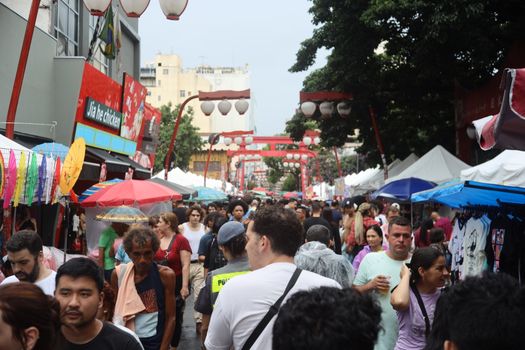
Alan Mandujano, head of marketing for Pokémon Go in Latin America, has previously noted that the community from Mexico to Argentina frequently organizes massive meetups for Go Fest. He compares the regional passion for the game to soccer—a global import that players have completely localized and claimed as their own. That level of organized community play changes the calculus of the game. When hundreds of players coordinate, Raid lobbies fill instantly. This eliminates the usual five-minute wait time trying to scrounge up enough local players to take down a high-tier boss.
If you plan to play, your first calculation should be inventory space. Catching animations take time, and transferring Pokémon one-by-one during the event destroys your efficiency. A serious player clears out at least 300 to 500 Pokémon storage slots before the event begins. You want to catch continuously and appraise your haul only after the event hours conclude. Every minute spent managing your inventory on the sidewalk is a minute you aren't generating Stardust.

The Mewtwo Bottleneck and Premium Item Trade-offs
When the headline feature of Go Fest is the return of a top-tier boss like Mewtwo, it completely shifts where you should direct your premium currency (PokéCoins). If you use a resource calculator or an IV-checking overlay, you already know that Mewtwo remains one of the highest-damage attackers across multiple raid formats. This makes your decision tree very simple: prioritize Raid Passes over everything else.
Many players waste their PokéCoins on Egg Incubators during major events. This is a mathematically poor trade-off. Incubators are a gamble. You pay premium currency for a random chance at a useful Pokémon, and you still have to walk several kilometers to realize that value. Raid Passes, specifically when used on Mewtwo, offer guaranteed baseline value. Even if you catch a Mewtwo with terrible stats, you still receive Mewtwo Candy, Rare Candy, and Golden Razz Berries. The asymmetry here is massive. A bad Raid still yields top-tier account resources; a bad Egg hatch yields a useless Pokémon and a fraction of the Stardust.
Time is your ultimate limiting factor during Go Fest. Consider the actual mechanics of a Raid. You have a two-minute lobby timer. The fight itself takes roughly one to three minutes depending on the size of your group. The catch sequence, assuming the boss breaks out of a few Poké Balls, takes another two minutes. That is a minimum of five to seven minutes per Mewtwo. If you have a three-hour event window, perfect execution yields a maximum of about 30 Raids. Realistically, factoring in walking between Gyms and server lag, you are looking at 15 to 20 Raids.
This is why the Latin American community's approach—highly organized, localized meetups—is the optimal way to play. They map out Gym clusters in advance. If you are a returning player, you should mimic this strategy. Find a local park with overlapping Gyms. Ignore the temptation to chase a rare spawn three blocks away if it pulls you out of your Raid rotation. Focus entirely on converting your Raid Passes into Mewtwo encounters, use Pinap Berries to double your candy yield on the catches you feel confident about, and leave the shiny hunting to the players who don't care about the combat meta.
The Final Verdict on Go Fest Preparation
Stop hoarding your premium items for a hypothetical future update. A major Go Fest, anchored by a highly relevant boss like Mewtwo, is the exact scenario your hoarded PokéCoins were meant for. Clear out your Pokémon storage today, map your local Gym clusters to minimize transit time, and spend your budget entirely on Raid Passes rather than the unpredictable gamble of Egg Incubators.