Resident Evil 2 (1998) is a survival horror video game developed and published by Capcom for the PlayStation, with later ports to PC, Nintendo 64, and Dreamcast. Players control either rookie police officer Leon S. Kennedy or college student Claire Redfield as they escape a zombie outbreak in Raccoon City, navigating the infested police station through fixed camera angles, strict resource management, and interconnected puzzle-solving.
Who This Guide Is For
| Player Type | What You'll Find Here |
|---|---|
| First-time players (any platform) | Core mechanics, survival priorities, and scenario structure explained without spoilers |
| Returning players after the 2019 remake | Key differences between remake and original, including Zapping System mechanics |
| Speedrunners / completionists | Scenario routing notes and version-specific considerations |
| Curious historians | Release history and port comparisons |
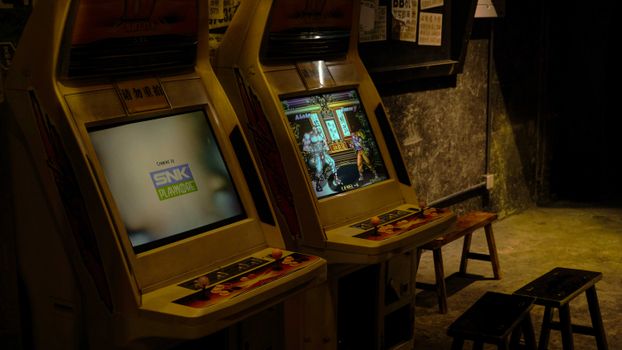
Core Identity: What Separates the 1998 Original
While the 2019 remake brought photorealistic visuals and over-the-shoulder shooting, the 1998 version's architectural design induces panic through information denial. You cannot see what waits around a corner until you physically round it. Fixed camera angles and pre-rendered backgrounds enable cinematic framing that hides threats in plain sight—anxiety that modern third-person cameras inherently dilute.
Why do purists argue the original is scarier than the 2019 remake?
Fixed camera angles force vulnerability. The remake's dynamic camera gives you too much control, removing the core friction of blindly walking into a hallway. Pre-rendered backgrounds allowed for highly specific, authored compositions that no real-time system replicates.

Core Gameplay: Resource Friction and Spatial Memorization
Every action in RE2 costs something. Firing costs bullets. Running risks damage. Even picking up an item costs inventory space, forcing return trips to safe rooms. This friction is the design's central thesis.
| Mechanic | How It Works | Survival Implication |
|---|---|---|
| Ammo | Strictly limited pickups; no crafting | You cannot kill every enemy. Dodging and baiting attacks are mandatory skills |
| Ink Ribbons | Required to save at typewriters; finite supply | Each save is an investment decision; reckless exploration risks losing progress |
| Item Box Network | Shared storage across specific safe rooms only | Route planning between boxes is essential; no local dumping |
| Inventory | 6-8 slots per character; key items consume space | Constant triage between weapons, healing, and progression items |
How does the zombie resurrection system change gameplay?
If you shoot a zombie without fully destroying its head, it may fall temporarily—then rise later as a faster, more aggressive variant. Because most players don't discover this on their first run, mid-game backtracking transforms previously cleared hallways into renewed threats. Burning bodies with limited fuel is the only preventive counter, forcing agonizing resource allocation.

The Zapping System: Two Scenarios, One Narrative
RE2 features a "Zapping System" where completing one character's "A Scenario" unlocks the other's "B Scenario." Your actions in the first run directly alter the second.
| Element | A Scenario (First Play) | B Scenario (Second Play) |
|---|---|---|
| Starting point | Standard entry into police station | Alternate entrance; some doors pre-unlocked or pre-opened |
| Enemy placement | Baseline | Modified; some areas harder due to "first run" consequences |
| Weapon availability | Standard pickups | Some weapons shifted or replaced based on first character |
| Boss encounters | Standard sequence | Additional or modified encounters, including mandatory Mr. X appearances |
| Ending completeness | Partial resolution | True ending; full context for supporting characters |
Does play order actually matter?
Mechanically yes, narratively partially. "Claire A / Leon B" is generally considered the canonical sequence, but "Leon A / Claire B" exists with slightly different weapon placements. Both paths are required to fully understand the fates of Sherry Birkin and Ada Wong.
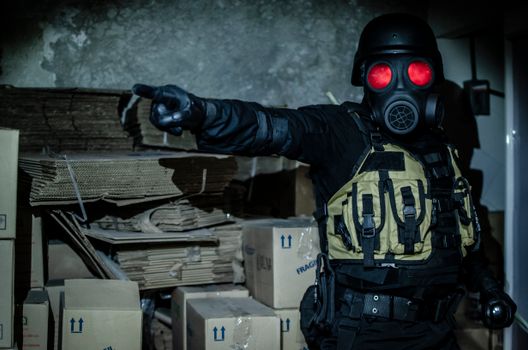
Character Comparison: Leon vs. Claire
| Attribute | Leon S. Kennedy | Claire Redfield |
|---|---|---|
| Starting weapon | Handgun | Handgun |
| Unique weapons | Shotgun, Magnum | Grenade Launcher, Bowgun |
| Supporting character | Ada Wong | Sherry Birkin |
| Key access | Specific doors/areas | Specific doors/areas (e.g., certain locked rooms) |
| Scenario difficulty | Slightly more direct combat tools | More versatile ammo types; different resource curve |
Progression: Puzzle-Solving and Key Items
There is no quest log. No objective marker. You find a gemstone, read a diary entry about a statue's missing eye, and connect the dots yourself. The police department is an interconnected puzzle box disguised as a building.
Standard progression loop:
- Find a key (e.g., Spade Key, Heart Key, Club Key, Diamond Key)
- Identify the locked door it opens—often across the map
- Navigate to that door, encountering new enemy types
- Retreat to a safe room to reorganize inventory for the specific threat
- Repeat with new area, new key, new complication
It is slow. It is deliberate. Rushing guarantees a game over screen.
What happens if you get completely stuck on a puzzle?
Examine everything in your inventory. Items combine or reveal hidden mechanisms only when rotated and inspected via the "examine" prompt. If stuck, you likely haven't inspected an object closely enough to reveal its secondary function.
Weapon Tiering and Tactical Use
| Weapon Class | Role | Best Practice |
|---|---|---|
| Pistol (upgradable) | Standard workhorse | Prioritize finding custom parts; headshots conserve ammo |
| Shotgun / Grenade Launcher | Close-range burst damage | Excellent for groups or strong enemies; recovery animation leaves you exposed |
| Magnum | Boss killer / panic button | Ammo is extremely scarce; reserve for mandatory encounters |
| Bowgun | Claire-specific; crowd control | Lower per-shot damage; useful for stalling or finishing weakened enemies |
| Knife | Defensive tool | Use to break free from grapples without wasting ammo; almost useless as primary attack |
Should you ever attack with the knife?
Only as last resort against basic zombies. Hit detection is unforgiving, and damage output is negligible compared to the high risk of taking a fatal bite during the long swing animation.
Boss Encounters: Pattern Recognition Over Firepower
Encounters with mutated William Birkin and the Tyrant (Mr. X) are designed to drain stockpiled resources. Brute-forcing fails.
Universal boss strategy: Observe attack animations, dodge during telegraphed wind-ups, step to safe angles, fire one to two shots, retreat. Firing during wind-up guarantees damage taken.
Can you avoid fighting Mr. X in the B Scenario?
No. While you can flee in standard hallways, he guards mandatory progression items. You must inflict enough damage to stagger him, grab the item, and escape. Kiting around central staircases is the standard survival tactic.
Beginner Survival Guide
| Tip | Why It Matters |
|---|---|
| Draw a map | The in-game auto-map fills as you walk, but physically tracing floor connections reveals shortcuts and loops the automatic system obscures |
| Accept deaths | Running out of ammo and getting lost are teaching tools, not failures. The game educates through consequence |
| Don't shoot everything | If a zombie occupies a hallway you don't need to revisit, run past. Two bites cost less health than a full magazine |
| Leave auto-aim on | Default in the PS1 release. Fixed camera shifts mid-combat make manual aiming frustrating, not skill-testing |
| Save before point of no return | Certain doors lock behind you; ink ribbon investment prevents soft-lock from poor resource state |
Version History: What to Play Today
| Platform | Release Year | Notable Characteristics |
|---|---|---|
| PlayStation | 1998 (JP/NA), 1999 (Dual Shock Edition) | Original release; Dual Shock version adds vibration support and new soundtrack option |
| PC | 1999 | Higher resolution backgrounds; mod support for modern resolutions via community patches |
| Nintendo 64 | 1999 | Unique randomizer mode; compressed audio and longer load times; exclusive "EX Files" lore documents |
| Dreamcast | 1999 | Cleanest pre-rendered backgrounds of the era; improved audio; VMU minigame support |
Current accessibility: The most convenient modern option is the digital release available through PlayStation Network (PS3/PSP/Vita compatible) or PC versions supported by community fixes. The Nintendo 64 port's randomizer is historically notable but not the optimal first experience.
Frequently Asked Questions
How long does a playthrough take?
A blind first scenario: 4–6 hours. Both A and B scenarios for one character pair: approximately 10 hours. Speedrunners clear single scenarios under an hour using optimized routes; standard careful play is designed as a weekend experience.
Do you need to play Resident Evil (1996) first?
No. RE2 assumes newcomer status. The opening cutscene summarizes the Spencer Mansion incident. Playing the first game adds context for Umbrella Corporation motives, but RE2 functions as a standalone mystery with self-contained resolution.
Is the difficulty genuine or outdated?
Genuine, but logic-based rather than reflex-based. No complex inputs are required. The challenge is mental spreadsheet management: health sprays remaining, bullets per enemy type, ink ribbon count versus exploration risk. Treat it as a puzzle game with monsters and the difficulty feels fair.
What is the "Crimson Head" confusion about?
"Crimson Head" is specific terminology from the 2002 Resident Evil remake. The 1998 RE2 features resurrected zombies with similar behavioral changes but does not use that naming. Using the RE1 remake term for RE2 (1998) creates factual inaccuracy.
Resident Evil 2 (1998) endures because its systems interlock with precision: every bullet, every save, every door is a meaningful decision. Understanding that architecture is the difference between frustration and mastery.