Game Overview
Sekiro: Shadows Die Twice is a critically acclaimed action-adventure game developed by FromSoftware and published by Activision. Released on March 22, 2019, the game represents a significant departure from the studio’s highly successful Dark Souls series, trading dark fantasy and slow, methodical RPG combat for a tightly focused, fast-paced samurai experience set in a fictionalized late-1500s Sengoku-period Japan. The title was directed by Hidetaka Miyazaki, with the creative vision heavily influenced by the classic Japanese ninja novel series The Legend of the Five Rings by Tetsuo Ushiba, though the narrative itself is entirely original.
The game is available on PlayStation 4, Xbox One, and Microsoft Windows. In 2024, it was also confirmed for release on PlayStation 5 and Xbox Series X/S, bringing the shinobi experience to modern consoles. Upon release, Sekiro achieved universal acclaim, winning numerous Game of the Year awards, including the prestigious Ultimate Game of the Year at the Golden Joysticks and the top prize at The Game Awards 2019. It is widely regarded as one of the finest action games of the modern era, celebrated for its precise combat mechanics, breathtaking world design, and uncompromising difficulty.
Core Systems
Unlike FromSoftware’s previous titles, Sekiro does not feature traditional RPG mechanics such as character classes, stat allocation, or a wide variety of equipment builds. Instead, progression is entirely linear and tied to the acquisition of specific tools and skills, ensuring that every player experiences the game from the exact same mechanical baseline.
The Posture and Vitality System
The absolute foundation of Sekiro’s combat is the dual-health system comprised of Vitality and Posture. Vitality functions as a standard health bar; when it is depleted, the enemy dies. However, enemies also possess a Posture gauge, which fills up as they block the player's attacks or as the player perfectly deflects their strikes. When an enemy's Posture gauge is completely filled, they become vulnerable to a Deathblow—a cinematic, instantly fatal strike. Crucially, an enemy's Posture recovers much faster if their Vitality is high. Therefore, the core combat loop requires players to whittle down an enemy's health while aggressively engaging in a parry-heavy rhythm to break their stance.
The player character, Wolf, is also governed by this same system. If Wolf's Posture is broken, he is left wide open to a devastating, often lethal, counter-attack. Wolf's Posture only regenerates when he is not actively blocking, meaning holding down the guard button is a highly punishable tactic. Players must learn to perfectly time their deflections to maintain their own posture while breaking their enemy's.
Shinobi Tools and Prosthetic Arm
Early in the game, Wolf loses his left arm and is fitted with the Shinobi Prosthetic. This mechanical arm serves as the game's primary method of combat variety. Players can attach different tools to the prosthetic, such as the Shuriken Wheel for ranged harassment, the Flame Vent for applying fire damage, or the Loaded Axe for breaking enemy shields. These tools require Spirit Emblems to use, introducing a strict resource-management element to combat. Tools are not just optional extras; many boss encounters are designed with specific prosthetic weaknesses in mind, rewarding players who experiment with different gadgets.
Skill Trees and Esoteric Texts
Instead of leveling up stats, players earn Skill Points by defeating enemies and consuming Texts (lore items found in the world). These points are spent on three distinct skill trees: Shinobi Arts (passive combat bonuses and basic martial arts), Samurai Arts (a collection of combat stances that modify Wolf's basic attacks), and Mushin Arts (high-tier, high-cost techniques that require mastering the previous trees). While many of these skills are passive, the active Martial Arts provide players with new combo strings, sweeps, and high-posture-damage attacks that are essential for mastering higher difficulties.
Progression and Economy
The game utilizes two primary currencies: Sen (coins) and Spirit Emblems. Sen is used to purchase consumable items, upgrade the prosthetic arm, and level up attack power at Sculptor's Idols (the game's version of bonfires). Spirit Emblems are a limited resource used to cast active Ninjutsu and Prosthetic tools; players carry a maximum number into battle but can manually craft more at Idols using Sen. Death carries a severe penalty: upon dying, the player loses half of their unbanked Sen and Skill Points. If the player dies again before retrieving their lost experience, it is lost forever. This is further complicated by Dragonrot, a fictional disease that spreads to key NPCs every time the player dies and resurrects, locking players out of their questlines until a rare cure is used.
Characters / Classes / Factions
Because Sekiro features a fixed protagonist rather than a create-a-character system, the "classes" are instead represented by the various combat stances and factions Wolf interacts with or aligns himself with throughout the campaign.
The Shinobi (Wolf / Sekiro)
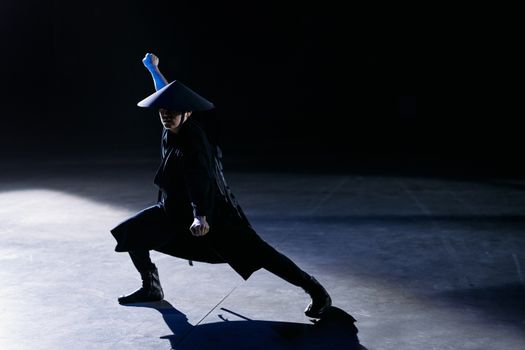
The player character is a loyal shinobi bound by an ironclad code of obedience to his lord. The shinobi playstyle is defined by agility, stealth, and the use of the prosthetic arm. In combat, Wolf relies on speed, precision, and deflection rather than heavy armor or brute force. His ability to resurrect on the spot—granted by a supernatural bloodline—makes him uniquely suited to the game's relentless difficulty.
The Samurai
The Samurai represent the traditional warrior class of Ashina. Through the Samurai Arts skill tree, Wolf can adopt the fighting styles of these warriors. The Ichimonji stance, for example, is a heavy, deliberate downward strike that deals massive Posture damage to the enemy while simultaneously lowering Wolf's own Posture. Playing as a samurai in Sekiro translates to a more methodical, spacing-heavy approach compared to the frenetic pace of the shinobi style.
The Ashina Faction
Under the leadership of Lord Genichiro Ashina, this faction is desperately trying to preserve the independence of the Ashina domain against the overwhelming military might of the Central Forces (the unifying army of Japan). The Ashina soldiers utilize a mix of traditional samurai tactics and darker, forbidden ninja arts. Genichiro himself embodies a tragic fusion of both factions, utilizing a bow, a sword, and dark lightning techniques in his pursuit of immortality to save his land.
The Senpou Temple Sect
A sinister faction of warped monks residing in the mountains. Ostensibly a Buddhist temple, the Senpou Sect has abandoned enlightenment in favor of pursuing immortality through grotesque, horrific means. They are responsible for the creation of the "Centipedes"—parasitic creatures grafted onto children to halt their aging. The enemies here attack with bizarre, unpredictable movements, forcing players to adapt their parry timings drastically.
The Ministry of Interior
An elite, shadowy government force dispatched by the ruling Tokugawa-like shogunate to crush the Ashina rebellion. Late in the game, the Ministry invades Ashina, bringing with them highly disciplined, terrifyingly effective swordsmen. Their Red Guard enemies are among the toughest non-boss encounters in the game, serving as a final test of the player's mastery over the combat system.

World Building
Sekiro boasts one of the most intricately designed worlds in modern gaming, blending historical architecture with surreal, nightmarish fantasy to create a land that feels both grounded and deeply unsettling.
The Ashina Domain
The game takes place entirely within the Ashina region, a snowy, mountainous territory isolated from the rest of Japan. The world is built around a central towering mountain. As players progress, they unlock the ability to grapple to higher elevations, fundamentally changing their perspective of the map. Locations are seamlessly interconnected; a cliff edge overlooked during the early hours of the game might become a critical fast-travel point ten hours later. Key areas include Ashina Castle (a multi-leveled feudal fortress that serves as the game's architectural centerpiece), Hirata Estate (a burning, melancholic flashback zone), and the Sunken Valley (a toxic, subterranean canyon filled with giant snakes and gun-wielding cultists).
The Dragon's Heritage
The central lore conceit of Sekiro is the Dragon's Heritage, a supernatural blessing (or curse) originating from a divine dragon residing in the fantastical realm of the Fountainhead Palace. This blood grants immortality and immense regenerative powers, but it disrupts the natural cycle of life and death. The sheer presence of this power in the mortal realm is what causes Dragonrot—a physical manifestation of the world's imbalance, rotting the populace from the inside out. Every faction in the game, from the scheming politicians of the Ministry to the mad monks of Senpou, seeks to claim the Dragon's Heritage for their own purposes.
Themes of Obedience and Humanity
While Dark Souls dealt heavily with cycles and entropy, Sekiro is a deeply personal story about the conflict between a shinobi's absolute subservience and his emerging humanity. Wolf is repeatedly referred to as a "machine" or a "tool" by his master's caretaker. The narrative questions the morality of blind loyalty, asking whether a shinobi can truly be human if his only purpose is to kill and die on command. This thematic undercurrent is reflected in the game's world, which is literally dying because people are refusing to accept the natural end of their lives.
Strategy & Tips
Sekiro is notoriously unforgiving, but it is entirely fair. The game does not rely on cheap tricks or unreadable attacks; every failure is a learning opportunity. To survive the lands of Ashina, players must completely rewire the habits they may have developed in other action games.
- Unlearn the "Souls" Instinct: The most common reason new players fail in Sekiro is that they play it like Dark Souls. Rolling away from attacks and waiting for openings to get one or two hits in will get you killed against anything stronger than a basic grunt. You must stand your ground, stay close to the enemy, and aggressively engage with their offense.
- Master the Mikiri Counter: The Mikiri Counter is a specific skill unlocked early in the game that allows Wolf to step on a thrusting attack, dealing massive Posture damage. Thrust attacks (indicated by a red Kanji symbol) cannot be sidestepped easily. If you see the red symbol, sprint directly into the attack and press the dodge button. Mastering this single technique will trivialize a massive portion of the game's humanoid enemies.
- Deflect, Do Not Block: Holding the guard button absorbs damage but causes your Posture to skyrocket. Tapping the guard button right as an enemy's weapon strikes you performs a "Deflect." This creates a shower of sparks, stops your Posture from increasing, and rapidly fills the enemy's Posture gauge. The timing window is generous once you internalize the rhythm of enemy attacks. Close your eyes and listen to the clashing of steel if the visual cues are too overwhelming.
- Use Stealth to Even the Odds: The game features a robust stealth system. Before engaging a difficult mini-boss or a group of enemies, use the grapple hook to get above them, and silently eliminate as many fodder enemies as possible. Not only does this make the actual fight easier, but it often allows you to deplete a chunk of the mini-boss's Vitality before the sword fight even begins.
- Aggressively Manage Aggro: When facing multiple enemies, do not try to fight all of them at once. Attack one aggressively to break their Posture and execute a Deathblow, then immediately run away to reset the other enemies' aggro. The game's movement speed and grappling hook make kiting enemies highly effective.
- Spend Your Sen: Because death halves your unbanked Sen and Skill Points, hoarding money is a terrible idea. Whenever you return to a Sculptor's Idol, buy as many Spirit Emblems and healing items as you can carry. If you die with your money converted into items, you lose absolutely nothing. Treat the merchant as a bank.
- Address Dragonrot, but Don't Obsess Over It: Dragonrot sounds terrifying, but it is a highly manageable mechanic. It will not lock you out of achieving the "best" ending. Use the Dragon's Blood Droplets you find on the ground to cure NPCs when their questlines require it, but do not be afraid to die and learn a boss's moveset just because you are worried about the rot spreading.
Resources
For players looking to dive deeper into the mechanics, lore, or strategies of Sekiro: Shadows Die Twice, the community has built an incredible wealth of knowledge. Because the game's tooltips are intentionally vague, consulting external resources is highly recommended for newcomers who feel lost.
Interactive Maps and Walkthroughs
- Map Genie: Offers an incredibly detailed, filterable interactive map of the entire Ashina region. Players can toggle icons for Sculptor's Idols, Prayer Beads, Gourd Seeds, Shinobi Tools, and lore texts, making 100% completion vastly easier.
- IGN Wiki / Polygon Guides: Both sites offer comprehensive, step-by-step walkthroughs for every boss and area. These are excellent resources if you are stuck on a specific puzzle or cannot find a path forward.
Community and Discussion
- r/Sekiro (Reddit): The primary hub for community discussion. It is an excellent place to find meme-worthy suffering, fan art, and specific build advice. The community is generally very helpful for players asking genuine questions about boss strategies.
- Sekiro Fextralife Wiki: The most comprehensive database for the game's raw data. If you want to know the exact Posture damage values of every Prosthetic tool, the frame data on deflections, or the exact requirements for every ending, this is the definitive source.
Video Guides and Analysis
- YouTube - FightinCowboy: Known for his calm, no-commentary or minimally-narrated walkthroughs. His boss guides are fantastic for studying an enemy's moveset without the distraction of excessive chatter.
- YouTube - VaatiVidya: For lore enthusiasts, VaatiVidya's "Prepare to Cry" series and his Sekiro lore videos break down the complex history of Ashina, the nature of the Dragon's Heritage, and the tragic backstories of the game's most prominent characters.
- YouTube - Scott Jund: If you are struggling with the fundamental mechanics, Scott Jund’s "Beginner's Guide" videos are unparalleled. He focuses entirely on the psychology of the combat system, explaining *why* the game is designed the way it is and how to mentally approach difficult encounters.