SoEasy Tile: Puzzle Match is a spatial inventory game disguised as a relaxing tile-matching puzzler. While the glossy visuals and cheering puppy mascot suggest a casual tapping experience, the core gameplay revolves entirely around managing a limited-capacity holding tray. Your primary focus should never be how fast you can find matching fruits or flowers, but rather how efficiently you can excavate overlapping layers without clogging your tray with unmatched tiles.
The Queue Management Trap
Most players approach tile-matching games as exercises in visual speed. They see a board full of shiny, glass-like objects, spot a pair of identical items, and immediately tap them. In SoEasy Tile, this instinct is actively working against you. The game is not actually about the board. It is a strict queue management system where the tray at the bottom of the screen dictates your survival.
When you tap a tile, it moves from the puzzle board into your tray. The game only clears tiles when three identical items sit in that tray simultaneously. If you fill every slot in the tray before completing a match of three, the level instantly restarts. This creates a fascinating disconnect between the game's aesthetic and its mechanics. SOFISH GAMES designed the environment to be a "moment of calm" with soft backgrounds and a cute puppy companion, but the tray mechanic introduces a hard, unforgiving bottleneck.
The biggest mistake new players make is prioritizing obvious surface pairs over structural excavation. Taking two identical tiles when the third is buried deep beneath a stack creates a dead zone in your tray. Those two tiles now occupy precious buffer space indefinitely, effectively shrinking your working memory for the rest of the sequence. You are suddenly playing the rest of the board with a handicapped capacity.
This mechanic exists to force deliberate sequencing. The developers built this loop to transition players away from the frantic, timer-based stress of older puzzle formats and into a more methodical, chess-like state of planning. You must treat the tray as a strict budget. Every uncompleted match is a debt you carry. The moment you view the game as an inventory management challenge rather than a simple matching exercise, the early levels transform from lucky tapping sessions into calculated clearings.
Strategic Bottlenecks and Booster Economy
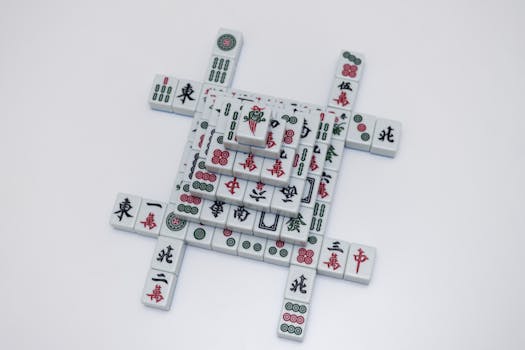
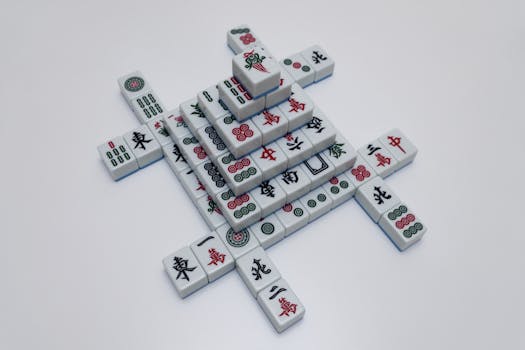
Understanding the overlapping geometry of the puzzle board is the only way to scale into the harder stages. Tiles in SoEasy Tile are not laid out flat; they are stacked in three-dimensional configurations. You can only interact with tiles that have no other tiles resting on top of them. This creates a severe asymmetry in how you should value different moves.
A tall stack of tiles is infinitely more dangerous than a wide spread of single, unblocked tiles. A single tile on the edge of the board can be picked up at any time. It hides no information and blocks no other pieces. A tall stack, however, obscures the board state. Therefore, clearing a match that peels a layer off a central, towering stack is worth far more than clearing a match from the flat edges. The flat edges should be treated as your emergency reserve. Leave them entirely alone until you absolutely need them to finish a sequence pulled from the center mass.
This brings us to the game’s booster economy, specifically the Undo and Magic Wand tools. Most players treat the Undo button as a simple correction tool for accidental taps. In tray-based puzzlers, an Undo button is actually a highly tactical scouting mechanism. Because you cannot see what is fully obscured beneath a top tile, you can occasionally tap a piece to move it to the tray, reveal the tile underneath, and then immediately hit Undo if the revealed tile doesn't help your current sequence. You trade a booster for perfect information.
The Magic Wand requires a different calculus. These types of heavy-impact boosters are designed to bail you out of mathematically impossible tray states. The optimal time to use a Magic Wand is never when you are merely frustrated, but specifically when your tray is one slot away from total failure and the required third tile is visibly blocked by multiple layers. Using it too early wastes its potential to clear a terminal bottleneck; using it too late means you restart the level.
The Asymmetry of Board Clearing
When you return to the game after a break, or when you are deciding where to invest your time on a complex board, you need a repeatable decision framework. Do not look for matches first. Look for the structural linchpins.
Scan the board for the tiles that are physically blocking the highest number of other tiles. These are your primary targets. If a shiny glass apple is sitting on top of four other overlapping tiles, removing that apple is your highest priority. Your next step is to scan the board for the other two apples needed to clear it. If those two apples are also accessible, you execute the move. If they are buried, you must calculate whether your tray has enough empty slots to hold the blocking tiles required to reach them.
This calculation is the true gameplay loop of SoEasy Tile. You are constantly weighing the cost of moving unwanted tiles into your tray against the reward of freeing a critical buried piece. If freeing a necessary flower requires moving three unrelated objects into your tray, and your tray only has two empty slots left, the move is fatal.
This dynamic highlights why the game has sustained a player base of over 10,000 downloads despite a crowded market. It rewards spatial reasoning and punishes impulsivity. The polished finish of the everyday objects and the calming atmosphere serve to lower your guard, making the sudden tray-fill restarts feel like a personal miscalculation rather than an unfair difficulty spike. To master the game, you must invert your natural habits. Stop looking at what is available, and start calculating the exact cost of what is hidden.
The One Habit to Break
Stop tapping the first available pair you see on the board. Leaving a single, easily accessible tile untouched is the most powerful strategic choice you can make, as it preserves your tray capacity for the deep excavations required to beat the hardest layouts.