Superstar Baseball codes (March Beginner's Guide - Tips & Tricks
5-Minute Primer
Superstar Baseball on Roblox drops you into the cleats of an aspiring professional baseball player, but the path to the majors is paved with fierce competition, complex stats, and a demanding economy. Before you swing at your first pitch, you need to understand the fundamental loop of the game: you practice to earn skill points, you play matches to earn currency, and you spend that currency to upgrade your gear and aesthetic flair.
The absolute most important thing to know right now is how to get free rewards. Roblox sports games are notorious for their heavy grind, and Superstar Baseball is no exception. This is where Superstar Baseball codes (March) come into play. Developers release these promotional strings of text monthly to keep the player base engaged, and March typically brings a fresh wave of codes tied to spring training, the start of the real-world baseball season, and game update milestones. Using these codes instantly grants you free boosts, cash, and occasionally exclusive cosmetic items, giving you a massive early advantage over players who ignore them.
Beyond redeeming codes, your secondary goal is to understand your hitting and pitching meters. This is not a casual button-mashing game; it is a timing-based simulation. If you try to play it like an arcade game, you will strike out endlessly and frustrate your teammates. Pace yourself, watch the ball, and learn the zones before you try to hit home runs.
First Hour Checklist
Your first sixty minutes in Superstar Baseball dictate your trajectory for the next several weeks. Follow this checklist in exact order to maximize your efficiency and avoid wasting time on mechanics that won't matter until later.
- Redeem All March Codes: Before you even step onto the diamond, pause the game, navigate to the codes menu (usually represented by a gear icon or a Twitter bird on the side of your screen), and input every active Superstar Baseball code for March. Write down the rewards you get so you know what you have to spend.
- Complete the Tutorial Batting Practice: Do not skip this. The tutorial teaches you the basic timing windows for different pitch types. Pay attention to the visual cues of the ball leaving the pitcher's hand.
- Allocate Initial Skill Points: You will likely start with a few base skill points. For your first hour, put all of them into Contact or Accuracy (depending on if you are building a hitter or pitcher first). Do not put points into Power yet; making consistent contact is far more valuable for earning XP than hitting occasional home runs.
- Play Your First Casual Match: Jump into a casual or quickplay mode. Do not worry about your win/loss record. Your only goal here is to calibrate your internal rhythm to the game's server tick rate. Notice how long it takes for your swing to register after you press the button.
- Spend Starter Cash on a Basic Bat: Take the cash you earned from the match (and the cash from your March codes) and buy the cheapest bat available that offers a slight boost to Contact. Do not save for an expensive bat right now; a small stat boost used immediately is better than a large stat boost hoarded for hours.
- Check the Daily Login Reward: Make it a habit to click the daily reward button before leaving the game. Consistency here compounds over time.
Key Systems Explained
The Combat System: Pitching and Batting
Despite being a sports game, the mechanical interactions in Superstar Baseball function much like an RPG combat system. There are distinct "classes" of actions, damage numbers (exit velocity), and defensive maneuvers.
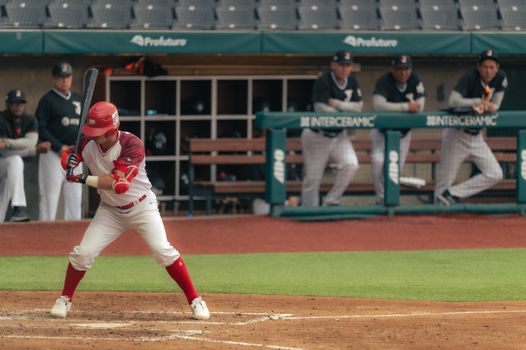
Batting: When you step up to the plate, you will see a strike zone overlay. Pitchers can throw fastballs, curveballs, sliders, and changeups. Each has a distinct visual cue as it leaves the hand. A fastball has minimal arc, while a curveball will have a sharp, late drop. To hit effectively, you must hold your swing until the ball enters the "green" zone of your timing meter. Swinging early causes a pop-up; swinging late results in a weak groundout. You can also aim your hit by moving your cursor or left stick while swinging, pulling the ball or hitting it to the opposite field depending on pitch location.
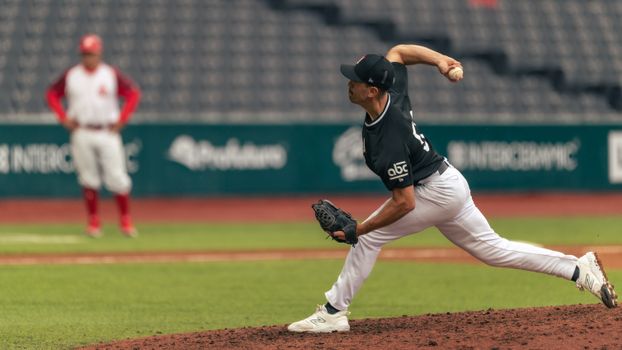
Pitching: Pitching is an active minigame, not an automated stat check. You select your pitch type, aim your reticle, and execute a timing meter. A perfect release on the meter results in maximum speed and sharp break. A slightly early or late release results in a "hanging" pitch—a slower, flat pitch that batters will crush. Good pitchers in this game bait batters into swinging at bad pitches by intentionally throwing balls, then exploiting their impatience with a perfectly timed strike in the dirt.
The Economy
Superstar Baseball features a dual-currency economy that can be incredibly confusing for beginners.
- Cash: This is the standard, farmable currency. You earn it by getting hits, making defensive plays, winning games, and completing daily tasks. Cash is used to buy standard equipment upgrades, basic cosmetics, and entering certain game modes.
- Premium Currency (Coins/Gems): This is the hard currency, typically obtained through Robux purchases, high-tier competitive rewards, or very rarely through specific Superstar Baseball codes. March codes occasionally include a small trickle of this currency, but it is primarily meant for high-end cosmetics or skipping parts of the grind.
The golden rule of the economy is to never spend Cash on cosmetics in your first week. Every single piece of Cash should be funneled into upgrading your batting gloves, bats, and cleats. Cosmetics are a trap for new players who want to look cool but end up hitting like a little leaguer.
Progression
Progression is tied to a combination of Player Level and Skill Points. You gain Player Level XP simply by participating in games, regardless of whether you win or lose. However, the amount of XP scales massively based on your performance. Striking out looking yields minimal XP; hitting a grand slam yields a massive XP burst. Skill Points are specific currencies earned by completing "Milestone" challenges (e.g., "Get 10 hits," "Strike out 5 batters"). These points are spent in a skill tree to permanently boost your character's base stats.
Build / Character Choices
Unlike traditional RPGs, you are not permanently locked into a single class in Superstar Baseball, but specializing early is highly recommended. Trying to be a "Jack of all trades" will result in you being a master of none, and you will be outclassed by specialists in competitive matchmaking. Here are the two primary builds you should choose between for your first character.
The Contact Specialist (Hitter Build)
This is the recommended build for 90% of beginners. The goal of this build is to put the ball in play as consistently as possible, relying on the opposing team making fielding errors to get on base.
- Priority Stats: Max out Contact first. Follow up with Speed (to beat out infield grounders and steal bases). Ignore Power entirely until Contact and Speed are at 80% of their cap.
- Gear Focus: Equip bats that offer Contact and Vision buffs. Wear cleats that boost base-running speed. Use batting gloves that increase your timing window slightly.
- Playstyle: Your job is to get on base. Do not swing at pitches outside the strike zone. Take walks if the pitcher is wild. Once on base, be a nuisance—steal bases and force throws. You will score runs simply by being present when the power hitters behind you do their jobs.
The Control Artist (Pitcher Build)
This build is slightly harder to master because it requires precise execution of the pitching meter, but it is incredibly rewarding because a single elite pitcher can completely shut down an opposing team.
- Priority Stats: Max out Accuracy and Stamina first. Pitch speed (Velocity) is a trap for beginners; throwing 100 MPH is useless if the ball sails over the batter's head because your Accuracy is low. Control beats velocity at almost every level of this game.
- Gear Focus: Equip gloves and cleats that boost Stamina regeneration and Accuracy. You want to stay on the mound as long as possible without your meter shrinking (which happens as your pitcher tires).
- Playstyle: Pitch to the corners of the strike zone. Rely on your changeup to upset the batter's timing. Never throw a fastball down the middle of the plate unless you are way ahead in the count. Your goal is to induce weak groundouts and pop-ups, not necessarily to strike everyone out.
Pitfalls to Dodge
The learning curve in Superstar Baseball is largely about unlearning bad habits. Here are the most common rookie errors that will stall your progress and drain your resources.
1. Swinging at Everything
Baseball is a game of failure, and the best hitters in the world fail 70% of the time. Beginners panic when they have two strikes on them and swing at pitches that are bouncing in the dirt. Practice patience. If a pitch is outside the strike zone box, do not swing. Taking a called strike three is frustrating, but chasing a bad pitch and popping out is worse. You must learn to trust your eye over your reflexes.
2. Hoarding March Codes for "Later"
Some players will find a list of Superstar Baseball codes for March, input them, see a massive pile of Cash and Boosts, and decide to "save" them in their inventory for when they reach a higher level. This is a massive mistake. The game's difficulty scales with your level; the pitchers you face at Level 20 are significantly harder to hit than the pitchers at Level 5. Using a 30-minute "2x Hitting XP" boost when you are Level 5 is highly efficient because you can easily rack up hits against weaker pitchers. Saving that same boost for Level 20 means you might struggle to get any hits at all, wasting the duration of the boost. Use rewards immediately to snowball your early progression.
3. Ignoring the Minimap and Base Runners
When you are batting, the game does not pause when you get a hit. Many new players hit the ball and immediately stop paying attention, assuming the AI will handle the base running. This leads to embarrassing outs where you get thrown out at second base on a single to left field. Always watch your base runner. If the outfielder bobbles the ball, or if their throw is going to a cutoff man, take the extra base. Conversely, if the outfielder fields it cleanly and fires a laser to home plate, hold up at third. Micro-managing your base running is what separates average players from great ones.
4. Overvaluing "Power" Stats
Everyone wants to hit home runs. It is the most exciting part of baseball. Because of this, new players dump all their skill points into Power. The reality is that Power is a useless stat if you cannot make contact with the ball. A player with 99 Power and 10 Contact will strike out 95% of the time. A player with 10 Power and 99 Contact will hit a line drive single almost every at-bat. Line drive singles win games. Build Contact first; Power can be added later once you are consistently making solid contact.
5. Playing Ranked Too Early
Competitive Ranked modes unlock early, but you should avoid them until you have a firm grasp of the timing meters and have invested at least 15-20 hours into casual play. Ranked play pairs you against optimized builds and highly experienced players. Entering ranked as a beginner will result in a miserable losing streak, which will drop your hidden matchmaking rating (MMR) into a "loser's queue," making it even harder to find balanced games later on. Stick to casuals, practice your timing, and only enter Ranked when you feel confident you can hit consistently against average pitching.
6. Buying Expensive Gear Without Reading the Fine Print
The in-game store features flashy, expensive bats and gloves that look incredible. However, high price does not always mean high stats. Some expensive items are purely cosmetic. Others might offer a massive +15 to Power but a hidden -10 to Contact. Always read the full stat breakdown of an item before purchasing it. A cheap, bland-looking bat with +5 Contact is infinitely better for a beginner than a $50,000 neon glowing bat with -5 Contact and +15 Power.
Next Steps
Once you have burned through your Superstar Baseball codes for March, established your build, and survived your first few dozen casual matches, the true depth of the game begins to open up. Your immediate next step is to join a Club or Team. The solo queue experience in Roblox sports games can be incredibly toxic and frustrating due to random teammates making errors. Joining an active club allows you to queue into matches with a coordinated group, guaranteeing that your teammates understand basic baseball fundamentals like covering bases and executing double plays.
After securing a team, turn your attention to the "Missions" or "Contracts" board. These are time-limited challenges that refresh daily or weekly. They are the most efficient source of Skill Points in the entire game. A common beginner mistake is to ignore these boards and just play match after match, gaining XP at a snail's pace. By focusing your gameplay on completing specific contract objectives—such as "Steal 3 bases in a single game" or "Pitch 5 scoreless innings"—you maximize your hourly progression rate.
Finally, keep your eyes peeled for the end-of-month code drops. The Superstar Baseball codes released in March are usually tied to the spring update, but developers frequently drop surprise codes over weekends or when the game hits a concurrent player milestone. Make it a habit to check the official community channels before you start your gaming session. Even if the March codes have already expired by the time you read this, the core philosophy remains unchanged: never leave free resources on the table, always prioritize consistency over flashy plays, and remember that in the grind to become a superstar, patience is your most powerful weapon.