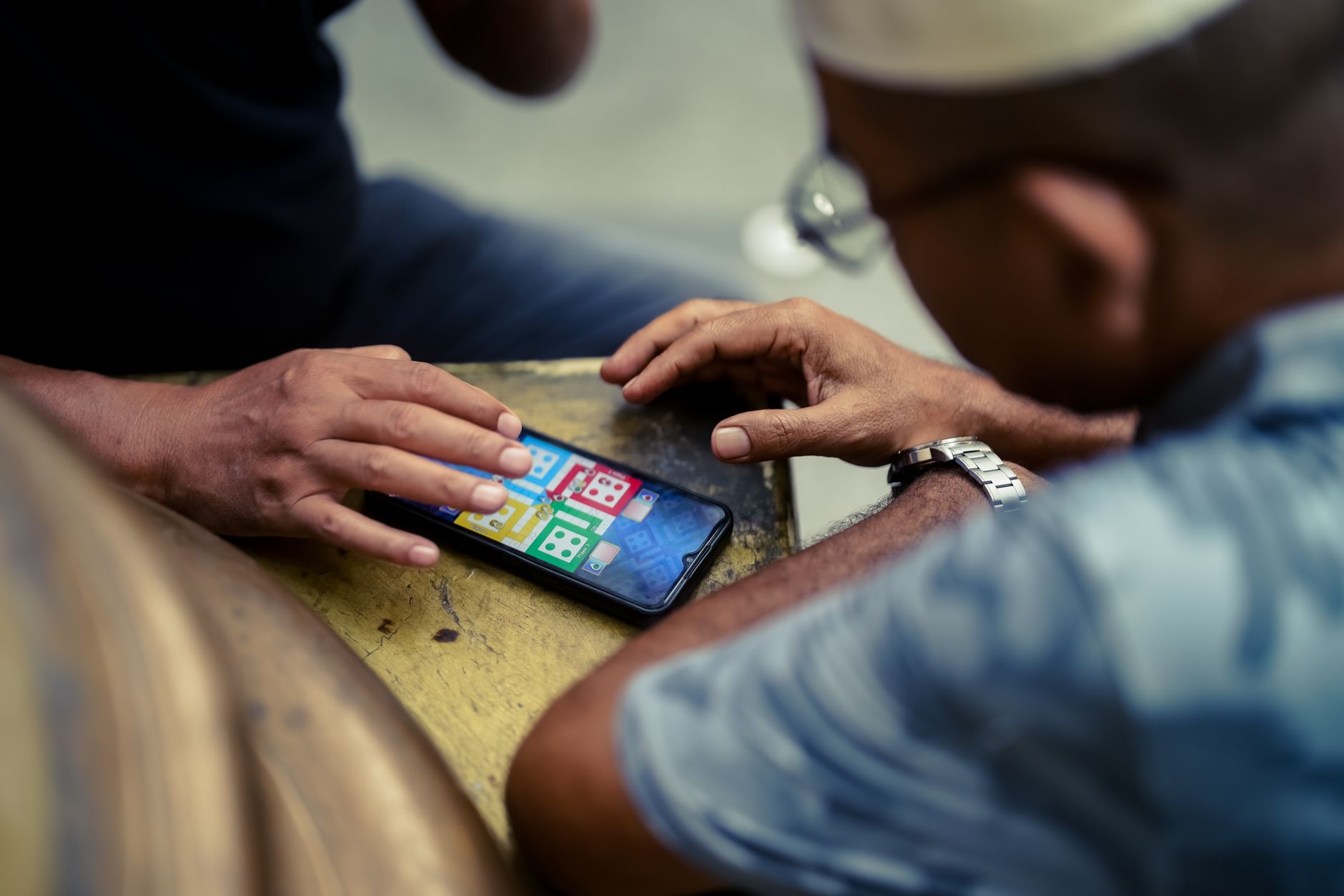
Stop scrolling the top charts. The definitive multiplayer experiences on Android right now are defined by two strict metrics: match length predictability and monetization fairness. If you have five minutes, asynchronous strategy games and auto-battlers rule because they remove network latency from the equation. If you have thirty minutes and a charger, tactical shooters and MOBAs offer mechanical depth rivaling their PC counterparts. Your primary decision isn't picking a genre; it is deciding exactly how much battery life, undivided attention, and hardware wear you are willing to trade for rank.
The Myth of the Casual Mobile Ecosystem
Let's kill the oldest assumption in gaming right now. The consensus dictates that touchscreens are for casuals, and "real" competitive multiplayer belongs on a desk with a mouse. That is entirely backward. The most ruthless, mechanically demanding competitive ecosystems in the world currently operate on six-inch glass screens. Mobile does not dilute the competitive gameplay loop. It accelerates it.
When you evaluate a multiplayer game on Android, you are essentially running a cost-benefit calculation on your own time and hardware. The Google Play Store is a broken discovery engine, heavily weighted toward games with aggressive user acquisition budgets rather than sustainable, balanced gameplay loops. You need a strict filter. The games that actually earn the "unrivalled" title share one absolute commonality: they completely decouple player power from the credit card.
Consider the massive hidden variable in Android multiplayer: the input divide. You might think you are losing gunfights or lane matchups because of slow reflexes. More often, you are losing because the game seamlessly matchmakes native touchscreen users against players using Bluetooth controllers or, worse, Android emulators on PC. If a game does not explicitly segment its matchmaking pools by input device, your ranked climb will eventually hit a mathematical ceiling.
This reality changes how you should choose your primary game. If you refuse to carry a controller clip in your bag, you must select games where positioning, team synergy, and game sense matter far more than raw APM (actions per minute). Auto-battlers and tactical card games heavily favor the native touch experience, making the playing field perfectly level. Conversely, if you want to play a fast-paced hero shooter or a battle royale, you are actively accepting a hardware arms race. You gain the adrenaline of high-stakes gunfights, but you lose the ability to play competitively on a crowded train. The physical environment dictates your digital outcome.

Core Gameplay Loops That Actually Respect Your Time
The defining metric of a premier Android multiplayer game is not graphical fidelity or brand recognition. It is match length predictability. On a home console, a match running fifteen minutes long is a minor annoyance. On a phone, it means your battery dies, your device overheats, or you miss your transit stop.
Top-tier MOBAs and tactical shooters on Android have aggressively optimized their internal economies to force rapid conclusions. Passive gold generation is higher, map sizes are condensed, and time-to-kill (TTK) is frequently adjusted to prevent twenty-minute stalemates. But this creates a very specific trade-off. You gain shorter, punchier sessions, but you lose the slow-burn strategic recovery phases found in traditional PC gaming. Mistakes on mobile are punished much faster. A single wiped team fight at the six-minute mark often ends the game outright.
For new or returning players, your first focus must be mastering the game's specific catch-up mechanics. Do not obsess over the meta tier list on day one. Meta characters shift with every single balance patch. Instead, learn how the game handles respawn timers, comeback gold, or ultimate ability generation when your team is losing. Understanding the underlying math of a comeback is infinitely more valuable than memorizing a specific weapon recoil pattern.
Then there is the monetization bottleneck. The industry standard has shifted heavily toward Battle Passes, but the implementation varies wildly. A cosmetic-only Battle Pass is a safe, predictable time investment. However, if a game locks new characters, loadout weapons, or statistical upgrades behind a premium track, you are playing a mathematically rigged system. You must audit the game's progression loop before you invest your first twenty hours. If a free-to-play player cannot unlock the exact same mechanical tools as a paying player within a reasonable timeframe, the game is not competitive. It is simply a storefront masquerading as a sport.

The Hidden Bottlenecks: Ping, Thermal Throttling, and Tick Rates
You cannot talk about Android multiplayer without addressing physics. The actual enemy of a smooth competitive experience is rarely the game's code. It is thermal throttling and cellular packet loss.
When you run a 3D multiplayer game at high framerates on a passively cooled glass slab, heat builds up fast. After about fifteen minutes of sustained play, most Android devices will automatically downclock the processor to prevent permanent hardware damage. This results in sudden, catastrophic frame drops right in the middle of a crucial match. The trade-off is stark: if you choose maximum graphical settings, you gain visual clarity but sacrifice late-game performance stability. Competitive players always drop their graphics to the lowest possible setting while maximizing the framerate cap. Consistency matters far more than shadows.
Network infrastructure is the second hidden variable. Mobile games frequently use aggressive lag compensation algorithms to mask the reality of players connecting via unstable 4G or 5G networks. This creates "peeker's advantage," where the player moving around a corner sees a stationary player fractions of a second before the stationary player's screen updates. If you are holding a defensive angle on a cellular connection, you are at a mathematical disadvantage.
To mitigate this, you have to change your playstyle based entirely on your connection type. If you are on stable Wi-Fi with low ping, you can hold angles and play reactively. If you are playing on cellular data while commuting, you must play aggressively. You have to be the one swinging corners to force the server to update your position first. Understanding this network asymmetry separates average players from the top ranks. You are not just playing the opponent; you are playing the server's tick rate. Furthermore, playing heavy 3D games while your phone is plugged into a charger compounds the heat issue, rapidly degrading your battery's maximum capacity over time.

Conclusion
Stop treating mobile multiplayer as a secondary, throwaway gaming experience and start treating it as a distinct format with its own physical and technical rules. Before you commit to a massive download, check the matchmaking input rules and test how hot your phone gets after twenty minutes of play. If the game respects your battery, guarantees its match lengths, and keeps its monetization strictly cosmetic, it is worth the grind. Otherwise, uninstall it immediately and move on.