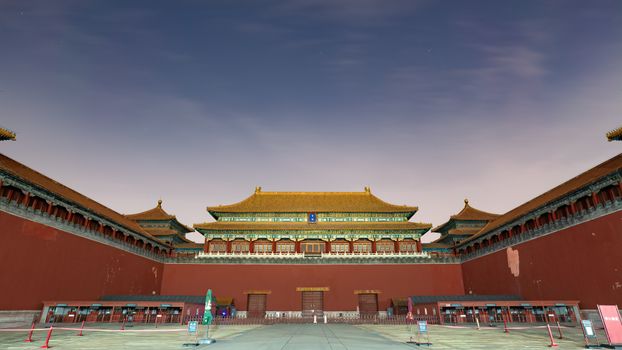
Where Winds Meet is celebrating six months since launch with a second major expansion, Imperial Palace, alongside a homesteading system, new gauntlet weapon, five-player PvE, companion mechanics, and tomb exploration—making this the definitive moment to either start fresh or return. The expansion shifts focus from the frontier openness of Hexi to claustrophobic court intrigue, trading geographic scale for narrative density with over 3,000 NPCs populating the palace complex.
What the Game Actually Is (And Why the Half-Year Mark Matters)
Where Winds Meet is NetEase and Everstone Studios' open-world wuxia action RPG, built around high-flying martial arts combat, factional politics, and historical Chinese settings. The half-anniversary timing matters more than typical live-service milestones because the game launched with a specific structural bet: front-load the frontier wanderer fantasy, then pivot inward to institutional power. Hexi established the "who are you in the wilderness" question. Imperial Palace answers "who do you become when the wilderness ends."
The core loop splits three ways. Combat uses a weapon-swap system with distinct martial arts styles—swords, spears, now gauntlets—where timing and stance management matter more than raw stats. Exploration rewards vertical movement; rooftops and cliff faces hold secrets that flat ground doesn't. Social systems embed you in faction hierarchies where NPC relationships unlock questlines, gear, and territorial control.
Here's what the marketing doesn't emphasize: the game gates its best content behind reputation grinds that look optional but aren't. You can mainline the story, but the faction systems, companion recruitment, and homesteading all require sustained investment in specific NPC networks. The half-anniversary additions don't reset this—they deepen it. The companion system arriving now means players who ignored relationships for sixty hours face a steeper catch-up curve than newcomers who build them organically.
The Imperial Palace expansion specifically trades on information asymmetry. Court intrigue mechanics mean NPCs remember slights, spread rumors, and block access based on hidden disposition scores. This isn't Skyrim's "arrow to the knee" repetition—it's a networked system where offending one royal cousin might lock a questline three expansions later. New players should understand: your first forty hours of faction choices become permanent architecture, not reversible decisions.

Where to Focus First (And What to Ignore)
New players face a classic overload problem. The game now contains two major expansions, multiple endgame systems, and seasonal content layered atop launch features. The wrong opening sequence wastes twenty hours on deprecated power curves.
Start here instead:
| Priority | System | Why It Matters Now | Trap to Avoid |
|---|---|---|---|
| 1 | Weapon mastery (one melee, one ranged) | Gauntlets arriving now means the meta is unsettled; early adopters shape community knowledge | Spreading points across three+ weapons—specialization beats flexibility until endgame |
| 2 | Qinghe homesteading | Unlocks farming, crafting shortcuts, and companion housing; half-anniversary rewards boost early progression | Treating it as cosmetic—resource generation compounds daily |
| 3 | Single faction reputation to "Respected" | Gates companion recruitment and palace access; the grind is front-loaded but pays exponentially | Bouncing between factions for "variety"—the game punishes dilution |
| 4 | Tomb exploration mode | New to this update, offers gear that skips intermediate grind tiers | Attempting before weapon mastery—difficulty spikes assume competent combat |
Returning players have a different calculus. If you left during Hexi, your gear is likely under the new power floor. Don't chase catch-up through old content. The half-anniversary event structure (implied by the timing, though specific reward tiers aren't detailed in available sources) typically offers accelerated progression for lapsed accounts. Prioritize whatever limited-time boost is active over "finishing" Hexi first.
The companion system deserves specific attention because it's the most misunderstood addition. Companions aren't combat pets—they're quest givers, crafting accelerants, and social keys rolled together. Each has hidden preferences (weapon types, faction alignment, homestead decorations) that unlock deeper functionality. The trap: recruiting widely instead of deeply. Three companions at acquaintance level provide less utility than one at confidant.
The Real Trade-Offs No One Explains
Where Winds Meet hides its most consequential decision behind an appealing fiction: you can "play your way." The systems suggest freedom. The math punishes it.
The specialization asymmetry: Weapon mastery curves are steep but single-peaked. A player with one weapon at maximum proficiency deals roughly comparable damage to a dual-specialist, but with cleaner resource management and access to weapon-specific questlines. The hidden cost of diversification isn't lower damage—it's missed content. Gauntlets entering the pool now make this acute. They're likely balanced for players who commit, not dabble.
The time-zone bottleneck: Global server expansion sounds universally good. In practice, Where Winds Meet's faction warfare and territorial control systems reward coordinated group play at specific windows. More servers mean thinner populations per shard. If you're in a non-peak timezone for your server's physical location, you may find the social systems—the game's claimed differentiator—functionally inaccessible. The optimization promises don't address this; they may worsen it by fragmenting communities further.
The homesteading compulsion loop: Farming and housing systems generate passive resources. They also create daily login obligations that stack with faction dailies, companion check-ins, and event timers. The half-anniversary additions increase total daily maintenance time without removing older obligations. This is classic live-service debt accumulation. New players feel it less because everything is fresh. Returning players hit it immediately: the game expects more of your calendar than it did six months ago.
The palace intrigue information gap: Over 3,000 NPCs sounds immersive. It also means quest triggers, disposition changes, and faction shifts occur in ways no wiki can fully track. The game leverages this—some outcomes are genuinely emergent. But it also means players who optimize for "best" outcomes through guides will find incomplete information, while players who engage organically risk locking themselves out of preferred content through irreversible early choices.

What You Should Do Differently
If you're starting now, pick one weapon, one faction, and one companion target before you finish the tutorial zone. Write them down. The game's systems will tempt you toward breadth at every turn—new weapons look cool, faction representatives make compelling cases, companions seem interchangeable. They're not. The players who thrive in Imperial Palace will be those who built concentrated social capital in the base game, not scattered goodwill.
If you're returning, don't nostalgia-play through old content. Check what half-anniversary catch-up mechanics are active, use them to reach the new power floor, and engage Imperial Palace fresh. The court intrigue systems reward attentive observation more than accumulated gear; being current matters less than being present.
The real measure of this expansion isn't whether the palace looks accurate—it's whether NetEase can make 3,000 NPCs feel like distinct agents rather than decorative noise. Early signs suggest they're betting on density over clarity. Your job as a player is to build selective focus within that density, not to experience it all.