Demon's Souls PS5 - Latest News & Updates
Headline Summary
The remake of Demon's Souls for the PlayStation 5 stands as a foundational pillar in the current console generation, serving as both a breathtaking technical showcase and a faithful restoration of the 2009 title that birthed the Soulslike genre. Developed by Bluepoint Games in collaboration with Japan Studio, the title was a PS5 launch exclusive that set a new benchmark for visual fidelity, haptic feedback integration, and atmospheric world-building. As the PS5 enters the middle phase of its lifecycle, Demon's Souls remains a critical talking point—not just for what it achieved at launch, but for what it represents regarding Sony's approach to first-party development, the preservation of classic gaming IP, and the ongoing evolution of the action-RPG genre.

Background
To understand the significance of the Demon's Souls PS5 remake, one must look back to the console generation that preceded it. In 2009, FromSoftware released the original Demon's Souls on the PlayStation 3. Directed by Hidetaka Miyazaki, the game was a commercial risk—a punishingly difficult, opaque action-RPG that actively resisted the hand-holding and linear progression that had come to define the mainstream gaming landscape.
Despite a lukewarm initial reception in its native Japan, the game developed a passionate cult following in the West, largely driven by word-of-mouth on early internet forums. It introduced mechanics that would become industry staples: the oppressive, rewarding difficulty loop, the "Souls" currency system where death meant losing your progress, the asynchronous multiplayer systems of bloodstains and player messages, and a deeply embedded, environmental storytelling technique.
The original game was not without its flaws. The PS3 hardware struggled to render its ambitious, desolate worlds, resulting in severe framerate drops, muddy textures, and notoriously long load times masked by a static loading screen featuring a heavy item tooltip. When FromSoftware moved on to create Dark Souls—and subsequently Bloodborne, Sekiro, and Elden Ring—Demon's Souls was largely left behind. It remained trapped on aging hardware, leading to a growing chorus of fans begging for a remaster or remake.
Sony Interactive Entertainment, holding the publishing rights to the original title, eventually answered the call. They tasked Bluepoint Games—a studio renowned for its meticulous, high-definition remasters of titles like Shadow of the Colossus and Uncharted: The Nathan Drake Collection—with the monumental task of rebuilding Boletaria from the ground up. It was a promotion for Bluepoint, shifting them from remasters to a full-fledged, ground-up remake, signaling a massive leap of faith from Sony in the studio's capabilities.
Key Details
The Demon's Souls PS5 remake launched alongside the PlayStation 5 in November 2020. It was positioned as a premium launch title, designed to immediately justify the consumer investment in next-generation hardware. The development team utilized a heavily modified version of Unreal Engine 4 to craft an experience that was visually unrecognizable compared to its PS3 predecessor, while maintaining the exacting geometric level design and mechanical balance of the original game.
Visual and Technical Fidelity
- Ray Tracing Integration: The game featured dynamic, real-time ray-traced lighting and reflections. The reflective marble floors of the Shrine of Storms and the glistening, blood-soaked stones of the Tower of Latria reacted realistically to in-game light sources, adding an unprecedented layer of atmosphere to the dark fantasy world.
- Framerate Options: Bluepoint offered players a choice between a "Cinematic Mode" locked at 30 frames per second with native 4K resolution and full ray tracing, and a "Performance Mode" targeting 60 frames per second at a dynamic 4K resolution with reduced ray tracing. This dual-mode approach became a standard for PS5 releases.
- Character Models and Animations: Every character, enemy, and boss was completely remodeled. The iconic Fluted Armor set became a viral sensation prior to launch due to its hyper-realistic metallic sheen. Enemy animations were recreated via motion capture to retain the menacing, deliberate weight of the original while smoothing out the stiffness of the PS3 era.
DualSense and Haptic Innovations
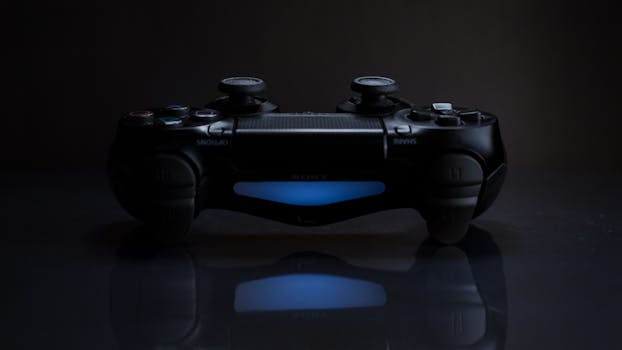
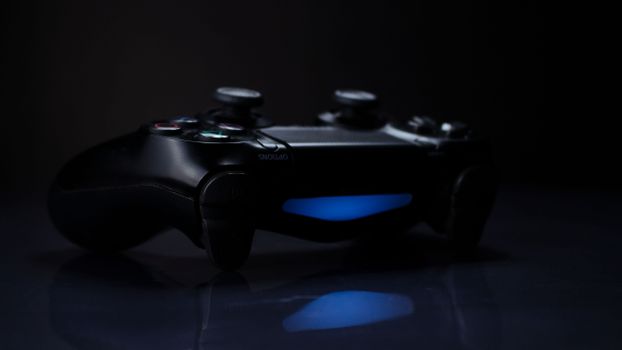
One of the most celebrated aspects of the remake was its implementation of the PS5’s DualSense controller. Bluepoint treated the controller as a core storytelling and gameplay device.
- Haptic Feedback: The adaptive triggers provided contextual resistance when drawing back a bowstring or blocking with a heavy shield. The haptic motors simulated the sensation of walking through mud, the subtle vibrations of a spell channeling through a character’s hands, and the heavy, guttural impact of a boss's footsteps.
- Tempest 3D AudioTech: The spatial audio was transformative. In the Tower of Latria—a level infamous for its blind, mind-flayer enemies—players could accurately pinpoint the direction of metallic squeaks and wails through standard headphones, turning sound into a vital survival tool.
Gameplay Tweaks and Quality of Life
Bluepoint walked a tightrope between modernization and preservation. They notably resisted the urge to add a traditional "Easy Mode." However, they did introduce subtle quality-of-life improvements:
- The notorious "Item Burden" mechanic was retained, but the grid system was slightly streamlined to be less punishing.
- The archaic inventory management was updated with a more intuitive, modern user interface.
- Frictionless load times replaced the agonizing 20-to-40-second waits of the original, fundamentally altering the pacing of death runs. Players could return to the fray in mere seconds.
The Firekeeper and New Secrets
In a departure from strict fidelity, Bluepoint added a mysterious, hidden NPC known as the Firekeeper, found behind an illusory wall in the Nexus. This character offered cryptic dialogue and hinted at a secret "Fractured World" mode—a feature that mirrors the world tendency mechanics of the original game but allows players to toggle the world state manually. Furthermore, a hidden puzzle involving the Rejuvenation spell and a specific candle in the Nexus resulted in a dramatic visual overhaul of the game's hub area, sparking massive community speculation and a viral ARG (Alternate Reality Game) hunt that took weeks to fully solve.
Industry Impact
The release of Demon's Souls PS5 sent ripples throughout the gaming industry, validating several emerging trends while simultaneously raising the bar for what constitutes a "remake."
Firstly, it fundamentally altered the economics and perception of remakes in the AAA space. Prior to this, remakes were often viewed as stopgap releases—ways to generate revenue during long development cycles. Bluepoint’s work elevated the remake to an art form, proving that a classic game, when treated with immense reverence and cutting-edge technology, could stand shoulder-to-shoulder with entirely new IPs. This success directly paved the way for other monumental remakes, such as Capcom's Resident Evil 4, reinforcing the idea that older games possess immense latent value if given the right resources.
Secondly, the game served as the ultimate litmus test for the PlayStation 5's hardware philosophy. While launch titles like Astro's Playroom showcased the DualSense in a playful manner, Demon's Souls proved that haptic feedback and 3D audio could be deeply integrated into a gritty, hardcore gaming experience. It forced rival hardware manufacturers and third-party developers to take the DualSense seriously, effectively killing the argument that haptic features were mere gimmicks.
Thirdly, the game’s existence highlighted a fascinating shift in Sony’s corporate strategy. Historically, Sony relied heavily on studios like Naughty Dog, Santa Monica Studio, and Insomniac Games for massive, cinematic blockbusters. By handing the reins of a prestigious, genre-defining launch title to a studio known exclusively for remastering other people's work, Sony signaled a new willingness to trust specialized developers with flagship IP. This move ultimately culminated in Bluepoint's acquisition by Sony in 2021, a deal valued at an estimated $400 million, proving that the Demon's Souls gamble was a resounding financial and strategic victory.
Finally, it underscored the incredible evolution of the Soulslike genre itself. The original Demon's Souls was a niche, janky masterpiece. The remake arrived in a world where Elden Ring had yet to be released, but the DNA of FromSoftware was already dominating the industry. By remaking the genesis point of the genre, Sony and Bluepoint provided a stark contrast to modern action-RPGs, reminding the industry of the raw, uncompromised vision that started it all.

Player Reaction
The community response to Demon's Souls PS5 was intensely passionate, though not without its share of controversy. The discourse largely fractured into two distinct camps: purists and modernists.
For the modernists and the vast majority of new players experiencing Boletaria for the first time, the reaction was overwhelmingly positive. The game was praised as a visual masterpiece, with many critics and players declaring it the best-looking game on the PS5 at the time of launch. The DualSense integration was universally lauded, with many stating they could not imagine playing the game without the haptic feedback. The elimination of load times alone was enough to convince many veteran players that the remake was superior to the original, as it removed a layer of artificial punishment that had aged poorly.
The purists, however, raised legitimate and nuanced critiques. A vocal subset of the FromSoftware fanbase argued that Bluepoint’s hyper-realistic art direction fundamentally misunderstood the tone of the original game. The PS3 version of Demon's Souls utilized a heavily muted, brown-and-grey color palette that felt uniquely oppressive and melancholic. The PS5 remake, with its vibrant HDR lighting, colorful particle effects, and highly detailed facial textures, was criticized by some as feeling too "clean" or "Hollywoodized." Purists pointed to specific boss designs—such as the Armor Spider and the adjudicator—as losing their uncanny, unsettling qualities in the transition to high fidelity. Some fans even created PC mods for the RPCS3 emulator to inject the PS5 textures into the original game, attempting to merge Bluepoint's art with the original’s lighting engine.
Another major point of contention revolved around the voice acting and sound design. While the performances were technically proficient, several iconic lines from the original—delivered with a distinct, almost surreal cadence—were re-recorded to sound more grounded and naturalistic. For players who had spent thousands of hours in the original Boletaria, these changes felt like a loss of the game's bizarre, alien charm. The removal of the classic "So, you've returned" voice line from the Maiden in Black upon loading a saved game became a particular lightning rod for fan criticism.
Despite these artistic debates, the underlying gameplay loop remained untouched and universally celebrated. The community embraced the new hidden secrets, with Reddit, Discord, and YouTube exploding with theories regarding the Firekeeper and the Fractured World. The collaborative nature of discovering these puzzles felt incredibly appropriate for a Demon's Souls title, echoing the communal experience of the original game's online mechanics.
What's Next
As the dust settles on the PS5's launch era, the future of the Demon's Souls IP and the studios involved remains a subject of intense speculation within the gaming industry.
The most pressing question revolves around Bluepoint Games itself. Following their acquisition by Sony and the monumental success of the Demon's Souls remake, the industry has been eagerly awaiting the studio's next move. For years, rumors have swirled that Bluepoint is working on an original IP. Given their mastery of technical performance and mechanical refinement, an original Bluepoint game is highly anticipated. However, recurring whispers also suggest that Sony may have tasked them with another high-profile remake—most frequently speculated to be Bloodborne. Given Bluepoint’s proven track record with FromSoftware’s underlying architecture and their ability to modernize a beloved PS3 exclusive, a Bloodborne remake by Bluepoint is considered by many fans to be an inevitable, highly logical business move for Sony, though nothing has been officially confirmed.
Regarding Demon's Souls specifically, the likelihood of a direct sequel is virtually nonexistent. Hidetaka Miyazaki and FromSoftware have long since moved on from the IP, with Miyazaki stating in past interviews that he considers the story of Boletaria complete. The IP is firmly in Sony's hands, but treating it as a recurring franchise without FromSoftware's involvement would likely invite severe backlash from the hardcore community.
In the shorter term, players are watching for potential patches or updates to the PS5 version. While the game runs flawlessly for the most part, the broader gaming community is hopeful that Sony will eventually grant the game a PC port. As Sony continues to port its first-party exclusives—such as Horizon Forbidden West, God of War, and Spider-Man—to Steam, Demon's Souls remains one of the few major holdouts. A PC release would not only generate significant revenue but would also open the door for the modding community to address the purists' complaints regarding art direction and sound design, potentially creating the "definitive" version of the game through community patches.
Furthermore, the success of Demon's Souls PS5 sets a fascinating precedent for the upcoming PlayStation 5 Pro. As Sony prepares to release a mid-generation hardware refresh, the gaming landscape will be watching to see how launch-era showcase titles like Demon's Souls are leveraged. Will Bluepoint return to update the game with an unlocked, native 8K resolution mode, or implement advanced machine-learning-based upscaling to achieve a flawless 60fps with full ray tracing? The way Sony handles its premium remakes on next-gen hardware will dictate the longevity of these titles.
Ultimately, the Demon's Souls PS5 remake transcended its role as a simple launch game. It acted as a bridge between gaming's past and future, taking a cult classic that defied industry norms and clothing it in the most advanced technology available. It proved that respecting a game's mechanical soul while radically upgrading its physical body is a viable, highly profitable art form. As the console generation marches forward toward its most ambitious titles, the shadow of the Tower of Latria and the fires of the Nexus remain burning brightly, reminding players and developers alike of the enduring power of a perfectly executed challenge.