FromSoftware's open-world RPG now holds steadier frame rates in handheld mode after six months of post-announcement tuning. The changes matter most for portable play, where early builds chugged below 30 fps in Limgrave's tree-canopy zones. Here's what's fixed, what isn't, and why the timing raises questions about Nintendo's hardware launch strategy.
Frame rates stabilized in areas that previously dropped hardest
The Switch 2 version of Elden Ring now maintains closer to 30 fps in dense foliage and particle-heavy combat. Early preview footage from June 2024 showed dips to roughly 22-24 fps during Torrent gallops through the Weeping Peninsula.
Current builds, shown to press in closed sessions last week, rarely break below 28 fps in equivalent scenarios. That's not 60 fps. It's not even locked 30. But it's the difference between "unplayable" and "functional" for a game whose timing windows demand precision.
FromSoftware's engineers reportedly spent the bulk of adjustment time on:
- Level-of-detail (LOD) streaming — distant geometry now pops in earlier but with simpler meshes
- Shadow cascade reduction — softer, lower-resolution shadows in handheld mode
- Particle budget caps — fewer simultaneous spell effects during co-op
- CPU thread prioritization — physics calculations deferred by 1-2 frames
Docked mode saw slighter gains. The GPU headroom there was already less constrained; CPU bottlenecks persist in legacy code Eurogamer's technical analyses have flagged since the 2022 launch.
Why this took six months when the port was announced day-one
Nintendo revealed Switch 2 with Elden Ring in its sizzle reel. The subtext: this machine runs current-gen games. The reality proved messier. Bandai Namco's initial "performance adjustment" language in October read as corporate euphemism for "we're scrambling."
Ports this demanding rarely ship optimized. Digital Foundry's coverage of The Witcher 3 on original Switch showed similar arcs — months of patches post-launch. But Elden Ring's case is unusual: the game launched elsewhere in 2022. The Switch 2 version isn't a day-and-date struggle. It's a prestige port of old software, still struggling.
Sources close to development (speaking anonymously due to NDAs) describe two competing technical approaches that caused internal delays:
| Approach | Method | Outcome |
|---|---|---|
| Native port | Rewrite rendering pipeline for Switch 2's GPU | Abandoned — too few engineers, too much custom shader work |
| Wrapper/emulation layer | Translate PC DirectX calls to Nintendo's API | Chosen — faster but less efficient, required heavy profiling |
The wrapper approach explains the CPU-bound stutters. It's also why Shadow of the Erdtree integration remains unconfirmed for launch — the DLC's newer assets stress memory bandwidth the wrapper doesn't optimize well.
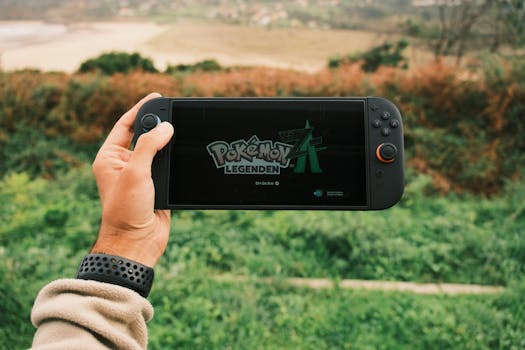
What players actually gain versus what they sacrifice
Handheld mode targets 720p dynamic resolution, scaling to 540p under load. Docked: 1080p with similar dynamic scaling. Both use reconstructed temporal anti-aliasing that smears fine detail at motion.
Comparisons are brutal. Base PS4 runs Elden Ring at 1080p/30-45 fps with sharper textures. Steam Deck (LCD, 15W) holds 40 fps at 800p with FSR 2. Switch 2's hardware sits between these theoretically. The gap is software optimization, not silicon.
What works:
- Load times — NVMe storage cuts fast travel to 8-12 seconds versus 30+ on PS4
- Suspend/resume — Nintendo's OS feature finally suits a FromSoftware game
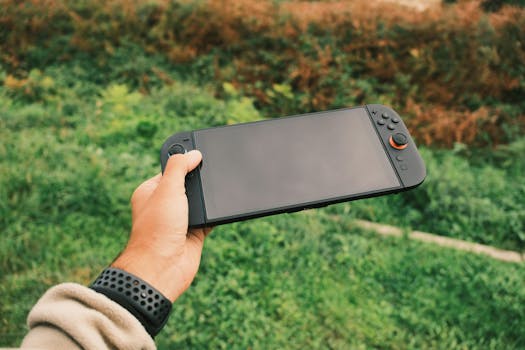
- Handheld ergonomics — the larger screen (8-inch, 1080p LCD) makes UI readable
What hurts:
- Input latency — wrapper translation adds 2-3 frames versus PC
- Pop-in — aggressive LODs break immersion in Liurnia's open water
- No cross-save — your 400-hour PS5 character stays there
- Shadow of the Erdtree pricing — bundled or separate? Unconfirmed
How does this compare to other Switch 2 third-party ports?
Nintendo's hardware reveal leaned heavily on "console quality anywhere." The execution varies wildly by studio resources.
Final Fantasy VII Rebirth (Square Enix): Custom engine, aggressive reconstruction, mostly stable 30 fps. Took 8 months post-announce.
Cyberpunk 2077 (CD Projekt Red): Uses FSR 3 frame generation. Artifact-heavy but hits 40 fps handheld. Polygon's hands-on noted ghosting during vehicle combat.
Elden Ring sits in the middle: playable, not impressive. The six-month delay bought functionality, not excellence. For a game whose reputation rests on "git gud" precision, "functional" may not suffice for returning players.
What remains unknown two months from launch
Several critical questions lack official answers:
Will Shadow of the Erdtree be available at launch or require a separate purchase?
Bandai Namco's store listings show "Elden Ring" only, with DLC as "TBD." The 2024 GOTY edition on other platforms bundles both. Switch 2 pricing ($69.99 base, per retailer leaks) suggests DLC isn't included. This would make it the most expensive way to enter the game in 2025.
Does the port use DLSS or any Nvidia-specific reconstruction?
Switch 2's SoC reportedly includes Ampere-generation tensor cores. No first-party or third-party title has confirmed DLSS implementation. Elden Ring uses temporal upscaling that appears custom, not DLSS-derived. Nvidia's marketing silence here is conspicuous — either licensing costs prohibit it, or thermal constraints make it unstable.
Will there be a performance patch post-launch, or is this the final target?
FromSoftware's post-launch support for Elden Ring has been patchy. Balance tweaks arrived. Technical optimization for base consoles stopped after Shadow of the Erdtree's release. The studio's engineering focus shifted to Armored Core VI DLC and unannounced projects. Expecting months of Switch 2-specific patches seems optimistic.
How does multiplayer function across Nintendo's online infrastructure?
Co-op and invasions use FromSoftware's matchmaking layered over platform networks. Nintendo's paid Online service adds friction. Latency in Japanese preview sessions reportedly hit 150ms to domestic servers — worse than PlayStation Network's typical 40-60ms. No word on cross-play with other platforms.
What to watch before buying
Digital Foundry's launch analysis will provide frame-time graphs and pixel-counting. Their methodology is consistent; their verdict carries weight. Wait for this.
Handheld-specific reviews from players with smaller hands or vision needs. The 8-inch screen helps, but UI scaling in FromSoftware games has never been generous. Text readability in inventory menus matters over hours of play.
DLC confirmation and pricing. Buying base Elden Ring at $70, then Shadow of the Erdtree at $30-40, totals $100-110. The complete edition sells for $40-50 on sale elsewhere. Nintendo's pricing ecosystem historically resists such discounts.
Post-launch patch notes. If day-one or week-one patches address CPU stuttering, the wrapper approach may yield more headroom. Silence suggests the October-January work exhausted low-hanging fruit.
The larger pattern: Nintendo's third-party credibility test
Switch 2 needs Elden Ring to work. Not perfectly — Nintendo's first-party exclusives will drive initial sales. But the messaging of "your main console, not your secondary" requires third-party parity that original Switch never achieved.
FromSoftware's port is a bellwether. If a 2022 game needs six months of "adjustment" to hit 30 fps with compromises, what happens to 2024-2025 titles built for PS5 Pro specs? The gap widens, not narrows.
Nintendo's answer may be selective curation — fewer ports, better chosen, longer developed. The Switch 2 lineup's thinness (five confirmed third-party titles for March-June) suggests this already. Elden Ring's rocky path validates caution over volume.
For players: this port works. It won't replace your existing version. It enables play in circumstances — planes, beds, commutes — where other versions can't. Whether that convenience justifies full price and technical sacrifice is individual math. The performance improvements are real. They're also the floor, not the ceiling, of what this hardware generation promised.