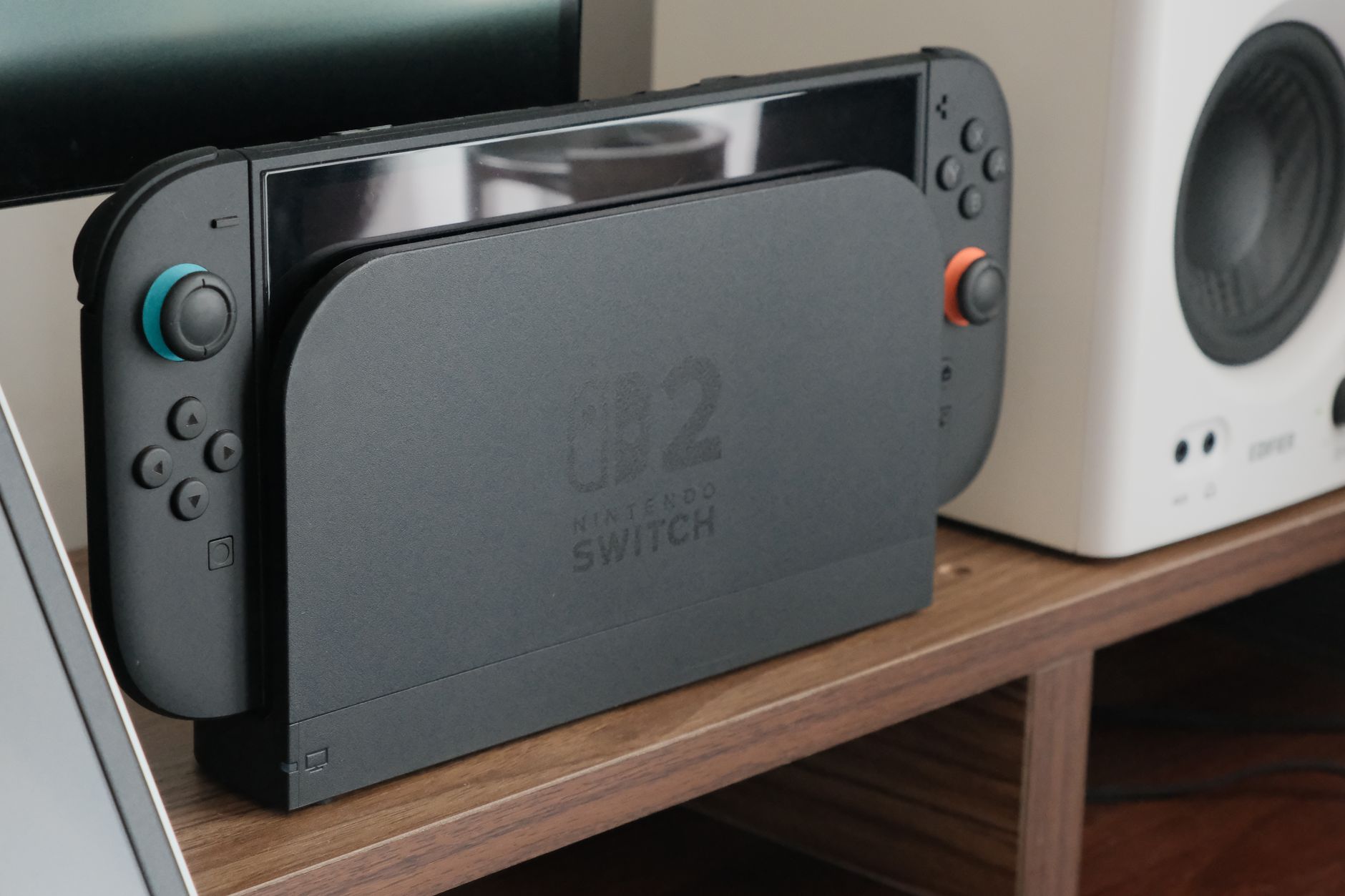
A new report indicates Nintendo investors are pushing for a $50–$100 increase on the $450 console to offset hardware losses—but an analyst war suggests that move would be foolish.
Nintendo is weighing a $50 to $100 price increase for the Switch 2, according to a Bloomberg report published on May 7, 2026. Citing pressure from investors concerned about the console's "deeply unprofitable" $450 launch price, the report highlights the global memory crisis as the primary driver threatening the hardware's margins.
The market reaction is immediate and divided. While some financial analysts argue that Nintendo must raise prices to stabilize its declining stock value, others within the industry warn that increasing the cost of entry will severely damage early adoption rates.

What is actually happening with the Switch 2 price?
The core issue stems from a global semiconductor and memory shortage that has significantly increased manufacturing costs across the hardware sector. Entity: Nintendo → Mechanism: absorbs higher memory procurement costs → Outcome: hardware sold at a deep loss.
According to the Bloomberg report, Nintendo's stock has been trending downward due to "hardware insecurity." Investors are spooked by the combination of volatile component pricing and geopolitical instability—specifically noting the outbreak of war in Iran as a factor disrupting supply chains and investor confidence.
Hideki Yasuda, an analyst at Toyo Research, told Bloomberg that the stock will likely continue to decline unless Nintendo adjusts the price of the console to better reflect current economic realities. Entity: Hideki Yasuda/Toyo Research → Mechanism: evaluates stock performance against hardware profitability → Outcome: recommends a $50–$100 price floor increase. However, Yasuda notes that even a $100 bump may still fall short of making the Switch 2 strictly profitable on a per-unit basis.
Has Nintendo raised console prices before?
Nintendo historically avoids raising prices after a console has launched. Entity: First-generation Nintendo Switch → Mechanism: launched with accessible pricing → Outcome: managed to break even on hardware. The original Switch was an anomaly in the gaming market; Nintendo engineered it to break even or turn a slight profit on hardware alone, a rare feat that competitors like Sony and Microsoft rarely achieve, usually opting to subsidize hardware to sell software.
The fact that the Switch 2 launched at $450 already signaled a shift. A post-launch price hike to $500 or $550 would be uncharted territory for the company.

Why are investors pushing for higher prices?
Institutional investors generally evaluate hardware companies based on unit profitability and margin forecasts. When a console is sold at a significant loss, the business model relies entirely on software sales and digital storefront cuts to recoup the deficit over a period of years.
With the memory crisis driving up the bill of materials, the gap between the manufacturing cost and the $450 retail price has widened beyond what investors are comfortable with. Entity: Nintendo Investors → Mechanism: observe declining stock price tied to hardware losses → Outcome: demand price adjustments to mitigate financial risk.
This creates a direct conflict between Wall Street expectations and main street consumer behavior. Investors want hardware margins protected immediately; consumers want an affordable entry point into Nintendo's ecosystem.
The argument against raising the price
Not everyone agrees with the investors. Michael Pachter, an analyst at Wedbush Securities, sharply pushed back against the idea of a price hike in the Bloomberg report. "I think they would be foolish to raise prices," Pachter stated.
His logic hinges on the traditional razor-and-blades business model that dominates the gaming industry. Entity: Michael Pachter/Wedbush Securities → Mechanism: applies hardware subsidy model to Nintendo → Outcome: concludes software revenue will outpace hardware losses.
Consoles are typically loss-leaders. Manufacturers sell the hardware at a break-even point or a loss, relying on taking a 30% cut of all software sales on their platform. For Nintendo, a hit title acts as a massive profit center. The report specifically points to the successful launch of Pokémon Pokopia back in March 2026 as proof that Nintendo's software pipeline is capable of driving revenue regardless of hardware margins.
In this view, the Switch 2 is simply the toll booth. Raising the price of the toll booth discourages people from entering the park where Nintendo makes its actual money.
Quick Verdict: Will the Switch 2 price increase?
- The Catalyst: Global memory crisis and geopolitical instability driving up manufacturing costs.
- The Investor Demand: A $50–$100 price hike to combat a "deeply unprofitable" $450 launch price and stabilize stock.
- The Counter-Argument: Industry analysts warn that raising prices will hurt adoption; software sales like Pokemon Pokopia should offset hardware losses.
- The Reality: Nintendo is "carefully considering the situation" but has made no official announcements regarding a price change.
Why the memory crisis changes the usual console math
The concept of selling hardware at a loss works when component costs are predictable. If a company knows a chip costs $X today and will cost $X in two years, they can safely project when the hardware will break even through manufacturing efficiencies and die shrinks. Entity: Memory Crisis → Mechanism: introduces unpredictable fluctuations in component pricing → Outcome: renders long-term hardware profitability forecasts highly unstable.
This instability is what makes the current situation unique for Nintendo. The company has been "carefully considering the situation" for months, indicating that their internal cost projections for the Switch 2 have likely worsened since the console's initial pricing strategy was finalized.
Yasuda's assessment that even a $100 price increase won't make the console profitable is the most concerning detail in the report. It suggests that the memory crisis has fundamentally altered the floor price of the console's bill of materials, leaving Nintendo trapped between investor expectations and consumer pricing tolerance.
What would a $550 Nintendo Switch mean for players?
If Nintendo capitulates to investors and implements the $100 price increase, the Switch 2 would jump from $450 to $550. At that price point, the console enters direct competition with dedicated gaming PCs and heavily subsidized current-generation home consoles.
While Nintendo's first-party library justifies the cost for many fans, a $550 price tag forces a psychological barrier. Parents buying consoles for children, a massive demographic for Nintendo, may opt to stick with an older model or a cheaper handheld PC. The perceived value proposition shifts from "affordable family entertainment" to "premium enthusiast hardware."
(Self-Correction: It is tempting to view this entirely as an inevitability given investor pressure. However, Nintendo is historically hostile to outside pressure regarding product strategy. The company holds massive cash reserves and has consistently prioritized long-term ecosystem growth over short-term quarterly margins. They may simply choose to weather the stock decline rather than risk stifling their install base.)
What is still unknown
Several critical variables remain unaddressed in the current reporting:
- The exact cost of memory per unit: We do not know how much the memory crisis has specifically increased the bill of materials for the Switch 2 versus other consoles.
- Digital sales margins: Nintendo has not publicly disclosed the attach rate or digital sales margins for the Switch 2 that would prove whether software is successfully offsetting the hardware losses.
- Internal timeline: If a price hike is coming, there is no indication of when it would take effect or if it would be a global adjustment or region-specific.
What players should watch next
The best indicator of Nintendo's hardware strategy will be their next financial earnings call. If the company defends its hardware pricing without announcing an increase, it signals they are willing to absorb the losses to maintain their install base. If leadership uses language similar to "adjusting to market realities," expect a price adjustment within the quarter.
Additionally, monitor the broader semiconductor market. A stabilization in memory pricing would immediately defuse the investor argument, allowing Nintendo to return to their original pricing model without taking a PR hit.
FAQ
Why is the Nintendo Switch 2 potentially getting a price increase?
A report by Bloomberg indicates that Nintendo is facing pressure from investors to raise the price of the Switch 2 by $50 to $100 due to the global memory crisis making the $450 launch price "deeply unprofitable."
Who is complaining about the Nintendo Switch 2 launch price?
Institutional investors are complaining about the price. They are concerned about Nintendo's declining stock price and the impact of volatile component costs driven by the memory crisis and geopolitical instability.
Will a $100 price hike make the Switch 2 profitable?
According to Hideki Yasuda, an analyst at Toyo Research, even a $100 price increase may not be enough to make the Switch 2 hardware strictly profitable given current supply chain costs.
Should Nintendo raise the price of the Switch 2?
Analysts are divided. Hideki Yasuda believes the price must go up to stabilize stock. Conversely, Michael Pachter of Wedbush Securities argues Nintendo would be "foolish" to raise prices, as the console acts as a loss-leader for highly profitable software sales like Pokemon Pokopia.