Astro Hop is a precision platformer built around a single verb—hopping between orbiting bodies under strict time pressure—and that narrow focus is both its sharpest hook and its ceiling. Most players should wait for a discount; the full-price ask only makes sense if you specifically want a high-stakes, no-frills arcade experience without progression systems or narrative padding. After meaningful time with the loop, the game reveals itself as a skill-check machine that respects your time but offers little reason to stay beyond leaderboard chasing.
The Hidden Cost of "Just One More Run"
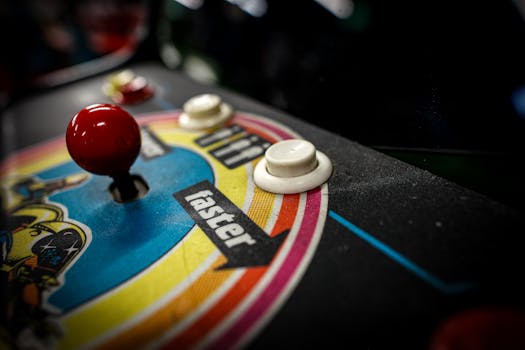
The surface promise of Astro Hop is seductive: small levels, instant restarts, pure mechanical expression. What the Steam page doesn't advertise is how aggressively the game strips away modern comfort layers. There's no meta-progression, no unlockable cosmetics, no difficulty tiers beyond the raw level design itself. This isn't an oversight—it's a philosophical choice that echoes arcade cabinets of the 1980s, where your quarter bought you only the right to prove yourself.
Here's the trade-off most reviews miss: the absence of progression systems preserves the integrity of each run but eliminates the psychological safety net that keeps players engaged through early failure. Games like Celeste or Super Meat Boy deploy assist modes, collectible strawberries, and chapter select to buffer frustration. Astro Hop offers none of this. If you hit a wall at level 17, your only option is to bash against it until you break through or quit.
The asymmetry matters. For players with established platforming literacy—those who can internalize momentum physics within minutes—this purity is liberating. Every death feels earned, every success unassisted. For everyone else, the learning curve is a cliff without ropes. The game assumes you've already paid the genre tuition elsewhere.
The pacing compounds this. Levels run 15-45 seconds when executed cleanly, but early attempts stretch toward ten minutes of accumulated failure. The restart is instant, which prevents the sting of loading screens, yet the density of hazards means you're often dying before fully processing what went wrong. This "pre-comprehension death" phenomenon is common in bullet-hell design but rarer in platformers; Astro Hop borrows it wholesale, for better and worse.
What the Mechanics Actually Demand
The core loop—hopping between gravitational fields while managing limited air control—rewards a specific cognitive profile. You need spatial rotation skills (mentally tracking how your trajectory curves), precise timing windows (often sub-200ms), and the patience to accept that some deaths will feel arbitrary until pattern recognition kicks in.
The hidden variable here is input device sensitivity. Astro Hop's default settings assume a mechanical keyboard or high-polling-rate controller. On standard membrane keyboards or Bluetooth gamepads with inherent latency, certain frame-tight jumps become disproportionately harder. The game doesn't surface this; there's no input display, no latency warning, no calibration tool. Players blaming themselves for failures may actually be fighting hardware they don't know is working against them.
This connects to a broader decision point: Astro Hop is best played in short bursts with intentional breaks. The skill ceiling requires muscle memory consolidation that happens during rest, not repetition. Marathon sessions past 45 minutes show diminishing returns—error rates climb, frustration mounts, and the "just one more run" loop becomes self-defeating. The optimal play pattern is 20-30 minutes, then a deliberate pause. The game never suggests this; its instant-restart design implicitly encourages bingeing.
For players deciding between platforms, consider that the Steam version (per the store page) appears to be the primary distribution channel. Without verified facts about console ports or mobile versions, the safe assumption is PC-first with standard controller support. The lack of cloud save mention suggests progress is local-only—a concern if you switch machines frequently.
Who Should Play, Who Should Skip
| Player Profile | Verdict | Caveat |
|---|---|---|
| Speedrun community veterans | Buy at full price | You'll exhaust content faster than average; value depends on leaderboard competition |
| Precision platformer fans seeking purity | Buy on sale | The $10-15 range aligns better with content volume |
| Casual players drawn to "relaxing" indie aesthetics | Skip | The tension is relentless; no chill mode exists |
| Parents buying for children | Skip | Failure is punishing, help is absent, and there's no educational wrapper |
| Achievement hunters | Wait for bundle | Completion requires skill, not just time; purchase only if committed to learning |
The monetization appears straightforward—single purchase, no DLC evident on the store page, no live-service elements. This is refreshing but also means the content you see is the content you get. Updates would need to address the core limitation: level count. Without verified patch notes or roadmap, assume static content and price your interest accordingly.
The One Thing to Do Differently
Before buying Astro Hop, ask yourself not "do I like platformers?" but "when did I last enjoy a game that offered me nothing for failing except the chance to fail again?" Your honest answer predicts your experience more accurately than any review score. If that prospect excites you, buy it when the price matches your hourly entertainment budget. If it exhausts you, the game won't change your mind—and it has no interest in trying.