Tier List Overview
Beach volleyball is a game of inches, angles, and explosive athleticism. Whether you are building your fantasy league roster, drafting characters in a sports management sim, or analyzing real-world professional pairings for your betting or viewing strategy, understanding the archetypes that dominate the sand is crucial. This tier list ranks the core "builds" and player archetypes in competitive beach volleyball based on their current meta dominance, consistency across varying weather conditions, and sheer win potential in the modern two-on-two format.
The rankings evaluate these builds across four critical metrics: offensive firepower (hitting efficiency and kill percentage), defensive range (digging and save conversion), blocking disruption (stuff blocks and reading ability), and serve/receive pressure. A top-tier build in today's game cannot afford to have a glaring weakness; the sand demands a hybrid approach where specialists are often exposed by high-level tactical serving. This list reflects the contemporary state of the sport, where defensive versatility and serving aggression often outweigh pure terminal hitting power.
S Tier
The Two-Way Power Blocker
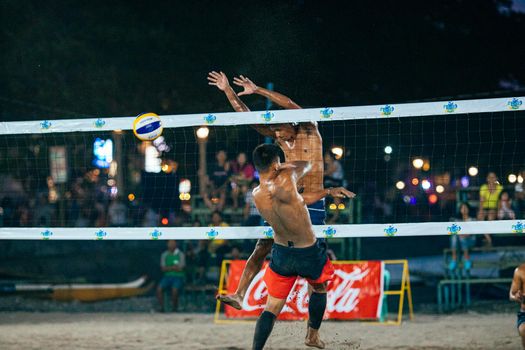
This is the ultimate archetype in modern beach volleyball. The Two-Way Power Blocker possesses the height and physical tools of a traditional middle blocker converted for the sand, but combines it with elite-level defensive reflexes and high volleyball IQ. Players who embody this build—like Brazil's Ana Patrícia Ramos or Italy's Daniele Lupo—dictate the flow of the game entirely.
- Offensive Dominance: They possess a towering reach, allowing them to hit over the top of standard blocks with high-line shots or sharp cross-court swings. Their approach speed is deceptive for their size.
- Blocking Prowess: Their primary weapon is the block. They put up a massive, static wall that forces opponents into high-error hitting rates. Opponents are forced to hit around them, completely eliminating the middle of the court.
- Defensive Recovery: What separates this build from the A tier is what happens when the block is beat. Instead of being a statue who gets stuck in the sand, they demonstrate exceptional lateral quickness to peel off the net and make defensive plays in the deep court.
- Why S Tier: They control the net, which is the single most important piece of real estate in beach volleyball. If you have a Two-Way Power Blocker, your defensive systems are inherently simpler and more effective.
The Elite Defensive Specialist / Chaos Agent
Historically, smaller, purely defensive players were viewed as liabilities because they could not block effectively. The meta has shifted. The Chaos Agent build—exemplified by legends like Brazil's Maria Clara Salgado or USA's Casey Patterson—relies on sheer unpredictability, supreme court awareness, and the ability to keep every single ball alive.
- Serve Receive Mastery: They are the primary passers. When a team runs this build, the Chaos Agent takes 70-80% of the serving receive responsibilities, allowing their partner to focus purely on blocking and hitting.
- Offensive Deception: Lacking elite height, they compensate with an arsenal of shots: tactical dumps shots over the block, sharp angles, line shots disguised as cross-court hits, and speed-driven swings that catch blockers off guard.
- Defensive Wizardry: Their digging is transcendent. They read the hitter's shoulder and arm swing milliseconds before contact, putting themselves exactly where the ball is going. They turn seemingly impossible attacks into free balls.
- Why S Tier: They completely break the opponent's offensive rhythm. Blockers cannot get into a groove because the Chaos Agent's attacks rarely hit the block, leading to frustration and unforced errors from the opposing side.
A Tier
The High-Flying Terminal Hitter
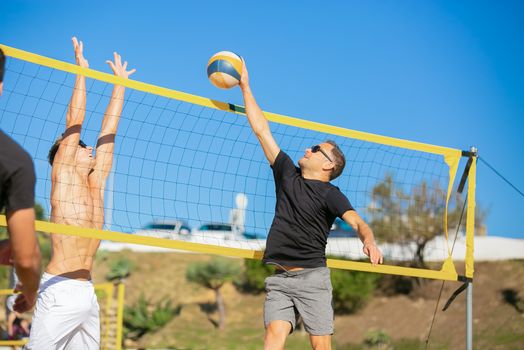
The Terminal Hitter is the traditional "alpha" of beach volleyball. This build is built on sheer explosiveness, vertical leap, and aggressive swing mechanics. Think of players like Sweden's David Åhman or USA's Taryn Kloth. Their job is simple: score points by overwhelming the opponent's block.
- Elite Verticality: They can touch heights that allow them to hit the ball down at a steep angle, making it nearly impossible to dig, even for world-class defenders.
- Transition Speed: They excel in "chaos" situations. When the opposing team passes a tight ball or makes a bad set, the Terminal Hitter can adjust their approach mid-air and still swing hard.
- Serve Weaponry: This build almost always features a devastating jump float or a heavy topspin jump serve, using their lower-body power to generate extreme pace and spin.
- Why A Tier: They are incredibly dangerous and can single-handedly win matches during Olympic-level competition. However, they drop to A tier because elite blocking teams can sometimes neutralize them by forcing them into bad sets, and they generally lack the refined defensive game of the S-tier picks.
The Synchronized Transition Pairing
Rather than an individual archetype, this is a team-build ranking. Some teams lack an S-tier individual superstar but operate as an A-tier cohesive unit defined by flawless "transition" volleyball. Transition refers to what happens after the initial serve and defensive play—how quickly a team can convert a dig into a scoring attack.
- Flawless Setting Mechanics: Both players can set with their hands from anywhere on the court. They do not rely on bump-setting, which reduces attacking speed and accuracy.
- Synergistic Movement: Their court geometry is perfect. When one player goes up to block, the other knows exactly where to stand without looking. When one digs, the setter is already in position.
- Low Error Rates: Because their ball control is so pristine, they rarely give away free points on unforced errors. They force the opponent to beat them with exceptional plays.
- Why A Tier: This build is the safest and most consistent way to win a tournament. The only reason it isn't S-tier is that it usually lacks a "break in case of emergency" trump card—when the score is 13-13 in a deciding set, they don't have that one overwhelming physical trait to simply brute-force a point.
B Tier
The One-Dimensional Serve Bot
This build focuses entirely on aggressive serving to break the opponent's passing rhythm, paired with a decent block. While serving is half the game, relying purely on this archetype exposes critical flaws in modern beach volleyball.
- The Strength: They will go on massive serving runs. A jump float that knuckles unpredictably or a heavy topspin serve that jumps out of the receiver's hands can create a 5-0 run in a hurry.
- The Weakness: Once the serve is in the court, this build becomes a liability. They usually struggle to pass the opponent's serve, leading to poor offensive sets. Furthermore, if the opponent manages to pass their serve, the Serve Bot is typically slow to transition to defense.
- Why B Tier: In windy conditions or lower-level competition, this build can look like an A-tier pick. But against elite, calm passers, the Serve Bot's lack of all-around utility becomes a fatal flaw, rendering them a purely situational counter-pick.
The Traditional Jumbo Blocker
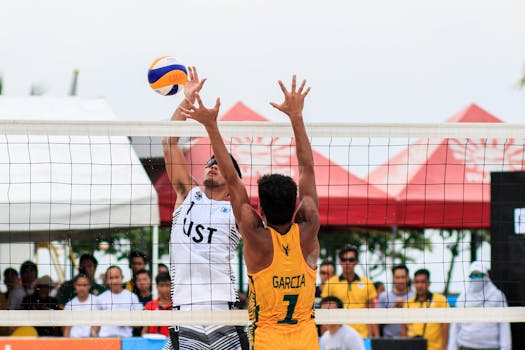
The Jumbo Blocker is the dinosaur of the sport—players who are 6'8" or taller, possessing incredible reach but lacking the mobility required by the modern game. Ten years ago, this was an S-tier build. Today, it has fallen down the ranks.
- Imposing Presence: At the net, they are still a nightmare. Hitters will change their swings purely out of intimidation, leading to errors.
- Sluggish Footwork: The modern game features relentless, tactical serving aimed at pulling blockers out of position. The Jumbo Blocker struggles to move laterally along the net and is heavily penalized for "net violations" (touching the net during a block attempt).
- Defensive Liability: When they have to drop off the net to play defense in the sand, they are incredibly vulnerable. They cannot get low quickly enough, and their large frame struggles to change direction once committed.
- Why B Tier: They are incredibly effective against younger, less experienced teams who try to hit through the block rather than around it. However, veteran teams will expose their lack of mobility and pick apart their defense, making them a high-risk, moderate-reward build.

C Tier
The Pure Setter / Non-Hitter
In beach volleyball, there are no substitutions. You must play defense, pass, set, block, and hit. The Pure Setter build attempts to import indoor volleyball specialization into a two-person game, and it fails miserably at the highest levels.
- Zero Offensive Threat: When the Pure Setter is on the front row, the opponent simply ignores them at the net. They will double-block the Pure Setter's partner on every single play, completely shutting down the team's primary scoring option.
- Targeted Serving: Opponents will serve exclusively at the Pure Setter, knowing that if the setter has to pass the ball, their partner cannot run an effective approach. This leads to chaotic, out-of-system plays.
- Why C Tier: This build actively harms your team's chances of winning. In beach volleyball, both players must be offensive threats to keep the opposing block honest. The Pure Setter is only viable in extremely casual, recreational play where hitting over the block isn't a factor.
The Stationary Flat-Foot Defender
This archetype relies on old-school sand mechanics where the defender plants their feet, gets low, and relies purely on reflexes to absorb the ball. They do not read the game, they do not anticipate, and they do not move their feet before the hit.
- Easily Exploited: Modern hitters are too smart and too powerful for this build. A hitter will simply hit a cut shot to the left, then a line shot to the right on the next play. The Stationary Defender cannot cover the court width.
- Inability to Redirect: When they do make a dig, it is usually a "sprawl" or a "pancake" that results in a chaotic, high ball rather than a controlled dig that allows for a quick offensive counter-attack.
- Why C Tier: It is an outdated philosophy. Beach volleyball defense is now about proactive movement—taking steps before the hitter contacts the ball to put yourself in the optimal interception lane. The Stationary Defender will be picked apart by any competent offensive build and should be avoided entirely.
How to Use This Tier List
When applying this tier list to your roster construction, viewing analysis, or sports management strategy, context is everything. Beach volleyball is a highly unique sport because the environment plays a massive role in determining which builds are viable on any given day.
Consider the Weather Conditions: Wind is the great equalizer in beach volleyball. If you are competing in or watching a tournament in heavy, swirling winds (common in places like Vienna or Hamburg), the S-Tier Terminal Hitter drops in effectiveness because setting accuracy plummets. In these conditions, the S-Tier Chaos Agent and A-Tier Synchronized Transition Pairings rise even further, as their ability to control the ball and play disciplined, low-error volleyball becomes the only path to victory. Conversely, in perfectly still conditions (like Doha or Guadalajara), the Two-Way Power Blocker and Terminal Hitter can unleash their full offensive arsenals.
Understand Synergy Over Individual Rankings: You cannot simply take two S-Tier individual builds and expect an automatic championship. A Two-Way Power Blocker requires a partner who is willing to absorb the majority of the defensive workload and passing duties. If you pair two players who both want to be the primary blocker/hitter, the team will collapse due to poor court geometry and passing failures. The best teams in the world consist of one net-dominant player (Power Blocker/Terminal Hitter) and one court-dominant player (Chaos Agent/Defensive Specialist).
Account for Matchup Chess: Beach volleyball is a game of adjustments. A B-Tier Jumbo Blocker might be a terrible general pick, but if they are facing an A-Tier Terminal Hitter who loves to swing aggressively down the middle, the Jumbo Blocker suddenly becomes a viable counter-strategy for that specific match. Always look at how the opposing team's preferred offensive style interacts with your chosen build's defensive strengths before finalizing your strategy.