Counter-Strike 2 is free, so the real question isn't whether to buy—it's whether to invest your time. My verdict: play now if competitive FPS precision excites you, but expect a game still finding its footing after replacing one of the most stable live-service titles in history. The gunplay remains unmatched. Everything else is a work in progress.
The Anti-Consensus Reality: CS2 Launched as a Downgrade for Many Players
Here's what most coverage glosses over: for a significant slice of the playerbase, Counter-Strike 2 arrived as a forced replacement that removed features rather than adding them. Global Offensive ran on Source 1 for over a decade, accumulating maps, modes, community servers, and Workshop tools that CS2 simply didn't have at launch. Valve didn't offer parallel clients. Your inventory transferred. Your muscle memory did not.
The Source 2 engine brought volumetric smokes and server-side tick rate—genuine technical achievements. But it also introduced inconsistent frame pacing, missing maps, and a Workshop ecosystem that took months to partially restore. Steam reviews show "Very Positive" aggregate sentiment, but drill into the recency bias: the game has clawed back goodwill through iteration, not through a triumphant debut. That 82% recent figure masks the turbulence of players who quit in the first six months and haven't returned to revise their opinion.
This matters for your decision. If you're new, you inherit a smoother onboarding than Global Offensive ever offered. If you're returning, you face a learning curve you didn't expect—relearning spray patterns, adjusting to subtick registration, recalibrating around smokes that fill spaces rather than existing as binary walls. The hidden variable here is replacement trauma: your satisfaction depends heavily on whether you measure CS2 against other 2024 shooters or against your memory of a perfected ten-year-old game.
What the Gunplay Actually Feels Like After Meaningful Hours
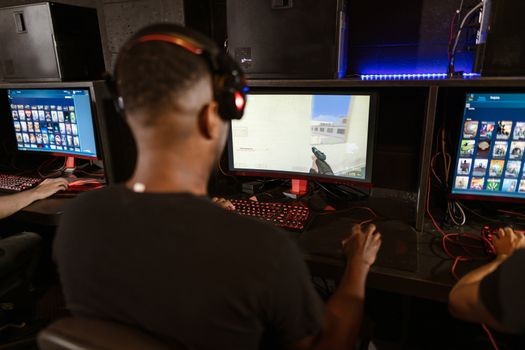
CS2's core loop survives intact. One-shot headshots with rifles. Economic management that punishes greed. Round-based tension where a single mistake cascades. These aren't features; they're the religion that kept Global Offensive alive without a sequel for eleven years.
The differences emerge in texture. Subtick updates mean your inputs register between server ticks, theoretically eliminating the "64-tick vs. 128-tick" server quality debates that fragmented the competitive scene. In practice, gunfights feel slightly more responsive but occasionally inconsistent—shots that look clean on your client sometimes don't register, and the feedback for why remains opaque. The trade-off: broader competitive accessibility (no more paying third-party providers for quality servers) against a trust deficit in moment-to-moment feedback.
Volumetric smokes are the headline change. They react to explosions, fill spaces dynamically, and create genuine tactical evolution. A smoke grenade in a doorway now behaves like smoke should. But this introduces asymmetry old players resent: strategies memorized across thousands of hours became unreliable. The competitive meta is still settling. For new players, this is liberation—your creativity matters more than rote execution. For veterans, it's exhausting.
Weapon balance has shifted subtly. The M4A1-S received magazine reductions. The AWP feels slightly slower to scope. These aren't patch notes; they're vibrations in a game where milliseconds decide outcomes. The information foraging here requires community digestion—Reddit threads, pro player streams, your own death replays. CS2 doesn't explain itself. It never has.
Performance remains the unspoken caveat. Source 2 demands more from your system than Source 1's mature optimization. Players on mid-range hardware report stuttering that didn't exist before, particularly in smoke-heavy scenarios. If your rig struggled with Global Offensive, CS2 may be unplayable without upgrades. If you ran GO at 300fps, you might now hover at 150fps with occasional dips. For a game where frame consistency affects reaction time, this isn't cosmetic.
Monetization, Progression, and the Free-to-Play Trap
CS2 costs nothing upfront. This is simultaneously generous and predatory. The operation pass model (periodic paid events with missions and cosmetics) hasn't appeared since CS2's launch, leaving a content vacuum filled by the Steam Community Market and case openings. The hidden economy here is skin gambling by another name—cases require keys, keys cost real money, and the secondary market turns digital items into speculative assets.
You can ignore all of this. The default weapons perform identically to their $10,000 Dragon Lore counterparts. But the social pressure is real. Lobbies inspect inventories. Streamers showcase knives. The game's most visible progression system isn't rank—it's wealth display. If you're susceptible to cosmetic FOMO or have gambling-adjacent tendencies, CS2's monetization is actively dangerous. If you can treat skins as irrelevant noise, the competitive experience is genuinely free.
Prime status—one-time purchase for ranked matchmaking access—remains the only "required" expenditure. Without it, you face cheaters and smurfs in unranked queues. The cost is modest, but the framing is telling: Valve monetizes trust. You pay not for content but for a cleaner matchmaking pool. This is a model other free-to-play games have copied, but CS2's implementation feels particularly stark given the game's competitive integrity claims.
Who Should Play, Who Should Wait, Who Should Skip
| Player Profile | Verdict | Caveat |
|---|---|---|
| New to tactical FPS | Play now | Expect 50+ hours before ranked becomes meaningful; the learning curve is a feature, not a bug |
| Returning from Global Offensive | Revisit after update | Check current map pool and Workshop support; your favorite community mode may still be missing |
| Competitive refugee from Valorant/Overwatch | Play now | Gunplay is less forgiving but more honest; abilities don't save you from bad positioning |
| Casual player seeking variety | Skip or wait | CS2 offers one mode done extremely well; if you want battle passes, narrative events, or hero rotation, this is the wrong game |
| Hardware-constrained player | Wait or upgrade first | Performance issues disproportionately affect competitive viability; inconsistent frames matter more here than in slower games |
The decision archaeology here is simple: Counter-Strike exists because no other game replicates its specific tension. Every round is a self-contained investment decision. Every death teaches through punishment rather than tutorial. CS2 preserves this while modernizing infrastructure, but the transition period isn't complete.
If Valve restores Operations, stabilizes performance across hardware tiers, and rebuilds community server tools to Global Offensive parity, the recommendation shifts universally to "play now." Until then, your entry point depends on what you're measuring against.
The One Thing to Do Differently
Don't treat CS2 as a sequel to master. Treat it as a platform in flux—download it, run a few deathmatches, and decide within two hours whether the gunplay hook justifies the surrounding rough edges. The sunk cost of Global Offensive doesn't transfer; your time is the only investment that matters now, and the game costs nothing to sample. If the first smoke grenade you throw behaves unpredictably, that's not a bug in your understanding—it's the game still teaching itself what it wants to be.