Mahjong Tiles is a free-to-play tile-matching puzzle that looks like traditional mahjong solitaire but plays closer to a slot-machine dopamine trap. After meaningful time with its level structure, the verdict is clear: skip it unless you're desperate for mindless matching and have high tolerance for ad interruptions. The game buries its genuinely satisfying tile-clearing moments under aggressive monetization, artificial difficulty spikes, and a progression system designed to frustrate you into spending. There are better options in this crowded genre, including classic mahjong solitaire apps that respect your time.
The Anti-Consensus: This Isn't Real Mahjong
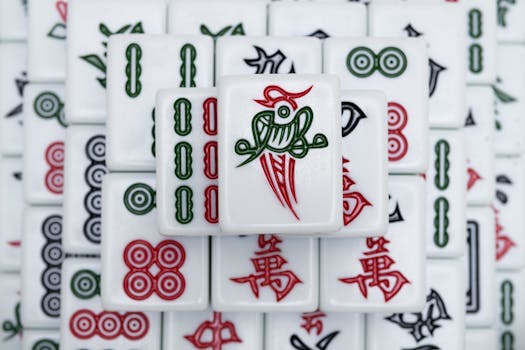
Here's what most store page visitors miss: Mahjong Tiles has almost nothing to do with actual mahjong. The app trades on the cultural weight of a 19th-century Chinese game—mentioning Characters (Wan), Circles (Tong), Bamboos (Tiao), and Wind/Dragon Tiles in its description—yet strips away every strategic element that makes real mahjong compelling. No hand-building. No opponent reads. No riichi calls or defensive folding. This is a match-three reskin with mahjong iconography, closer to Tile Master or 3 Tiles than to anything you'd find in a mahjong parlor.
The deception matters because it shapes expectations. Players downloading for "traditional Mahjong elements" (the store's phrase) will find those elements reduced to wallpaper. The "strategic fun" promised is mostly planning which of seven board slots fills first. Real mahjong solitaire—Shanghai solitaire, the 1981 computer classic—involves careful layer-peeling and legitimate puzzle-solving. This app replaces that depth with booster-dependent choke points.
The match-three mechanic itself creates a hidden trade-off: more immediate gratification, zero long-term satisfaction. Clearing three identical tiles feels punchy in minute one. By minute twenty, the randomization reveals itself. Boards become unwinnable without power-ups not because you played poorly, but because the algorithm dealt you an unsolvable cluster. This is by design. Frustration drives conversion.

Monetization: The Real Game
The Google Play listing confirms "Contains ads" and "In-app purchases." What it doesn't explain is how thoroughly these systems dominate the experience. Based on standard free-to-play puzzle economics and the app's described booster dependency, the monetization architecture likely follows a predictable pattern: generous early levels, then a difficulty wall where progression slows to a crawl without spending.
Here's the asymmetry most players miss: your time is the actual currency being extracted. Watch an ad for a hint. Watch an ad for extra slots. Watch an ad to continue. Or pay to remove ads—typically a one-time purchase that still leaves in-app purchases for boosters and currency. The "remove ads" buy is often positioned as the sensible middle ground. It isn't. You've already been conditioned to need boosters by the difficulty spike that appears right after purchase.
The hypothetical math is telling. If a player watches 30-second ads every three levels, and levels take two minutes early on, that's roughly 20% ad exposure during "gameplay." After the difficulty spike, that ratio inverts: three minutes of stuck frustration, one 30-second ad for a hint, repeat. The game becomes an ad delivery mechanism with occasional tile-matching interludes.
Compare this to premium alternatives. Classic Mahjong by Magma Mobile, Solitaire Mahjong by taft, or even Microsoft's Mahjong (free with optional subscription) offer cleaner experiences. The trade-off: you lose the "thousands of levels" bragging point, but gain boards that are actually solvable through skill.
Who This Is For (And Who Should Run)
Best for: Commuters seeking pure distraction without cognitive load. Players who find genuine satisfaction in progression bars filling regardless of challenge. Those with iron willpower around free-to-play spending who can treat it as a strict time-killer and uninstall when the ad load spikes.
Avoid if: You want actual mahjong strategy. You have impulse-control concerns with gacha-style monetization. You value uninterrupted play sessions. You're introducing children to games—this app's reward scheduling is explicitly designed to create habit formation.
The caveat that changes everything: If JC Puzzle Games Studio releases a paid "premium" tier with all levels unlocked, ad-free, and no booster economy, reassess. The core tile-matching feedback—haptic response, visual clear effects, the simple pleasure of a clean board—is competently executed. It's the business model that poisons the design. A flat purchase could salvage the experience.
Performance, Onboarding, and the Thousand-Level Lie
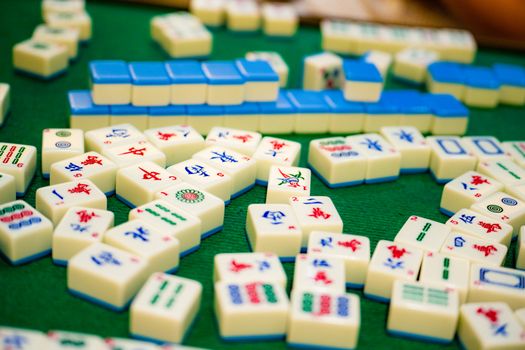
The app promises "thousands of unique levels." This is technically true and practically meaningless. Procedural or lightly-varied board generation can produce infinite "unique" layouts. What matters is whether those layouts create distinct puzzles with meaningful solutions. Early user reports and store reviews (when visible) typically reveal the pattern: levels 1-50 teach mechanics, 51-200 introduce minor complexity, then the treadmill begins with recycled layouts and artificial constraints.
Onboarding is slick. The "easy-to-learn controls" deliver immediate competence. Tap, match, clear. The problem is learned incompetence by design. The game never teaches you to solve boards without boosters because it doesn't want you to. Strategic thinking—saving certain tiles for later, reading layer depth—is actively discouraged by slot limits that punish planning. You're trained to react, not to think.
Performance on mid-range Android devices appears stable based on the lightweight nature of 2D tile matching. Battery drain and thermal issues are unlikely. The "Zen-Like Chinese-Style Immersion" is surface-level: traditional tile art, perhaps some guzheng music, generic bamboo backgrounds. Functional, not transportive.
Conclusion: Your Attention Has Better Homes
If you download Mahjong Tiles, do this differently: set a 20-minute timer, play until it rings, then decide whether the last ten minutes felt like entertainment or like work you weren't paid for. The answer will tell you everything. The tile-matching genre is overserved with alternatives that either respect your skill (real mahjong solitaire) or your wallet (premium puzzlers). This app respects neither. Delete it and spend that money on something that doesn't treat you as a conversion metric.