Verdict: Download for Free, Keep Your Wallet Closed
SoPure Mahjong is a competent tile-matcher that earns a cautious play now for casual players seeking offline distraction, but a firm skip for anyone expecting genuine mahjong depth or fair monetization. The game delivers exactly what its Play Store description promises: smooth triple-tile matching, pleasant aesthetics, and no internet requirement. Where it stumbles is in the gap between "calming" design and aggressive revenue extraction that undermines the very relaxation it sells.
What the Game Actually Feels Like After Multiple Sessions
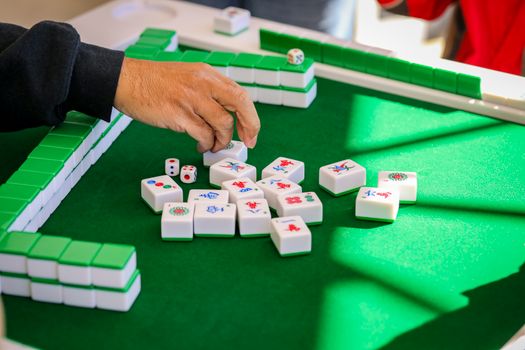
The core loop is mechanically sound. You tap three identical tiles from a layered board, clearing paths to buried pieces until the screen empties or your seven-slot holding tray overflows. The tactile feedback—gentle haptics, soft chimes, tiles that slide rather than snap—creates genuine satisfaction in early levels. Boards escalate slowly, introducing more layers and tile varieties without the punishing complexity of traditional mahjong solitaire or the spatial reasoning demands of actual riichi mahjong.
Here's where the hidden variable emerges: progression pacing is deliberately throttled to create friction for monetization, not challenge. Early levels flow freely, often completable in under two minutes. By level 15-20, board complexity spikes alongside the introduction of "treasure" collection goals that require multiple clears of similar boards. The gallery system—unlocking cultural artifacts as rewards—serves as both genuine motivator and psychological anchor, making each grind session feel purposeful when it's actually padding engagement metrics.
The "designed for adults and seniors" positioning carries an uncomfortable trade-off. Large tiles and gentle pacing genuinely assist players with vision or motor control concerns. Yet this same demographic is disproportionately targeted by mobile puzzle monetization, and SoPure Mahjong's in-app purchase architecture—boosts, extra slots, continue options—follows patterns that consumer protection advocates have flagged as predatory toward older players. The game markets itself as sanctuary while embedding the stress it claims to relieve.
Performance remains stable across sessions. No crashes in extended play, minimal battery drain, and the offline functionality works as advertised—critical for actual travel use cases rather than theoretical ones. Load times between levels stay under three seconds, though the interstitial ad frequency increases noticeably after level 10, roughly every third completion.
The Monetization Reality Check
SoPure Mahjong operates on a classic dual-revenue model: advertising plus in-app purchases. The Play Store listing confirms both "Contains ads" and "In-app purchases," though specific price points aren't disclosed in the source material. Based on standard mobile puzzle economics, expect currency packs ranging from roughly $0.99 to $9.99, with "remove ads" typically offered at the higher end.
The asymmetry that matters: paying to remove ads does not remove monetization pressure. The game still gates progression through energy systems or star requirements, still dangles boost purchases before difficult boards, still uses the gallery collection as an infinite sink for premium currency. This is the mobile puzzle template refined across thousands of games—SoPure Mahjong applies it competently but not innovatively.
For decision-making, consider this framework:
| Your situation | Recommended action | Caveat |
|---|---|---|
| Seeking 10-15 minutes daily of mindless matching | Download, play free, tolerate ads | Set phone purchase password; the "just one boost" temptation is real |
| Wanting extended sessions without interruption | Skip or wait for deep sale on ad-removal | Verify whether ad removal is one-time or subscription; many games have shifted to recurring |
| Comparing to Apple Arcade or Play Pass alternatives | Strongly consider those instead | $4.99/month for hundreds of games without this monetization structure |
| Buying for elderly relative | Avoid without setting up parental-style purchase restrictions | The large-tile accessibility is genuine; the revenue extraction is equally genuine |
The comparative framing that exposes SoPure Mahjong's value proposition: Microsoft Solitaire Collection offers more varied card gameplay with optional subscription, but its free tier is less aggressive. For tile-matching specifically, games like Shanghai Mahjong on iOS or numerous open-source Android alternatives provide similar mechanics without the monetization architecture. SoPure Mahjong's differentiator is production polish—HD artwork, smooth animations, curated sound design—that may or may not justify its revenue model for individual players.

Who Benefits, Who Gets Burned
Best for: Commuters with unreliable connectivity, players who genuinely stop after 2-3 levels (before monetization friction intensifies), anyone seeking matching mechanics without timer pressure or competitive elements. The "no frantic timers" claim holds true—this is contemplative in a way that Tile Master or Zen Match sometimes aren't, despite similar structures.
Should avoid: Players susceptible to "completionist" compulsion, anyone who's previously overspent on mobile puzzles, traditional mahjong enthusiasts expecting riichi or Hong Kong rules (this is tile-matching, not mahjong), and parents considering this for children—the "Everyone" ESRB rating ignores the sophisticated monetization design.
The caveat that could change this recommendation: a future update introducing a true one-time purchase that unlocks unlimited ad-free progression without secondary currencies. Some developers eventually offer this as a "premium" tier; most don't, because the recurring revenue math overwhelmingly favors the current model. Watch the Play Store changelog for terms like "premium unlock" or "complete edition" rather than merely "ad removal."
The One Thing to Do Differently
Before downloading, open your phone's purchase settings and require authentication for every transaction—not the default 30-minute window. SoPure Mahjong's calming aesthetic is designed to lower your guard; the monetization is designed to exploit that lowered guard. The game can be genuinely pleasant under strict self-imposed constraints. Without them, it becomes another wallet trap dressed in zen minimalism.