Le Mans Ultimate dumps you into prototype and GT machinery with minimal hand-holding. Most new players burn 3-4 hours chasing lap times before understanding fuel mapping, tire degradation curves, or why their LMH car handles like a shopping cart on cold rubber. This guide maps the exact sequence—settings, progression, car selection, and pit strategy—that prevents early frustration and builds lasting competence.
Your First 15 Minutes: Force Feedback and Input Calibration Make or Break Everything
Skip the glamour shots. Before touching career or multiplayer, open Options > Controls > Force Feedback. The default FFB in Le Mans Ultimate runs heavy—too heavy for nuanced trail-braking feel.
Baseline wheel settings (tested on Fanatec DD, Logitech G Pro, Thrustmaster T-GT II):
- Overall Gain: 65-75% (not 100%)
- Dynamic Damping: On—prevents oscillation on straights
- Steering Lock: Match car-specific value, not generic 900°
- Brake Pedal Calibration: Set 85-90% input as 100% game value; prevents lockups from pedal travel variance
Pedal dead zones matter more here than in GT-focused sims. Prototypes have no ABS in most classes. A 2% dead zone on a worn load cell translates to missed braking points at Mulsanne speeds.
Controller players: Enable Steering Assist > Low initially, but plan to disable it within 10 hours. The assist masks weight transfer cues you'll need for wet conditions.
Career Mode Progression: License Tests Gate Everything Worth Doing
Le Mans Ultimate uses a license tier system (Rookie → National → International → World Endurance). You cannot enter the 24 Hours of Le Mans event without International license. The grind is real—approximately 6-8 hours of structured content—but rushing it backfires.
Which license tests should I prioritize and in what order?
Focus sequence matters. The game presents tests by car class; your optimal path is:
| Priority | Test Type | Why First | Time Investment |
|---|---|---|---|
| 1 | GTE Baseline | Stable platform, teaches trail-braking fundamentals | 45 min |
| 2 | LMP2 | Downforce introduction, higher braking zones | 60 min |
| 3 | LMH/LMDh | Hybrid deployment, complex tire warmup | 90 min |
| 4 | Night/Weather | Required for International license | 75 min |
Critical error: Skipping GTE to "get to the fast stuff." LMH cars without trail-braking muscle memory become undrivable in tire-degradation phases. The game does not explain this. You will spin at Porsche Curves. Repeatedly.
Each license tier unlocks specific event contracts with manufacturer affinity bonuses. Porsche contracts reward tire-wear reduction; Toyota contracts favor hybrid efficiency. Your first manufacturer lock-in should match your intended main class—respec costs in-game currency that accumulates slowly for free players.
Car Class Selection: Start GTE, Not LMH, Despite What Looks Cool
The garage screen tempts. The Toyota GR010 and Porsche 963 look correct. They are not correct for you yet.
Why is GTE the best class for learning Le Mans Ultimate's physics?
GTE machinery sits in a forgiveness window the other classes lack:
- Aerodynamic grip: Present but not dominant—you feel mechanical grip limits
- No hybrid systems: One less variable while learning brake bias migration
- Tire compounds: Two options (Soft/Medium) versus LMH's four-plus inter/wet complexity
- BoP stability: GTE Balance of Power changes infrequently; competitive times remain valid longer
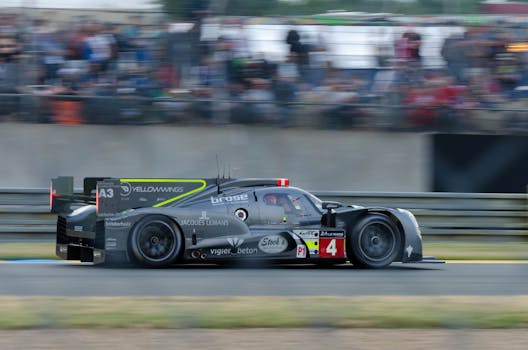
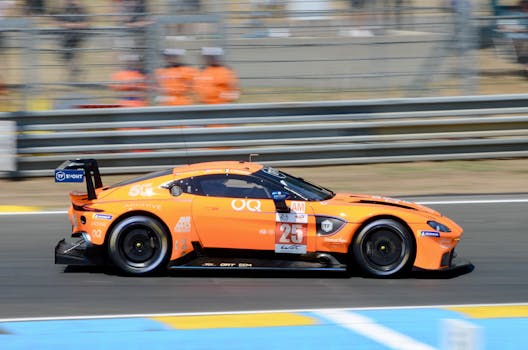
Recommended starter: Porsche 911 RSR-19 or Chevrolet Corvette C8.R. Both have predictable weight transfer, strong front-end grip, and extensive community setup databases. The Ferrari 488 GTE Evo rewards smoother inputs but punishes early aggression—save for hour 15+.
LMP2 caveat: Faster than GTE, but the closed cockpit reduces spatial awareness. New players misjudge braking points by 10-15 meters consistently for the first 5 hours. The ORECA 07 specifically has tricky brake pedal modulation—firm initial hit, then bleed, not progressive squeeze.
The Setup Trap: Use Defaults, Then Community Bases, Never Start From Blank
Le Mans Ultimate's setup menu has 40+ parameters. The in-game descriptions are technically accurate, practically useless for beginners.
What setup approach saves time and prevents frustration?
Three-tier progression:
- Hours 0-5: Default setup + tire pressure adjustment only. Drop pressures 0.2-0.3 PSI from default for better heat buildup on out-laps.
- Hours 5-15: Community setups from established sim racing databases or the game's integrated workshop. Filter by track and recent patch—physics updates invalidate old setups silently.
- Hours 15+: Personal adjustments to diff preload, brake bias, and rear wing. Everything else requires telemetry analysis most players won't need.
Specific parameter priorities if you must tweak early:
| Parameter | Safe Adjustment Range | What It Actually Does |
|---|---|---|
| Brake Bias | 52-58% front | Higher = more stable under braking, slower rotation; lower = turn-in, rear lock risk |
| ARB Front | Default ±2 clicks | Higher = less mid-corner understeer, harsher over curbs |
| Tire Pressure | ±0.5 PSI from default | Lower = more heat, more grip to a point; too low = sluggish response |
Everything else—dampers, springs, ride height—interacts. Changing one without understanding the matrix produces slower, less predictable cars. I spent four hours chasing a rear instability that was actually front damper rebound. The game never flagged this.
Pit Strategy and Fuel Management: The Skill That Separates Rookies From Finishers
Le Mans Ultimate's endurance races run real-time or accelerated. Even 30-minute sprint events require fuel calculation. The HUD fuel estimate lies—it assumes constant throttle, not traffic, draft, or hybrid deployment.
How do I calculate actual fuel needs for my first races?
Manual method (mandatory until you develop intuition):
- Run 3 clean laps in practice, note fuel used per lap
- Add 15% for traffic, defensive lines, and error correction
- Multiply by race length in laps; divide by tank capacity for stop count
- Add one extra lap of fuel—the game's "0.0" reserve still runs 30-45 seconds
Hybrid classes (LMH/LMDh): Fuel burn varies 20-30% based on deployment strategy. The game offers four hybrid maps (Qualify, Attack, Balanced, Save). Balanced is not balanced—it biases toward deployment on exits, saving fuel on straights. Attack burns both fuel and battery; Save preserves both for critical moments.
Critical pit window knowledge: Le Mans Ultimate enforces minimum pit stop times in most series. You cannot win by "perfect" stops. You win by entering pits with optimal tire wear—not too early (lost track position), not too late (fall-off cliff). GTE soft tires typically drop 2-3 seconds after 12-15 laps at Le Mans. Plan stop at 10-11, not 14.
Beginner Mistakes That Cost Hours: A Prevention Checklist
These errors dominate Discord help channels and Reddit complaint threads. All avoidable.
| Mistake | Why It Happens | The Fix |
|---|---|---|
| Cold tire crashes on out-lap | Assuming tire model like ACC/iRacing | 2-3 laps minimum before pushing; use tire blankets where available |
| Wrong brake pedal technique | GT habit of trail-braking into apex | Prototype: brake straight, release progressively, coast to apex, throttle |
| Ignoring track limits | Visual kerbs look usable | Le Mans Ultimate runs strict cut detection; 3 warnings = penalty in most lobbies |
| Hybrid deployment at wrong points | Button mashing on straights | Deploy post-apex to exit speed, not mid-straight for top speed |
| Joining public lobbies immediately | Career feels slow | Complete National license first; public lobbies have no safety rating protection |
| Overdriving in traffic | Ego from faster qualifying pace | Race pace = qualifying pace +2-3 seconds initially; consistency beats hero laps |
Personal failure: I qualified 3rd in my first online race, led for 4 laps, then crashed at Indianapolis corner trying to maintain pace with cold tires after a safety car. Finished 18th. The safety car period lasted 6 minutes; my tires were at 60% optimal temperature. I did not check. The game does not prompt you to check.
Multiplayer Entry: When and How to Find Clean Racing
Le Mans Ultimate's multiplayer uses a safety rating (SR) and performance rating (iRating equivalent) system. Your first races determine lobby placement for weeks.
What is the safest path into competitive multiplayer?
- Complete National license (unlocks ranked lobbies)
- Run 5 AI races at 90% difficulty—teaches racecraft without SR risk
- Join "Rookie Friendly" labeled lobbies, not "Open"—moderated, often with stewards
- Qualify, start mid-pack, finish—SR gains from incident-free races outweigh position points early
Peak hours matter. European evening lobbies (19:00-23:00 CET) have highest population, best split quality. American afternoon lobbies fragment across time zones; you may land in splits with 2000+ rating variance. Avoid.
Private leagues offer the cleanest racing but require application. Community league platforms list entry-level endurance series with mandatory pit stops and driver swaps—excellent for learning multi-stint consistency without full 6-hour commitment.
Graphics and Performance: Settings That Affect Lap Times, Not Just Pretty
Frame time consistency beats resolution. Le Mans Ultimate's physics thread ties to render frame in ways that visible stutter affects input lag.
Compromise settings for stable 90+ FPS (VR) or 120+ FPS (single screen):
- Shadows: Medium—High adds CPU load with minimal visual racing benefit
- Mirror resolution: Low or Off initially; prototype mirrors are functionally useless anyway
- Particle effects: Medium—High settings in rain reduce visibility more than Low
- Anti-aliasing: TAA or DLSS Quality, not Off—jagged edges distract from braking markers
DLSS/FSR caveat: Quality mode introduces 1-2 frame latency. For direct-drive wheels at high FFB rates, this is perceptible. Test with your hardware; some drivers prefer native resolution with reduced effects.
Field of view: Use calculated FOV, not preference. Incorrect FOV distorts speed perception, causing early or late braking. Single screen at 27", 60cm distance = approximately 38° horizontal. The game defaults wider; most new players run 50-60° unknowingly.
Your Next 10 Hours: Structured Progression Path
After completing this guide's baseline:
- Hour 1-3: GTE license completion, default setups, one track mastered (Le Mans or Spa)
- Hour 4-8: LMP2 license, community setups, first AI race with pit stops
- Hour 9-15: LMH license, hybrid management, wet weather practice
- Hour 16-20: Ranked multiplayer entry, safety rating focus, one manufacturer affinity at level 5
- Hour 21+: League exploration, telemetry analysis (MoTeC i2 Pro or community tools), personal setup development
The 24 Hours of Le Mans event unlocks at International license. Do not attempt before 25+ hours. The race requires 3-driver minimum in most formats, 6+ hour real-time commitment, and strategy depth that makes sprint racing look trivial. Premature entry wastes your time and your teammates'.
Final micro-friction: The game's save system occasionally fails to record practice session progress if you alt-tab during loading screens. I lost 90 minutes of tire data this way. Wait for the garage screen fully loaded before switching applications.