Mahjong Soul is a free-to-play digital client for Japanese Riichi Mahjong. It automates the notoriously complex scoring math of the physical tabletop game, allowing new players to focus purely on probability and strategy. While it masks itself as an anime character collector, the actual gameplay is a ruthless test of variance management where cosmetics offer zero competitive advantage. You play this to master a high-ceiling probability game, not to satisfy a gacha itch.
The Anime Gacha is a Decoy for a Brutal Probability Engine
Most players look at Mahjong Soul’s Steam page, see the flashy ultimate animations and stylized avatars, and assume the characters you unlock provide better tile draws or special abilities. They do not. The game is entirely deterministic regarding its ruleset. Your starting character has the exact same odds of drawing a winning tile as a character that cost someone hundreds of dollars to unlock.
Why does this software exist? Riichi Mahjong is fundamentally a complex probability calculator. In real life, players must memorize esoteric scoring tables to calculate hand value. You have to count "han" (major win conditions) and "fu" (minipoints based on tile composition and wait shapes). A single scoring error ruins the integrity of a physical match. Mahjong Soul acts as an automated calculator and rules enforcer. It highlights playable tiles, warns you when you lack a required win condition, and instantly processes the math at the end of a round. It solves the worst user-experience problem of the physical game.
This creates a massive asymmetry in the player experience. You gain absolute mechanical parity for free. You lose the ability to easily acquire cosmetics. The gacha system is notoriously stingy. Free pulls are incredibly rare, tied to grinding event currency and trading items in the shop at terrible conversion rates. If you enter Mahjong Soul expecting a steady drip of new avatars, you will hit a wall within your first week.
The trade-off is clear. You get a pristine, mathematically perfect tabletop simulator for zero dollars, but you pay for it by existing in an ecosystem where your avatar will likely remain a default character for months. Do not spend money expecting to win more. You are only paying for the privilege of looking slightly cooler while you lose to a mathematically superior opponent.
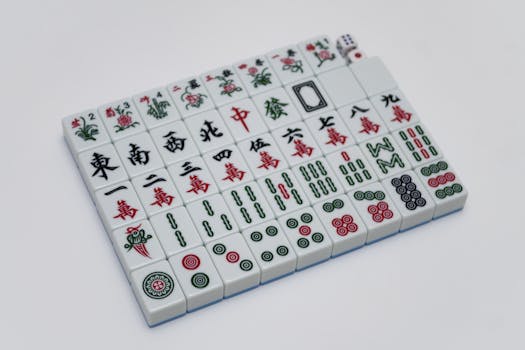
The True Gameplay Loop: Variance Management and the Fear of Fourth Place
The core loop is not collecting characters. It is climbing the ranked ladder. And the ladder is built on a punishing math system that heavily penalizes coming in last.
In lower ranks, players play to win. They chase massive, highlight-reel hands. In higher ranks, players play to not lose. This is the hidden variable that breaks new players. Mahjong Soul’s ranking points are deeply asymmetrical. Winning first place might grant you a modest bump in rank points, but finishing in fourth place will devastate your progress. This creates a gameplay loop entirely focused on risk assessment.
When an opponent declares "Riichi"—meaning they are one tile away from winning and have locked their hand—your entire objective shifts. You are no longer trying to build your hand. You are playing defense. You must discard tiles that are mathematically safe against their specific hand, a technique known as betaori. If you discard the tile they need, you pay the entire point penalty yourself. If they draw it themselves, the penalty is split among the three losers. You must learn the furiten rule, which dictates that a player cannot win off your discard if they have previously discarded that same tile. This rule is the mechanical backbone of all defensive play.
This is where players must connect Mahjong Soul to external tools. To actually improve, you cannot rely solely on the game’s internal tutorials. You need efficiency calculators. You should dump your Mahjong Soul game logs into external review trackers to see exactly where your tile efficiency broke down. The game expects you to learn the difference between a high-probability two-sided wait and a low-probability edge wait. Holding onto a lone dragon tile in the mid-game is a mathematical death sentence. Your focus in the first twenty hours should be narrow: memorize the two easiest win conditions (Tanyao and Riichi) and learn to fold your hand completely the second an opponent shows aggression.
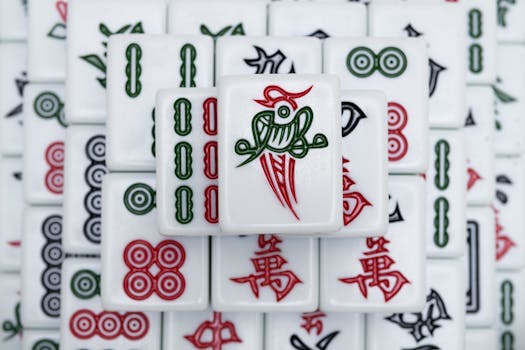
The Copper Coin Bottleneck and the Reality of In-Game Bankruptcy
There is a secondary economic system in Mahjong Soul that catches returning players completely off guard. It is the Copper Coin economy. You need Copper Coins to pay the entry fee for ranked matches.
When you win, you take coins from the losers. When you lose, you pay out. New players rarely notice this because the lowest-tier Bronze rooms have negligible entry fees, and the game showers you with introductory currency for completing basic tasks. But as you climb into the Adept and Expert rooms, the fees scale aggressively.
If you hit a bad streak of variance—which is entirely normal in a game where a perfect player still only wins about 25% of the time—you can literally go bankrupt. If your coin balance drops below the entry threshold for your current rank, you are locked out of that room. You are forced to grind in the beginner rooms for pennies or wait for a daily revival allowance.
This creates a brutal trade-off. Do you play in the highest room available to maximize your rank point gains, risking a devastating coin loss if you finish fourth? Or do you play one room down, protecting your coin purse but severely capping your rank progression? The math favors playing at your highest level, but only if you maintain a coin buffer of at least ten times the entry fee.
Do not waste Copper Coins buying low-tier gifts in the store just to feed the gacha mechanics. The conversion rate from coins to cosmetic dust is a trap designed to drain your account. Hoard your coins as a buffer against variance. The game will inevitably deal you unwinnable starting hands for five matches in a row. Your rank will recover eventually. Your coin purse, if mismanaged, will lock you out of the game entirely.
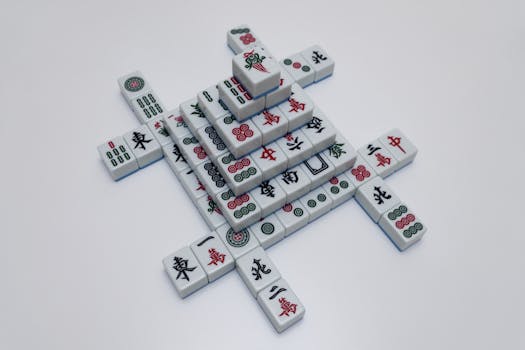
The One Habit to Break Before You Start
Stop clicking the "Pon" and "Chi" buttons just because they light up on your screen. Opening your hand by claiming an opponent's discarded tile destroys your defensive options, lowers the point value of your hand, and locks you out of the easiest win condition in the game. Keep your tiles hidden, learn the basic math of tile efficiency, and let the other three players destroy each other's rank points.