The tray fills faster than you think. Your first hour in SoEasy Tile should focus on one skill: reading the board three moves ahead before your first tap. Everything else—boosters, visual themes, the puppy mascot—is secondary to learning how tiles stack and which identical triples are actually reachable.
The Tutorial's Blind Spot: Stacking Order
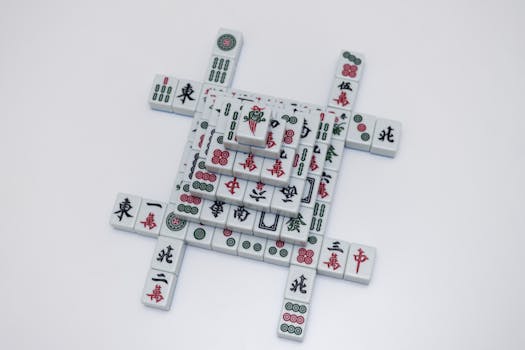
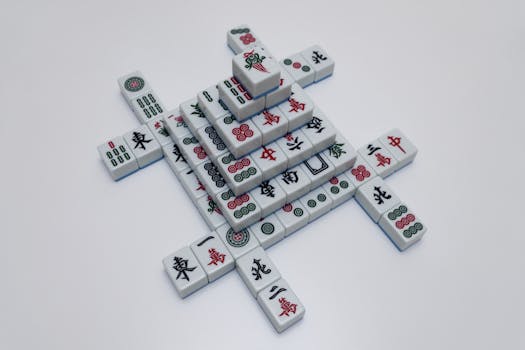
The game teaches you to match three identical tiles. It does not teach you that tiles are often buried under two or three layers you cannot see, and that your first tap frequently locks you into a dead end.
Here's what actually happens. You see a strawberry tile on top. You tap it. Now it's in your tray. But the tile beneath it was also a strawberry—and now it's trapped under a lemon you didn't notice. Your tray has one strawberry, one lemon, and growing anxiety. This is the most common early failure mode.
The hidden variable: surface area. Boards with scattered single tiles look easier than dense clusters, but scattered layouts force you to hold more partial matches in your tray. Dense clusters let you clear layers predictably. Early players intuitively avoid clusters because they look "harder." They're wrong.
| What Looks Smart | What Actually Works |
|---|---|
| Clearing edge tiles first | Clearing center stacks that block the most tiles |
| Grabbing obvious matches immediately | Holding one match to see if a better one appears |
| Using Undo when you mess up | Using Undo to test whether a tile has hidden twins beneath it |
The Undo booster is cheap early and expensive later. Use it as reconnaissance, not rescue. Tap a tile, check what surfaces, undo, now you know. This costs nothing if you act before placing a third tile.
Currency Traps and Booster Math
SoEasy Tile offers in-app purchases and ad rewards. The early economy feels generous. It isn't.
Two mistakes waste your progression:
Hoarding boosters for "hard levels." Players hit level 15-20, face their first real stacking puzzle, and burn all three boosters to brute-force through. Then level 22 is harder, and they're out of resources with no practice at actual board reading. Better to fail a level three times and learn the stack pattern than to spend your way past it.
Buying extra tray slots permanently. The tray holds seven tiles. You can expand this. Don't. The game is balanced around seven. Expanding to eight or nine teaches sloppy habits that break when events or challenges force you back to the standard size. I've seen players with ten-slot trays who cannot complete daily challenges at the base difficulty.
| Booster | Best Use | Common Waste |
|---|---|---|
| Undo | Reconnaissance on hidden stacks | Recovering from obvious mistakes you should have seen |
| Shuffle | When you're genuinely stuck with 6/7 tray full of singletons | Panic button after two bad taps |
| Hint | Never early; use when learning new tile sets | Following blindly without understanding why |
Ads for free continues are tempting. The trade-off: thirty seconds of ad versus restarting with full knowledge of the board layout. Early on, restart. You learn faster. Later, when levels take five minutes to clear and one slip costs everything, the ad continue becomes efficient. The asymmetry: time now versus skill forever.
The Three Decisions That Shape Your Run
After the first hour, your account trajectory locks in based on three choices:
1. Which tile set you master first
The game cycles through visual themes—fruits, flowers, objects. Each has slightly different color differentiation and silhouette recognition speed. Pick one. Stick with it for fifty levels. Your brain builds pattern-matching shortcuts. Switching early resets this. The flower set has the most similar shapes (roses versus peonies versus carnations). Fruits are easiest to distinguish at glance. Objects sit in the middle. If you struggle with visual parsing, fruits are your training wheels.
2. Whether you chase daily streaks
Daily rewards escalate. Missing one resets to day one. The math: a 7-day streak gives roughly 3x the total rewards of seven individual days. But chasing streaks forces you to play when tired, which builds bad habits and burns boosters. The trade-off is asymmetric. Streak rewards matter far less than skill development. Play daily if you enjoy it. Don't log in at 11:58 PM panicking about a flower icon.
3. When you first attempt "Zen" mode versus timed challenges
Zen mode has no tray limit pressure. Timed challenges do. Players who do fifty Zen levels first develop elegant, slow board-reading skills that shatter under time pressure. Players who rush to timed challenges learn frantic tapping that fails on complex boards. The optimal path: alternate every five levels. Zen for pattern recognition, timed for decision speed. Most players pick one and stay there. Their skills stay lopsided.
What to Do Differently
Stop matching the first triple you see. Spend ten seconds scanning for which tiles are buried under others, which triples are actually completable before your tray fills, and whether that "obvious" match is trapping something worse underneath. The first hour is not for winning levels. It's for building the reflex to see board state, not just surface tiles. Everything after level twenty assumes you already have this.