Game Overview
V-Rally 4 Ultimate Edition is the definitive version of the critically acclaimed off-road racing game developed by KT Racing and published by Bigben Interactive (now Nacon). Released in 2019 for the PlayStation 4, Xbox One, and PC, the Ultimate Edition serves as a comprehensive package that bundles the base game with all previously released downloadable content (DLC). As the fourth main installment in the storied V-Rally franchise—which originally found massive success on the original PlayStation and Sega Saturn in the late 1990s—this entry successfully bridges the gap between retro arcade accessibility and modern simulation depth. The game boasts an officially licensed World Rally Championship (WRC) backdrop, featuring iconic cars, challenging tracks, and a robust career mode designed to test the mettle of both casual rally fans and hardcore sim-racing enthusiasts.
Upon its initial release, V-Rally 4 was praised for its stunning visual presentation, dynamic weather systems, and incredibly diverse roster of vehicles. However, the base game was criticized by some for feeling slightly sparse in its career progression. The Ultimate Edition rectifies this entirely by injecting a massive amount of new content, including the entirety of the "Rally B" and "Extreme Kutcha" vehicle packs, alongside additional tracks and the iconic Peugeot 206 WRC. This makes the Ultimate Edition the only truly complete way to experience KT Racing’s ambitious off-road revival.
Core Systems
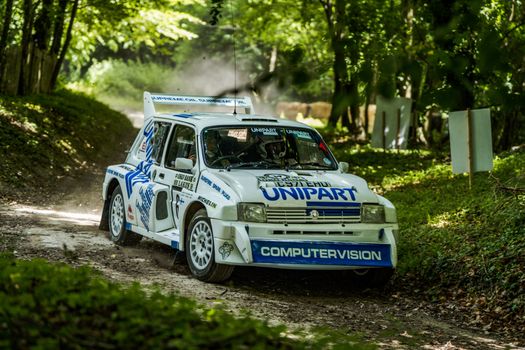
Handling and Physics
At the heart of V-Rally 4 is a dual-pillar physics system that attempts to straddle the line between arcade fun and sim racing rigor. Players can choose from several handling presets—primarily "Premium" (a balanced, slightly forgiving mode) and "Expert" (a highly demanding, realistic simulation mode). In Expert mode, the game utilizes a complex tire deformation and grip model. Driving on loose gravel requires deliberate weight shifting; throwing a car into a corner too aggressively will result in catastrophic understeer or a snap oversteer spin. The surface types drastically alter how the cars behave. Tarmac offers high grip but punishes minor mistakes with terminal wall impacts, while deep snow and mud severely limit traction, forcing players to rely on momentum and careful throttle modulation rather than outright speed.
The game also features a highly dynamic weather system that directly impacts the physics engine. Rain doesn't just look pretty—it pools on the racing line, washing away the top layer of gravel to expose the slippery bedrock beneath. Fog severely limits visibility, requiring players to rely heavily on their co-driver's pace notes and memorization. Snow accumulates on the track over the course of a stage, meaning a clean line driven by the first car in a rally will quickly degrade into a rutted, slippery mess for the cars following behind.
Progression and Economy
V-Rally 4 employs a deep progression system anchored by its Career Mode. Unlike traditional racing games where you simply buy the fastest car available, V-Rally 4 gates vehicle purchases behind a multi-tiered licensing system. Players start in the V-Rally Cross (RX) category, driving lightweight buggies to learn the basics of car control. As they earn credits and accumulate "Fame" points (experience), they unlock higher tiers such as Rally 2, Rally, and the ultimate Rally Elite class. Each class features progressively faster, more powerful, and more difficult-to-drive vehicles.
The in-game economy is heavily tied to vehicle maintenance and team management. While earning prize money for finishing stages is straightforward, players must also manage a repair budget between stages. Damage sustained during a rally—such as broken suspension, damaged turbos, or shattered windshields—carries over. Repairing everything perfectly can drain a player's funds, forcing a risk-versus-reward calculation: do you spend your winnings fixing minor cosmetic damage, or save the money to buy a faster car for the next championship, knowing you will start the next race with a compromised engine?
Vehicle Customization
While V-Rally 4 does not feature deep mechanical tuning akin to something like Gran Turismo, it offers a highly satisfying visual and setup customization system. Players can alter their car's livery using a robust decal and color editor. More importantly for gameplay, players can adjust their car's setup before each rally. This includes tweaking gear ratios (choosing between a close-ratio setup for tight, twisty tracks or a long-ratio setup for high-speed straights), adjusting ride height, altering suspension stiffness, and selecting different tire compounds for varying weather conditions. These setup changes have a noticeable, tangible impact on the track, making pre-race preparation a vital core system.
Characters / Classes / Factions
Playable Vehicle Classes
Because V-Rally 4 focuses entirely on motorsport, its "classes" are defined by the distinct categories of off-road vehicles available to the player. The Ultimate Edition expands these significantly:
- V-Rally Cross (RX): The entry-level class featuring lightweight, rear-wheel-drive buggies. These cars are low on horsepower but highly agile, making them perfect for learning how to slide a car without the severe penalties of heavier machinery.
- Rally 2: Featuring older generation 4WD rally cars, this class serves as the stepping stone to true rally simulation. Cars here have less aerodynamic downforce than the top tier, meaning they are more prone to sliding and require aggressive counter-steering.
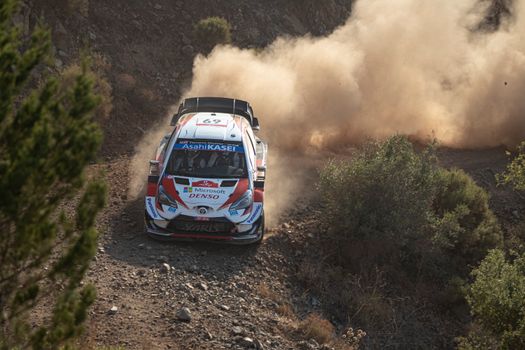
- Rally: The modern WRC specification class. These cars are incredibly fast, boasting massive aerodynamic kits, complex all-wheel-drive systems, and anti-lag turbo systems. They require immense skill to master due to their high speeds and violent cornering capabilities.
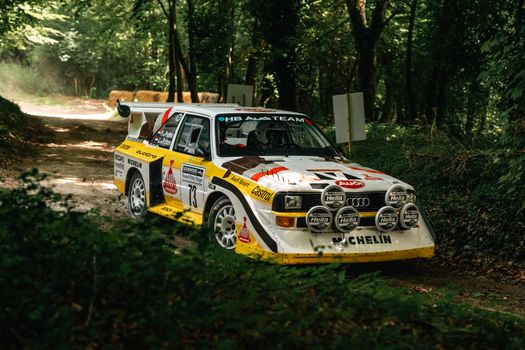
- Rally Elite: The pinnacle of the V-Rally 4 experience. These are legendary, historically significant rally monsters from the infamous Group B era of the 1980s. Featuring insane power-to-weight ratios (often exceeding 500 horsepower in cars weighing less than a ton), the Rally Elite class is notoriously difficult to tame, rewarding only the most precise and brave drivers.
- Extreme Kutcha: (Added in the Ultimate Edition DLC) These are specialized, heavily modified trucks and endurance vehicles designed for the harshest desert environments. They handle like heavy boats compared to rally cars, requiring a completely different driving style focused on momentum and survival over outright agility.
- Buggy: Pure, unadulterated off-road fun. These open-wheel vehicles lack the sophisticated aerodynamics of the Rally classes but make up for it with absurd suspension travel and an ability to jump and land massive terrain changes without breaking.
Factions: The Manufacturer Teams
While there is no narrative-driven faction warfare, the game is heavily themed around real-world manufacturer rivalries. As players progress through the career mode, they are essentially acting as a freelance driver who can sign contracts with different manufacturer "factions." Signing with Ford, Subaru, Peugeot, or Volkswagen unlocks unique perks, primarily access to that manufacturer's specific line-up of cars. Aligning yourself with a specific faction early on dictates the trajectory of your career, as manufacturer loyalty often yields better upgrade parts and exclusive liveries for that specific brand's vehicles.
World Building
Global Rally Locations
V-Rally 4 does not feature a traditional open world; instead, its "world building" is expressed through its masterfully crafted, geographically diverse rally stages. The Ultimate Edition features over 50 unique stages spread across highly distinct global biomes, each presenting a unique tactical challenge. The environments are not merely visual reskins; they feature distinct topographies and surface types that fundamentally alter gameplay.
- Malaysia: Characterized by dense, claustrophobic jungle tracks. The terrain is a mix of deep mud and hard-packed dirt hidden beneath fallen leaves. Visibility is often poor due to the thick canopy, and the narrow paths leave absolutely zero margin for error.
- Siberia: A freezing, unforgiving landscape dominated by ice and deep snow. Stages here feature long, sweeping corners where the car is constantly sliding on a low-friction surface. Players must look far ahead to anticipate where the ice begins and ends.
- Japan: A stark contrast to the other locations, the Japanese stages take place on narrow, winding asphalt mountain passes (reminiscent of touge racing). Grip is high, but the sheer drop-offs on the sides of the road make crashing fatal to your stage time.
- Kenya: The classic African safari rally experience. These stages feature incredibly high speeds, massive jumps, and heavily rutted dirt tracks. The key challenge in Kenya is avoiding the hidden rocks and deep ruts that can instantly destroy a car's suspension at 120 mph.
- Idaho (USA): Featuring a mix of dense pine forests and rocky, high-altitude desert trails. The USA tracks are known for their highly technical, slow-speed hairpin turns interrupted by sudden, violent elevation changes.
The Co-Driver Dynamic
A crucial element of the game's atmospheric world-building is the inclusion of your co-driver. In V-Rally 4, the co-driver is your lifeline. The game utilizes the standard "pace note" system (e.g., "Left 3 into Right 1, don't cut"). The delivery of these notes is highly immersive, with the co-driver's tone becoming more urgent as speeds increase. In extreme weather conditions like heavy fog or blinding snow, the auditory cues from the co-driver replace visual sight as your primary method of navigating the world, creating an intense, claustrophobic bond between the player and the invisible passenger.
Strategy & Tips
Mastering the Art of the Scandinavian Flick
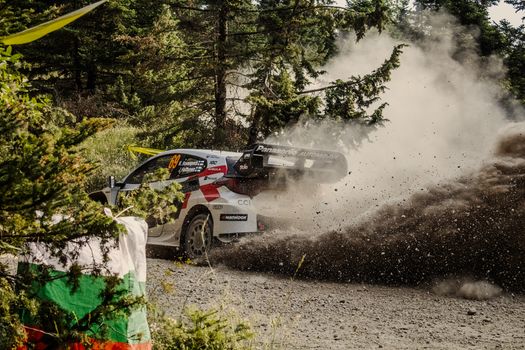
To succeed in the higher classes of V-Rally 4—particularly in the Rally Elite Group B cars—you must master the Scandinavian Flick. This is a technique used to initiate a slide on loose surfaces. As you approach a tight corner, briefly steer in the opposite direction of the turn (away from the apex), then aggressively flick the wheel back toward the apex while simultaneously applying the handbrake and throttle. This shifts the weight of the car to the outside wheels, breaking rear traction and swinging the rear of the car around, allowing you to carry much more speed through a corner than traditional braking would allow. Practice this extensively in the Buggy class, where the low grip makes the technique easy to learn, before applying it to the faster, more dangerous Rally classes.
Tire Management and Setup Optimization
Many players make the mistake of using the same tire compound and setup for an entire rally. In V-Rally 4, adapting is crucial. If a rally features mixed weather—with rain expected halfway through a 10-minute stage—starting on dry tires will leave you crawling for the second half. Opt for intermediate tires to maintain a competitive pace throughout. Similarly, do not neglect the gear ratio setup. For narrow, technical stages like those in Malaysia, a close-ratio gearbox keeps the turbo spooled and the car in the power band. For the sweeping, high-speed roads of Kenya, a long-ratio setup is mandatory to prevent hitting the rev limiter and losing power on long straights.
Managing Your Repair Budget
The biggest strategic mistake in Career Mode is treating every stage like a sprint race. If you are 15 seconds behind the leader with two stages left in a rally, pushing at 100% to make up the time will likely result in a crash that breaks your suspension. The time lost fixing that suspension before the final stage will cost you more than the 15 seconds you were trying to make up. Drive within your limits to ensure the car survives. Prioritize repairs: engine and gearbox damage degrades your overall performance, so fix those first. Leave cosmetic damage like broken headlights or minor bodywork unrepaired if funds are tight.
Reading the Road Surface
Always keep your eyes focused two to three corners ahead of your current position. The co-driver will call out the upcoming terrain, but you must process what that means for your tires. If you hear "Caution, deep rut into left 2," you must lift off the throttle early. Dropping a wheel into a deep rut at high speed will rip the steering wheel out of your hands, leading to an unavoidable crash. Similarly, on tarmac stages, look for the dark patches on the road; this indicates water pooling or spilled oil, which drastically reduces grip. Adjust your racing line to avoid these dark patches even if it means taking a slightly longer route around the corner.
Using the Rewind Feature Wisely
V-Rally 4 includes a "Rewind" feature that allows players to turn back time to correct mistakes. While sim purists may avoid it entirely, using rewind strategically is an excellent learning tool. If you crash on a specific corner, do not immediately rewind. Let the crash finish, watch the replay to understand why you crashed (did you brake too late? Did you clip the inside bank?), and then restart the stage. If you are struggling mid-race and make a minor mistake that doesn't damage the engine, use the rewind. If you completely destroy the car, take the time penalty and use it as a lesson in car preservation rather than rewinding to pretend it never happened.
Resources
For players looking to dive deeper into the mechanics, leaderboards, and community surrounding V-Rally 4 Ultimate Edition, the following resources are invaluable:
- Official V-Rally Website: The home base for developer news, patch notes, and official announcements regarding the KT Racing franchise.
- Steam Community Hub: The most active hub for PC players. Here you will find detailed guides on optimal car setups for specific stages, troubleshooting threads for technical issues, and active discussion boards about the game's physics engine.
- YouTube Sim-Racing Creators: Channels dedicated to rally sim racing (such as those covering WRC and Dirt Rally) often have comprehensive V-Rally 4 tutorials. Searching for "V-Rally 4 Setup Guide" or "Group B Masterclass" will yield highly visual, step-by-step demonstrations of advanced techniques like left-foot braking and weight transfer.
- Reddit (r/simrally): While there isn't a massive, dedicated subreddit solely for V-Rally 4, the broader sim-rally community on Reddit frequently discusses the game, shares custom liveries, and compares its physics model to contemporaries like Dirt Rally 2.0.
- In-Game Telemetry: Do not overlook the game's internal telemetry screen available in the garage. While basic compared to dedicated PC sim tools, it provides vital data on tire temperatures, suspension travel, and throttle/brake inputs. Reviewing this data after a poor stage is the best way to identify where your driving is fundamentally failing.