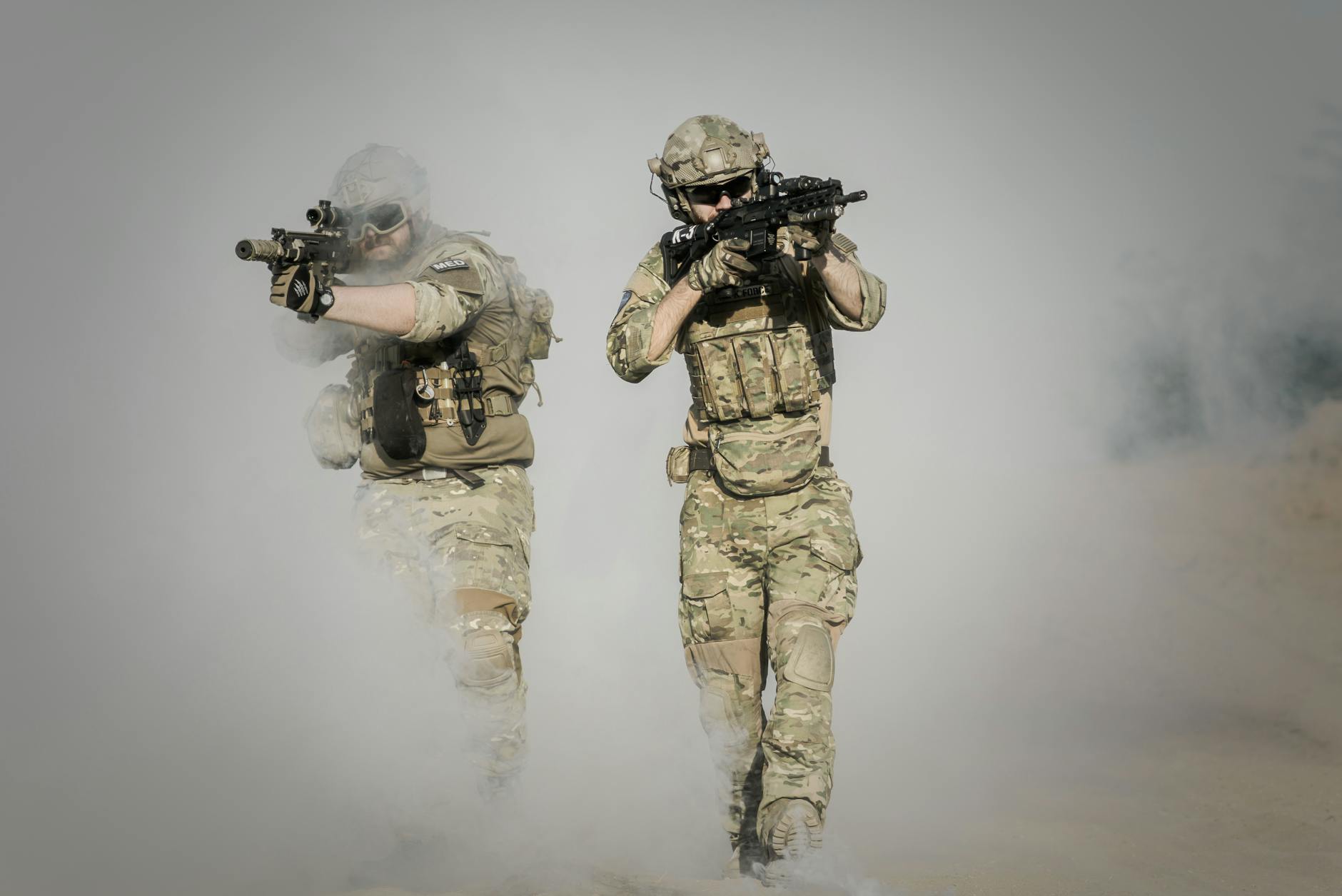
The motion-capture veteran says his role in Sandfall's RPG is 'exactly the same' as film or stage work. The difference? This time, the industry might actually believe him.
Andy Serkis, who voiced the character Renoir in Clair Obscur: Expedition 33, told Variety that videogame acting has faced persistent industry snobbery — and that he approaches motion-capture performance with identical rigor to film, stage, or television. His comments arrive as Sandfall's RPG gains traction as a potential turning point for how acting talent perceives and participates in the medium.
What Serkis Actually Said — and What He Didn't Need To
The interview, published May 8, 2026, contains no hedging. Serkis: I don't see any difference between that and acting in films or on stage or TV. It's exactly the same. You approach the character and build a character in the same way.
This is not a newcomer discovering the medium. Serkis first worked in videogames with Ninja Theory on Heavenly Sword for PlayStation 3 — a 2007 title that predates the modern performance-capture pipeline. He has watched the arc from dismissal to curiosity to, possibly, legitimacy.
The specific phrasing matters. There has always been that snobbery
— past tense, continuous. Not was
. The prejudice persists. But Serkis locates a shift in who is doing the dismissing: young actors are coming out of
training now willing to engage. The gatekeepers may be aging out.
On Expedition 33 specifically, Serkis praised Sandfall's visual direction — I just thought it was beautiful
— and noted the collaborative mocap process with Sandfall's internal talent, including Maxence Cazorla. The performance was not isolated star vehicle; it was integrated production work.

The Milestone Claim: Why Expedition 33, Why Now
PC Gamer's original coverage frames Expedition 33 as a vital milestone on the road to getting everyone else to take the medium and (more importantly the people who make it, mocap actors included) as seriously as they deserve to be.
This is a specific claim worth testing.
What makes this different from previous prestige-cast games?
The list is longer than casual recall suggests. Death Stranding fielded Norman Reedus, Mads Mikkelsen, Léa Seydoux. Cyberpunk 2077 had Keanu Reeves. Baldur's Gate 3 — which Dragon Age: Inquisition lead writer David Gaider credited with having changed the game
for videogame actors — built its performances on ensemble theatrical methodology. Charlie Cox, who played Expedition 33 and announced another videogame role for 2026, cited the game as having opened a new avenue.
So the milestone is not first-contact. It is density. Multiple prestige actors, across multiple high-profile releases, treating game work as career continuation rather than exotic detour. Serkis's explicit equivalence-drawing — the exactly the same
formulation — provides rhetorical cover for actors who lack his established capital to make the same claim without career risk.
Hidden variable: The mocap actor's credit visibility. Serkis names mocap actors included
as the specifically underserved constituency. Film audiences know Serkis's face from Lord of the Rings; they do not know the names of the body performers who executed the physical data his voice anchored. Expedition 33's integration of Sandfall internal talent like Cazorla with external voice casting represents a production model where the labor hierarchy is flatter — or at least flatter than Hollywood's traditional above/below-the-line segregation.

The Comfortable Narrative — and Where It Cracks
SERP consensus on this topic tends toward teleology: each prestige-cast game is another step toward inevitable legitimacy. The medium matures; Hollywood follows. This is wrong in two falsifiable ways.
First: The history is cyclical, not linear. Heavenly Sword (2007) featured Serkis and received critical praise for its animation. The industry did not pivot. LA Noire (2011) used MotionScan facial capture with professional actors. The technology was not widely adopted due to cost and pipeline constraints. Prestige casting in games spikes, plateaus, recedes. The current wave requires specific sustaining conditions.
Second: The economic incentive structure remains unstable. Serkis can afford to say exactly the same
because his film career is non-negotiable. For actors without equivalent security, videogame work still carries opportunity cost — long production cycles, NDA-bound promotion, performance fragmented across non-chronological recording sessions. The snobbery
was never purely aesthetic. It was risk-assessment.
Expedition 33 matters if it demonstrates that the risk has shifted: that game performance now offers sufficient visibility, sufficient creative input, sufficient credit clarity to compete with equivalent film or television time investment. Serkis's testimony is evidence; it is not proof. The proof requires tracking whether his participation produces imitators at non-star levels.
How the Performance Actually Worked
Sandfall's production model for Renoir is worth examining as mechanism.
Entity → mechanism → outcome:
- Serkis (voice) + Cazorla (mocap) → split performance pipeline → synthesized character. This is not Serkis performing physically. The voice performance and body performance were separable, recombined in engine. The actor's traditional monopoly on character embodiment is technologically dissolved.
- Sandfall (developer) + internal mocap team → reduced outsourcing dependency → faster iteration loop. Cazorla's presence as named internal talent suggests Sandfall built sustained mocap capacity rather than renting facility time. This changes cost structure and creative control.
- Unreal Engine 5 (inferred from visual evidence and release date) → photorealistic rendering standard → reduced uncanny valley penalty for human faces. The "beautiful" Serkis responds to is partly technical; the engine's lumen and nanite systems permit lighting that flatters performance capture in ways previous generations struggled to achieve.
The outcome: a performance that Serkis could plausibly claim as equivalent to his film work because the visual result no longer betrays its digital origin at casual glance. The snobbery required visible seams. The seams are narrowing.

What This Means for Players — and What It Doesn't
For players of Expedition 33, the immediate implication is verification: the Renoir performance is not stunt casting. Serkis's engagement with character-building methodology — his insistence on process equivalence — suggests the vocal work was directed with narrative intention rather than marquee obligation.
For the broader player community, the implications are structural:
Credit visibility may improve. When prestige actors name their mocap collaborators in press interviews, they create precedent for billing practices. Players who check credits may start seeing body performers listed with equivalent prominence to voice talent.
Production budgets for narrative RPGs may polarize. The capacity to attract Serkis-level talent requires funding; the capacity to integrate that talent with internal mocap teams requires infrastructure. Mid-tier developers without Sandfall's specific resource profile may find the performance bar raised against them.
What this does not mean: Universal adoption. The conditions that made Serkis's participation possible — Sandfall's internal mocap capacity, Unreal Engine 5's rendering capabilities, the game's specific French-painting-inspired aesthetic that flatters stylized realism — are not generalizable across all genres or budgets. A pixel-art RPG does not need this. A live-service game with fragmented narrative delivery cannot sustain it.
What Remains Unverified
Several claims in circulation exceed current evidence.
Financial terms: No disclosure of Serkis's compensation structure, whether equity, flat fee, or performance bonus. The economic viability of prestige casting for a debut IP from a new studio is unproven without this data.
Recording conditions: Whether Serkis performed voice work in isolation or with scene partners, whether sessions were directed by Sandfall narrative staff or external film directors, whether any improvisation was permitted — all unreported. These variables affect the "exactly the same" claim substantially.
Long-term career impact: Charlie Cox's announced 2026 game role is cited as downstream influence. Causation is unestablished. Cox may have been contracted before Expedition 33 released. The "opened a new avenue" quote refers to his subjective experience, not industry-wide pattern.
Sandfall's future projects: No announced follow-up. Whether the studio can sustain this production model, or whether Expedition 33 represents one-time resource concentration, is unknown.
What to Watch Next
Immediate (0-6 months):
- BAFTA Games Awards 2026 nominations, specifically performance categories. Expedition 33's presence or absence establishes institutional recognition.
- Charlie Cox's unannounced 2026 game — whether it receives comparable press positioning, whether Cox names collaborators, whether the performance quality matches his description.
Medium-term (6-18 months):
- Whether Sandfall's next project retains internal mocap capacity or outsources. This reveals whether the production model was sustainable or exceptional.
- Actor union (SAG-AFTRA) negotiations regarding videogame performance. Serkis's equivalence claim becomes relevant if contract terms move toward parity with film/television.
Structural indicator (18+ months):
- Non-star actors reporting improved credit visibility, residual structures, or audition access for mocap-specific roles. Serkis's advocacy matters only if it produces material benefit below his tier.
The Harder Verdict
Serkis is right about the snobbery. He is right about the methodology. Whether he is right about the change requires evidence he cannot provide — evidence about what happens to actors who are not Andy Serkis.
Expedition 33 is a milestone if it proves replicable. The game is beautiful. The performance is serious. The production model is instructive. Replication, not celebration, is the test.