Bryan Catanzaro's admission flips the narrative: AI isn't cheap labor—it's expensive infrastructure with a payroll problem.
Nvidia vice president Bryan Catanzaro told Axios his team's compute costs exceed employee salaries—a direct contradiction of AI's core selling proposition as cheap labor replacement. The admission, from a company that became the world's first $5 trillion firm on AI demand, reveals how capital-intensive model training and inference have become even for insiders with preferential hardware access.
What Catanzaro Actually Said
"For my team, the cost of compute is far beyond the costs of the employees."
Source: Axios interview, reported by PC Gamer, May 8, 2026. Speaker: Bryan Catanzaro, VP of applied deep learning, Nvidia. Caveat: Quote does not specify total cost vs. per-worker equivalent; context suggests total expenditure interpretation.
Why This Statement Lands Differently Than Typical AI Cost Debates
Most AI cost discourse splits along predictable lines. Vendors promise productivity gains. Labor advocates warn of displacement. Economists debate net job effects. Catanzaro's comment bypasses all three. He's describing a cost structure inversion inside the most AI-advantaged organization on Earth.
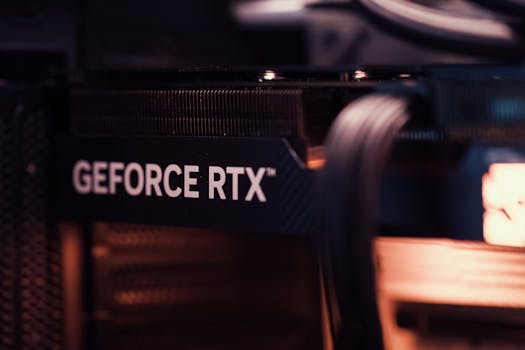
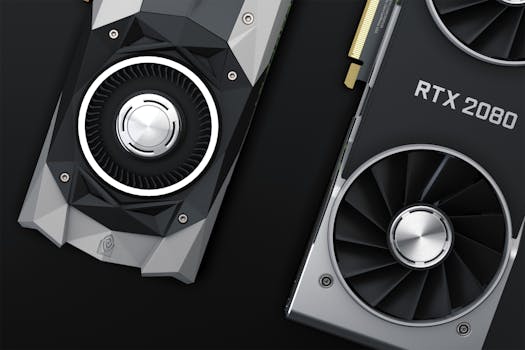
Here's the mechanism. Nvidia designs the GPUs. Nvidia gets them at cost—or earlier. Nvidia's deep learning team doesn't pay cloud markup, doesn't wait in Anthropic's or OpenAI's procurement queue, doesn't suffer the 40-100% price inflation that hit H100 clusters in 2023-2024. If this team's compute exceeds its payroll, the economics for ordinary firms are brutal.
The hidden variable: labor arbitrage vs. capital intensity. AI was sold as replacing expensive white-collar hours with cheap inference. The reality, at least at frontier scale, is replacing expensive white-collar hours with more expensive capital equipment running continuously. Software margins don't apply when your "product" is petaflop-hours consumed in real time.
What does "compute costs" actually include for a team like Catanzaro's?
Training runs for foundation-model research. Inference at scale for internal prototyping. Data pipeline processing. Evaluation clusters. The electricity, cooling, and facility amortization that Nvidia's own financials bury in cost of revenue. Catanzaro didn't itemize. The blunt comparison—compute vs. employees—was the point.
The Consensus Catanzaro Just Undermined
The dominant AI narrative, especially from Microsoft's AI CEO Mustafa Suleyman and similar voices, holds that lawyers, accountants, project managers, and marketers face 12-18 month replacement horizons. The implicit promise: AI workers cost less. Not "cost differently." Not "cost more but do more." Less.
Catanzaro's data point doesn't falsify this for every use case. A $20/month ChatGPT subscription replacing a $75,000 junior analyst? Different math. But it does falsify the assumption that frontier AI development itself follows the cheap-labor model. The people building the replacement tools operate in a cost regime where their own salaries are the smaller line item.
Self-correction: I initially read Catanzaro's "far beyond" as potentially hyperbolic—executive color commentary. Re-examining: this is a technical VP, not a marketing officer, speaking to Axios on record. The specificity of "my team" limits the claim's scope but also protects it; he's not generalizing to all of Nvidia, let alone the industry. The constraint makes it more credible, not less.
What This Signals for Three Different Players
| Player | What Changes | What to Watch |
|---|---|---|
| Enterprise buyers | Total cost of ownership calculations need capital expenditure lines, not just subscription fees. Inference at scale isn't marginal-cost-zero. | Whether vendors shift pricing from per-seat to per-token or compute-hour models. |
| AI startups | Competing on model capability requires capital structures that favor incumbents with captive compute. Differentiation must come from architecture efficiency, not just scale. | Distillation and compression techniques that reduce inference costs 10x without capability collapse. |
| Workers in "replaceable" roles | Replacement timeline may depend on whether your tasks need frontier models or commodity inference. The latter arrives faster and cheaper. | Which job categories see tool deployment before full automation—augmentation as precursor to replacement. |
The Nvidia Specificity: Why This Isn't Generalizable (Yet)
Nvidia's position as GPU designer and primary beneficiary creates circular economics. The company has incentive to maximize AI investment everywhere, including internally. Catanzaro's team likely runs experiments that would be indefensible at a startup—exploratory training, architecture searches, scaling law probes with no immediate product.
But that's precisely why the admission stings. If even rational internal compute allocation exceeds payroll, what does irrational allocation—driven by competitive FOMO, investor pressure, or talent recruitment—look like? OpenAI's $110 billion funding round (reported early 2026) and Meta's continued AI infrastructure commitments suggest the industry is betting Catanzaro's cost structure is temporary, solvable through scale.
The contrarian read: scale reduces per-unit costs, not necessarily total expenditure. Jevons paradox for intelligence. More efficient compute gets consumed immediately by larger models, longer contexts, multimodal expansion. Catanzaro's ratio may worsen before it improves.
Is AI actually more expensive than human workers across the industry?
No comprehensive data exists. Inference costs have fallen—OpenAI's GPT-4-level API pricing dropped roughly 90% from 2023 to 2025 per token. But token volumes expanded faster. Net spend? Growing, per every cloud provider's earnings call. The "cheaper than humans" claim survives at the task level, collapses at the system level.
What Remains Unknown
- Catanzaro's baseline: Is he comparing compute to mean, median, or fully-loaded employee cost? Silicon Valley engineering compensation including stock can exceed $500K. "Far beyond" that threshold is genuinely staggering.
- Time horizon: Is this a training-spike anomaly or sustained operational state? Training costs are lumpy; inference is continuous.
- Internal transfer pricing: Does his team pay market rates for Nvidia hardware, nominal accounting rates, or zero? The answer determines whether this is real economics or organizational accounting.
- Competitive response: Will AMD, Google TPU, or custom silicon alter this cost structure, or has Nvidia's CUDA ecosystem locked in the expense?
What to Watch Next
Short term (3-6 months): Whether other AI executives confirm or dispute Catanzaro's framing. Silence will be its own signal. Watch for "efficiency" announcements from OpenAI, Anthropic, Google—token-cost reductions that don't mention total spend.
Medium term (6-18 months): Enterprise AI contract structures. Per-seat pricing that dominated 2023-2024 gives way to usage-based or hybrid models when buyers realize inference isn't free. The transition will be messy—CFOs discovering that enthusiastic adoption creates unpredictable OpEx.
Structural: Nvidia's own reporting. If AI demand softens, does the company break out "internal consumption" vs. external sales? Jensen Huang's 2025 comment—that AI creates new roles even as it eliminates others—reads differently when the cost side is this visible. Role creation is cold comfort if the economics don't close.
The Verdict
Catanzaro didn't say AI is a bad investment. He said it's a different investment than advertised—not labor replacement but capital intensification. The implications are sector-wide. For enterprises: budget models need hardware depreciation. For workers: displacement risk is real but the "cheap substitute" framing understates competitive pressure. For investors: Nvidia's $5 trillion valuation assumes this cost structure is someone else's problem. Catanzaro just confirmed it's his too.
FAQ
Who is Bryan Catanzaro?
Vice president of applied deep learning at Nvidia, a technical leadership role responsible for research and implementation of deep learning techniques across Nvidia's products and internal operations.
Did Catanzaro say AI workers cost more per person or in total?
The Axios report notes ambiguity. PC Gamer's coverage flags this: "more in total" is the likely interpretation given Nvidia's scale of AI investment, but "per average worker's work" was not ruled out.
Does this mean AI isn't profitable?
Not directly. It means AI development at frontier scale is capital-intensive in ways that contradict the "cheap automation" narrative. Profitability depends on revenue capture, which varies by vendor and use case.