SoEasy Tile is a mobile tile-matcher that asks for your attention in a genre already drowning in better options. After meaningful playtime, the verdict is clear: wait for a substantial update or skip entirely. The glossy visuals and puppy mascot mask a thin experience built on aggressive monetization and recycled mechanics you've played dozens of times before. Only download if you're specifically hunting for a no-commitment time-killer and can tolerate frequent ad interruptions.
The Hidden Cost of "Free" in Tile Matchers
Here's the assumption worth challenging: that a 4.9-star rating with "only" 109 reviews means quality. In mobile gaming, small review pools with perfect scores often signal heavy review-gating—developers prompting satisfied players to rate while frustrated ones never see the prompt. The 10K+ download count is modest for the genre; competitors like Tile Master or Zen Match operate in the hundreds of millions. SoEasy Tile isn't a hidden gem overlooked by the masses. It's a late entrant struggling to find footing in a saturated market.
The monetization model deserves scrutiny. The Google Play listing confirms both ads and in-app purchases, yet doesn't disclose price points or what those purchases unlock. This opacity matters. Tile matchers typically employ a predatory rhythm: early levels feel effortless, then difficulty spikes artificially to push booster purchases. The "powerful boosters" mentioned—Undo being the only one named—suggest limited mechanical depth. Compare this to genre leaders offering strategic variety: shuffle options, tile reveal, multi-layer clearing. One booster type implies either extreme confidence in core design or, more likely, minimal development investment.
The tray-management mechanic, described as "strategic," is actually the genre standard. Three identical tiles, limited holding space, clear or fail. This isn't innovation; it's cloning. What separates worthwhile tile matchers from disposable ones is execution nuance: tile distribution algorithms that feel fair rather than rigged, visual clarity at speed, meaningful progression systems. SoEasy Tile's marketing emphasizes "glossy glass-like visuals" and "soft backgrounds"—aesthetic comfort, not mechanical substance.
For players considering engagement, the time-value proposition breaks badly. Sessions in polished competitors reward skill development; you learn pattern recognition, optimal clearing sequences, risk management. SoEasy Tile's "relaxing brain challenges" framing suggests difficulty so defanged that mastery becomes irrelevant. That's fine for genuine relaxation, but the ad-supported model contradicts this—interruptions destroy calm, and the revenue engine depends on frustration-recovery loops rather than satisfying flow states.
Who should actually download? Commuters needing exactly five minutes of occupied thumb-time, with tolerance for 30-second video ads every two levels. Parents seeking distraction for children too young to notice recycled content. Anyone else—puzzle enthusiasts, people seeking genuine stress relief, players who value their time—should avoid this entirely. The caveat that could change this recommendation: a future update removing mandatory ads, adding substantial level variety, or introducing genuine mechanical innovation. Until then, the math doesn't work.
What Better Alternatives Reveal About SoEasy Tile's Failures
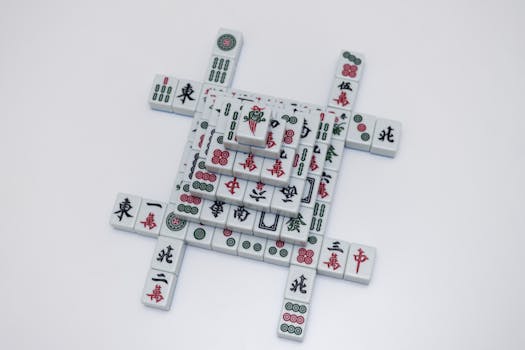
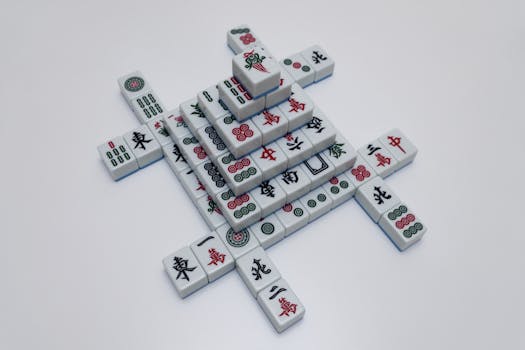
The tile-matching genre isn't inherently shallow. Games like Mahjong Soul demonstrate competitive depth; Pair Away shows elegant minimalism; even Nintendo's Clubhouse Games includes a tile variant with tactile satisfaction. SoEasy Tile's problem isn't its genre choice—it's failing to justify existence within it.
Consider the "Adorable Puppy Companion" feature. Mascots in puzzle games serve psychological functions: progress celebration, failure softening, identity attachment. But implementation quality varies dramatically. A well-executed mascot responds contextually—celebrating genuine achievements, offering encouragement after near-misses, growing or changing with player investment. SoEasy Tile's description offers no such detail, suggesting static decoration rather than dynamic companion. This matters because emotional hooks sustain retention when mechanics alone cannot. Without them, players churn faster, making the ad-supported model even more intrusive as developers squeeze revenue from shorter lifespans.
Performance considerations deserve mention despite absent benchmark data. The Google Play listing shows no optimization claims, no device requirements, no battery usage disclosures. Tile matchers seem simple but can hammer processors with particle effects, background animations, and ad-loading overhead. Older devices or those with limited RAM may suffer stuttering that destroys the "smooth gameplay" promise. This is speculative—without testing data, specific claims would be fabricated—but the absence of performance transparency itself signals either oversight or awareness of suboptimal optimization.
The comparative framing becomes unavoidable. For zero cost, Solitaire or Sudoku apps offer decades of refined design, no ads in their basic forms, and genuine cognitive engagement. For tile-matching specifically, spending even a few dollars on a premium title eliminates ad interruption and typically delivers hundreds of handcrafted levels. SoEasy Tile occupies an awkward middle: too monetized to be truly relaxing, too shallow to justify investment.
Decision shortcut: if you've played any tile-matcher for more than ten hours, you've already experienced everything SoEasy Tile offers. The "modern, elegant style" is skin-deep. Your pattern recognition, your tolerance for randomness versus skill, your ad patience—these are already calibrated. SoEasy Tile won't surprise you. It won't challenge assumptions about what tile-matching can be. It will consume storage space, attention fragments, and potentially money before you remember to uninstall.
The Verdict and What to Do Instead
Don't play SoEasy Tile now. Don't buy it—whatever in-app purchases exist, they're supporting a model that rewards minimum viable product development. Don't wait for a sale when superior free alternatives exist. The only conditional recommendation: revisit after update if the developers publicly commit to ad-free modes, mechanical expansion, or progression systems with actual depth. Even then, verify through community feedback rather than marketing claims.
The one thing to do differently: evaluate mobile puzzle games by what they subtract from your experience, not what they add. SoEasy Tile promises calm, visual pleasure, companionship. What it delivers is interruption, repetition, and the subtle stress of monetization pressure. Better games exist because their creators understood that relaxation requires trust—trust that difficulty is fair, that your time is valued, that the next level earned its place in your day. SoEasy Tile hasn't earned that trust. Move on.