RUNNING TRAIN drops you into a 40km Japanese rural railway with minimal handholding. Your first hour dictates whether you learn the crew cabin controls or restart out of frustration. This guide covers the exact progression sequence, the settings that actually matter, and the specific mistakes that cause new players to derail or stall out before reaching the seaside segments.
What to do first in RUNNING TRAIN
Complete the basic brake and throttle calibration in the crew cabin before leaving the first station. Check your controller deadzones in the settings menu, set the camera to the first-person operator view, and memorize the speed limit markers on the HUD. Driving at a consistent 45-60 km/h through the initial countryside segment builds the muscle memory required for the tighter coastal curves later in the 40km route.
The Standard Starter Routine (And Why It Fails)
Most new players approach RUNNING TRAIN like a standard arcade driving game: max the throttle, brake hard at corners, and ignore the cabin instrumentation. On a flat arcade track, this works. In a realistic 3DCG rural railway simulation, this approach fails because the physics engine models gradient resistance and braking distance based on your current mass and velocity. Slamming the brakes does not stop you on a dime; it triggers wheel slide, which increases your stopping distance and risks a penalty.
The correct initial sequence relies on throttle modulation. Accelerate gradually. Watch the upcoming gradient indicators and speed signs. Begin braking at least 200 meters before a posted limit drop. The train operator role in RUNNING TRAIN is about anticipation, not reaction. (If you are playing with a keyboard instead of a controller, this modulation is significantly harder—adjust your key sensitivity or switch to an analog input immediately).
Core Mechanics That the Tutorial Doesn't Emphasize
The 40km Japanese rural railway route in RUNNING TRAIN is not a flat loop. The elevation changes are subtle but mechanically significant.
How does gradient affect your speed in RUNNING TRAIN?
When your train ascends, gravity pulls against the locomotive's tractive effort, slowing your acceleration and capping your top speed below the posted limit. When you descend, gravity assists the train, meaning your speed will creep up even at idle throttle. The mechanism here is simple physics simulation: potential energy converts to kinetic energy. The outcome is that downhill segments require constant brake application or throttle reduction to avoid speeding violations. Ignoring gradients is the primary reason players fail timing checks on the coastal half of the route.
How does the crew cabin interface work?
You operate from a first-person perspective inside the cabin. The levers control master controllers (throttle) and dynamic brakes. The keybinds map directly to physical movements—pushing forward accelerates, pulling back applies brakes. Novatetsu Games built this interface to mirror actual train operation logic, meaning there is no "handbrake" button for emergencies. You must rely on the dynamic brake and the service brake in sequence. Attempting to treat the cabin levers like a car's pedals results in jerky stops and passenger discomfort penalties.
Settings and Input Setup for New Players
Before you depart the first station, open the settings menu.
- Deadzone: Set controller deadzones to the minimum threshold that prevents input drift. A loose deadzone makes throttle modulation impossible on gradients.
- Camera: Lock the camera to the operator seat. The third-person view looks cinematic but hides the speedometer and distance markers critical for early progression.
- Audio: Keep the track audio high. The sound of the rails changes near switches and stations, serving as an audio cue before visual indicators appear.
Skip the visual flair settings. They do not affect gameplay. Focus entirely on input precision.
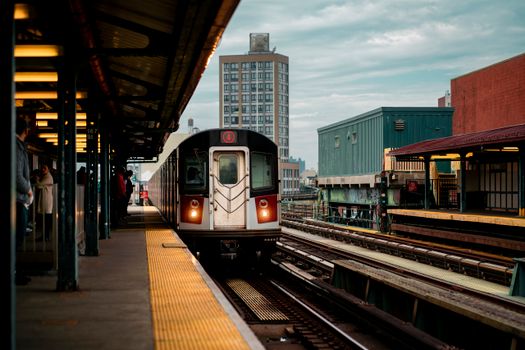
Beginner Mistakes That Kill Early Runs
Three errors account for the vast majority of failed first-hour runs in RUNNING TRAIN.
1. Overspeeding on descent. You crest a hill, see a 40 km/h limit, and realize you are already traveling at 65 km/h with no time to brake. Fix: start braking the moment you see the gradient indicator shift downward, regardless of the current speed limit.
2. Ignoring station approach sequences. Stopping at a platform requires a precise deceleration curve. Coming in too fast forces a hard stop past the boarding marker. Coming in too slow wastes time and breaks your schedule. Fix: aim to hit 15 km/h exactly at the 100-meter approach board.
3. Switching views while operating. Toggling to third-person to look at the scenery breaks your spatial awareness of the cabin controls. You lose track of your lever positions. Fix: pick one view and stay in it until the train is fully stopped.
Progression Path: What to Focus On Hour by Hour
Hour 1: Master the throttle-brake transition on flat ground. Complete the first station-to-station run without a single overspeed warning. Do not worry about timing schedules yet.
Hour 2: Introduce gradient management. The route shifts from flat countryside to rolling hills. Practice holding a steady speed on ascents and controlled descents.
Hour 3: Hit the seaside curves. The coastal segment features tighter radius turns combined with gradient changes. This is where your first two hours pay off. If your muscle memory is solid, the seaside run becomes the most visually rewarding part of the 40km route.
Hour 4 and beyond: Begin optimizing for schedule adherence. Once you can drive without errors, the challenge shifts from operation to efficiency.
When to Switch from Casual to Realistic Mode
Do not touch the realistic settings until you can complete a full 40km run in casual mode with zero violations. Realistic mode tightens the braking physics and reduces the HUD assistance. The mechanism is a stricter simulation model with fewer forgiveness parameters. The outcome is a steep difficulty spike that will feel punishing if your foundational inputs are not automatic.
I initially tried realistic mode after one successful casual run. It was a waste of time. The braking distances I had internalized were wrong by 30-40 meters. Switch back to casual, run the route three more times, then make the jump.
Next Steps After Your First Full Run
Once you complete the full 40km Japanese rural railway route without major errors, your goal shifts to schedule optimization. Learn the exact braking points for each of the rural stations. Memorize the speed transitions entering the seaside corridor. The game does not unlock new routes—your progression is entirely skill-based, measured by your consistency and timing across the same beautifully detailed environment.
Frequently Asked Questions
Is RUNNING TRAIN playable on keyboard?
Technically yes, practically no. The throttle and brake require analog precision that binary key presses cannot provide. A controller is strongly recommended for the train operator experience.
How long is a full run in RUNNING TRAIN?
A full 40km run takes roughly 35 to 50 minutes depending on your stops, speed adherence, and familiarity with the route.
Does RUNNING TRAIN have multiple routes?
No. The game centers on a single 40km Japanese rural railway route featuring countryside and seaside environments. Progression comes from mastering this specific line.
What happens if you derail in RUNNING TRAIN?
Overspeeding on curves or failing to brake in time results in a run failure. You must restart from the nearest checkpoint or the beginning of the current segment.