Executive Summary
In the ever-shifting meta of World of Tanks, understanding which tanks dominate the battlefield is the difference between a stagnant grind and a steady climb to Mark of Excellence and ranked glory. This tier list evaluates the current landscape, focusing strictly on tech tree vehicles that are accessible to all players. We have moved away from ranking premium or reward tanks, as those fluctuate wildly with the cash shop and seasonal events. Instead, this guide highlights the absolute best, most reliable lines to grind if you want to maximize your carry potential, win rate, and overall battlefield impact in the current patch.
The meta currently heavily favors heavily armored heavy tanks with turret armor that can withstand standard ammunition, and highly mobile medium tanks that can flex across the map to react to flanks. Pure hull-down meta heavies dominate city maps, while autoloaders and high-velocity mediums dictate the flow of open maps. If you are looking for the fastest path to Tier X dominance, focus on the lines highlighted in our Best in Slot and Solid Choices categories.
Best in Slot
These are the apex predators of World of Tanks. Grinding these lines yields Tier X vehicles that define the competitive meta, are virtually mandatory for Clan Wars, and possess the tools to single-handedly carry unwinnable matches. If you only have time to grind three lines, make them these.
Object 140 (Soviet Medium Line)
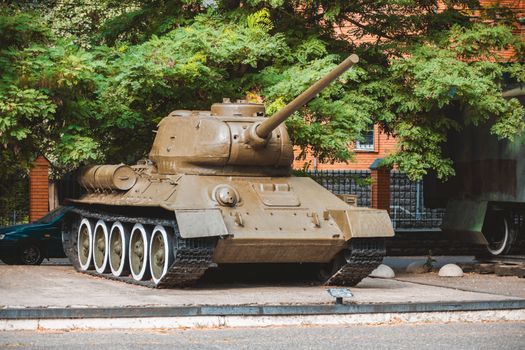
The crown jewel of the Soviet tech tree, the Object 140—and its closely related sibling, the T-62A—represents the pinnacle of flex-heavy medium tank gameplay. The entire line from the Tier VI T-34-85 through the Tier IX T-54 is famously smooth, meaning you don't have to suffer through terrible stock grinds. The Object 140 features a highly sloped turret that is practically impenetrable to same-tier standard rounds, excellent terrain resistance values that make it deceptively fast, and a 100mm gun that boasts exceptional gun depression (-7 degrees) for a Soviet tank. Its role is to act as a secondary scout, a ridge-line brawler, and a flanking assassin all in the same match. It thrives in chaotic situations where a player can leverage its DPM and mobility to punish overextended enemies.
Object 260 (Soviet Heavy Line)
Often debated as the best all-around heavy tank in the game, the Object 260 line (starting from the IS-2) is a masterclass in aggressive heavy tank play. The Object 260 itself features an incredibly robust turret, solid hull armor that can be angled effectively, and a 122mm gun that hits like an absolute truck. Unlike the IS-7, which is purely a brawling heavy, the Object 260 has the gun handling and accuracy to reliably snap-shot targets at medium ranges. Its primary strength lies in its versatility; it can lead a charge down a city street, but it can also transition to a hull-down position on a mid-range ridge and still excel. The line requires a bit of patience at Tier VIII with the IS-3, but the payoff at Tier X is unmatched for heavy tank mains.
Strv 103B (Swedish Tank Destroyer Line)
The Strv 103B is the most unique tank in World of Tanks, playing more like a sniper in an FPS than a traditional tank destroyer. The entire Swedish TD line is a masterclass in extreme patience, culminating in a vehicle that has no turret but features an automatic siege mode mechanic. When in siege mode, the Strv 103B gains incredible aim time and shell velocity, allowing it to land pinpoint shots across the entire map. Furthermore, it features a "barrel travel limit" mechanic that automatically adjusts your shell trajectory to hit targets behind tiny pieces of cover—a feature no other vehicle possesses. In a meta where map control and crossfire are paramount, the Strv 103B is the ultimate tool for locking down an entire flank from safety. It is exceptionally weak to aggressive rushes, but in the hands of a player who understands map positioning, it is utterly broken.
Solid Choices
These lines are incredibly strong, highly reliable, and will serve you perfectly well in random battles, strongholds, and advanced ratings. They might lack the absolute ceiling of the Best in Slot picks due to a specific flaw, but they are fundamentally sound and universally respected.
Progetto 46 (Italian Medium Line)
The Italian medium line revolutionized World of Tanks when it was introduced, bringing the autoreloader mechanic to the masses. The Tier X Progetto 46 can fire a single shell for high burst damage, or dump a two-shell magazine in under two seconds. This gives it unparalleled flexibility. You can play it exactly like a standard single-shot medium tank, trading shot-for-shot on ridgelines. But when an enemy makes a mistake and exposes their side, you can instantly dump 480 damage into them before they can react. The line is comfortable to play, features decent armor on the turrets of the higher tiers, and teaches excellent ammo management. It is slightly outclassed in pure DPM by the Object 140, but its burst potential keeps it firmly in the upper echelons of the meta.
Object 261 (Soviet SPG Line)
If you enjoy playing artillery, this is the only line you should consider. The Object 261 is universally recognized as the best SPG in the game due to its incredibly high shell velocity, massive splash radius, and surprisingly good accuracy for an artillery piece. Unlike the deadly but incredibly slow BC 58, the Object 261's shells travel so fast that leading targets is almost non-existent, allowing you to hit moving light tanks with relative ease. The line leading up to it, featuring the SU-14-2, is notoriously punishing due to poor mobility and gun handling, but if you have the patience to reach Tier X, you are rewarded with the most consistent and reliable artillery piece in the game.
AMX 50 B (French Heavy Tank Line)
The AMX 50 B is the ultimate "high risk, high reward" heavy tank. Armed with a devastating four-shell autoloader, it has the potential to deal 1,600 damage in a matter of seconds. The vehicle is incredibly fast for a heavy tank, allowing it to reposition across the map with the speed of a medium. However, its armor is notoriously weak, and its clip reload time is agonizingly long. A missed shot or a poorly timed push will leave you helpless for nearly 40 seconds. Despite this flaw, the sheer threat of its clip forces enemies to play cautiously. In organized play and random battles alike, a well-played AMX 50 B can single-handedly win a game by wiping out multiple enemies in a single push, making it a perpetually solid choice.
Niche Picks
Niche picks are tanks that are exceptionally good at one specific job but fail everywhere else. They require deep game knowledge, excellent map awareness, and a team willing to play around their strengths. They are not recommended for beginners, but in the right hands, they are terrifying.
Leopard 1 (German Medium Line)
Historically the king of the sandbox, the Leopard 1 has fallen on hard times due to power creep and the introduction of hull-down heavy tanks that it simply cannot penetrate frontally. However, it remains the ultimate "damage farmer." The Leopard 1 has essentially zero armor, meaning it dies if an enemy looks at it too aggressively. But it features the highest standard-shell DPM of any Tier X medium, incredible accuracy, and a laser-like shell velocity. It is a pure support tank, requiring you to stay strictly at the second line and pump damage into enemies who are distracted by your heavy tanks. You will rarely carry a game from the front in a Leopard 1, but you will consistently put up massive damage numbers if you have the patience for passive gameplay.
Object 277 (Soviet Heavy Line)
The Object 277 is a strange hybrid of a heavy tank and a medium tank. It is incredibly fast, featuring a top speed of 55 km/h, and it has a heavily armored turret. However, its hull armor is highly complex and oddly shaped, meaning it frequently takes unexpected damage even when angled perfectly. Furthermore, its gun handling is notoriously poor for a Tier X heavy; it cannot snap-shot reliably, and fully aiming in takes an eternity. It fills a niche as a heavy tank that can rush down a flank to secure early crossings, but it lacks the pure brawling reliability of the Object 260 and lacks the DPM of medium tanks. It is a momentum tank that snowballs if it gets early kills, but collapses under sustained fire.
Object 705A (Soviet Heavy Line)
The Object 705A is the definition of an "all-in" tank. It features the highest alpha damage of any Tier X heavy tank (a staggering 650 damage per shot) and incredibly tough frontal turret armor. The problem? Its hull armor is made of paper, it moves like a glacier, and its gun depression is a miserable -5 degrees. This means the 705A can only effectively fight on perfectly flat terrain where it can hide its lower plate. If you are forced to fight on a slight incline, you cannot depress your gun enough to shoot back. It is entirely dependent on map selection; on maps like Himmelsdorf or Prokhorovka, it is a god of war. On maps like Mountain Pass or Mines, it is a liability.
Underperformers
These lines are currently suffering from severe power creep, poor balancing decisions, or mechanics that simply do not work in the current high-armor, high-HE-spam meta. Grinding these lines will likely result in frustration and a lower win rate.
FV217 Badger (British Tank Destroyer Line)
There was a time when the FV217 Badger was considered an unstoppable force. It features a ridiculously thick mantlet, a 230mm penetrating hull, and a four-shell autoloader. However, the introduction of the HE (High-Explosive) rework and the proliferation of high-caliber guns have turned this tank into a nightmare to play. Because it is incredibly slow and relies entirely on its armor to survive, it is incredibly vulnerable to HE spam from vehicles like the FV4005, Object 268v4, or even standard heavy tanks firing HE to track and damage it simultaneously. Furthermore, its gun depression is poor, forcing it to expose its weak hull to shoot over hills. In a meta where flexibility is key, the Badger is a static liability that will be chewed apart by artillery and HE mechanics.
AMX 50 B (French Heavy Line) - Late Tier Grind
While the Tier X AMX 50 B is a solid choice, getting there is an exercise in masochism. The Tier VIII AMX 50 100 and Tier IX AMX 50 120 suffer from some of the worst matchmaking in the game. They are large, incredibly poorly armored, and feature long clip reload times that leave you vulnerable for over 30 seconds at a time. In a Tier X battle, which these vehicles see frequently due to the matchmaking template system, the AMX 50 100 cannot reliably penetrate the frontal armor of heavy tanks it faces, and its size makes it an easy target for artillery. The grind actively hurts your stats and sanity, making the line difficult to recommend unless you are willing to free-XP past the lower tiers.
Maus (German Superheavy Line)
The Maus is the ultimate boomer trap. New players see a 300-ton tank with 240mm of frontal armor and assume it is invincible. In reality, the Maus is the most outdated tank in World of Tanks. Its armor is flat and easily penetrated by Tier X premium ammunition, which is heavily prevalent in the current economy. It is painfully slow, meaning if you deploy to the wrong flank, the game is effectively over for you before you even see an enemy. Worst of all, its massive size means it eats massive amounts of splash damage from artillery, and it is incredibly easy to track, leaving it helpless in the open. In a game that has continuously rewarded mobility and active armor profiles, the Maus is a relic of the past that belongs firmly at the bottom of any modern tier list.
Building Around Your Picks
Selecting the right tank is only half the battle in World of Tanks; how you integrate that tank into the broader ecosystem of your garage and your team's composition dictates your true success rate. If you specialize too heavily in one role, you become incredibly vulnerable to matchmaking RNG.
Balancing Your Garage: You should aim to have at least one Tier X tank in each of the three primary roles: a Heavy Tank for city brawling and holding choke points (like the Object 260), a Medium Tank for flexing and ridge-line fighting (like the Object 140), and a Tank Destroyer or Light Tank for long-range support and vision control (like the Strv 103B). This ensures that regardless of the map you draw, you have a competitive vehicle to deploy.
Crew Synergy: World of Tanks heavily punishes players who spread themselves too thin. Instead of leveling five different nationalities to Tier X, focus your efforts on two nations—preferably the Soviet line for raw stats and a secondary nation for variety, like Sweden or Italy. A crew with six Brothers in Arms perks, combined with directives and food, will perform vastly better than a tank with a 100% unskilled crew. The performance gap between a zero-skill crew and a fully skilled crew in a vehicle like the Object 140 is the difference between an A-tier tank and a D-tier tank.
Adapting to Team Composition: In random battles, you must read the team composition during the countdown. If your team has seven heavy tanks and no light tanks, do not take your Strv 103B. You will be left alone on a flank with no support, and you will be rushed and destroyed. Instead, switch to your heavy tank to add mass to the inevitable heavy brawl. Conversely, if your team is entirely composed of medium tanks and autoloaders, taking a slow heavy tank will leave you playing catch-up all game. Match the tempo of your team to maximize your carry potential.
Equipment Optimization: The equipment 2.0 system allows for deep customization, but the optimal setups are fairly rigid. For your Best in Slot medium and heavy tanks, you almost universally want to run a combination of Vertical Stabilizers, a Gun Rammer, and Improved Ventilation or Coated Optics depending on your view range needs. For the Strv 103B, dropping the Vertical Stabilizer in favor of a Turbocharger or Improved Aiming can yield better results since you should never be moving while shooting anyway. Always tailor your equipment to the specific engagement style of the vehicle, rather than copy-pasting the same setup across your entire garage.